How to Grow Courgettes in the UK – Complete Guide

Raised Garden Beds

At a glance

Sow indoorsLate April to mid-May
Plant out afterLast frost – late May onwards
Yield per plant20 to 30 fruits in a season
Plants neededTwo plants maximum

Courgettes are the quintessential productive summer vegetable. A single well-grown plant will produce more fruit than most households can comfortably eat through July and August – which gives rise to the familiar British gardening tradition of leaving bags of courgettes on neighbours’ doorsteps under cover of darkness. Two plants is almost always enough for a family. Three is a commitment to creative cooking. The challenge with courgettes is not getting them to produce – it is managing the volume once they get going.

They are genuinely easy to grow provided you respect two non-negotiable rules: never plant them out before the last frost date for your area, and never let them sit in waterlogged soil. Get those two things right and courgettes almost grow themselves through a British summer. This guide covers every stage from variety selection through to keeping plants productive into September.

Best varieties for UK gardens

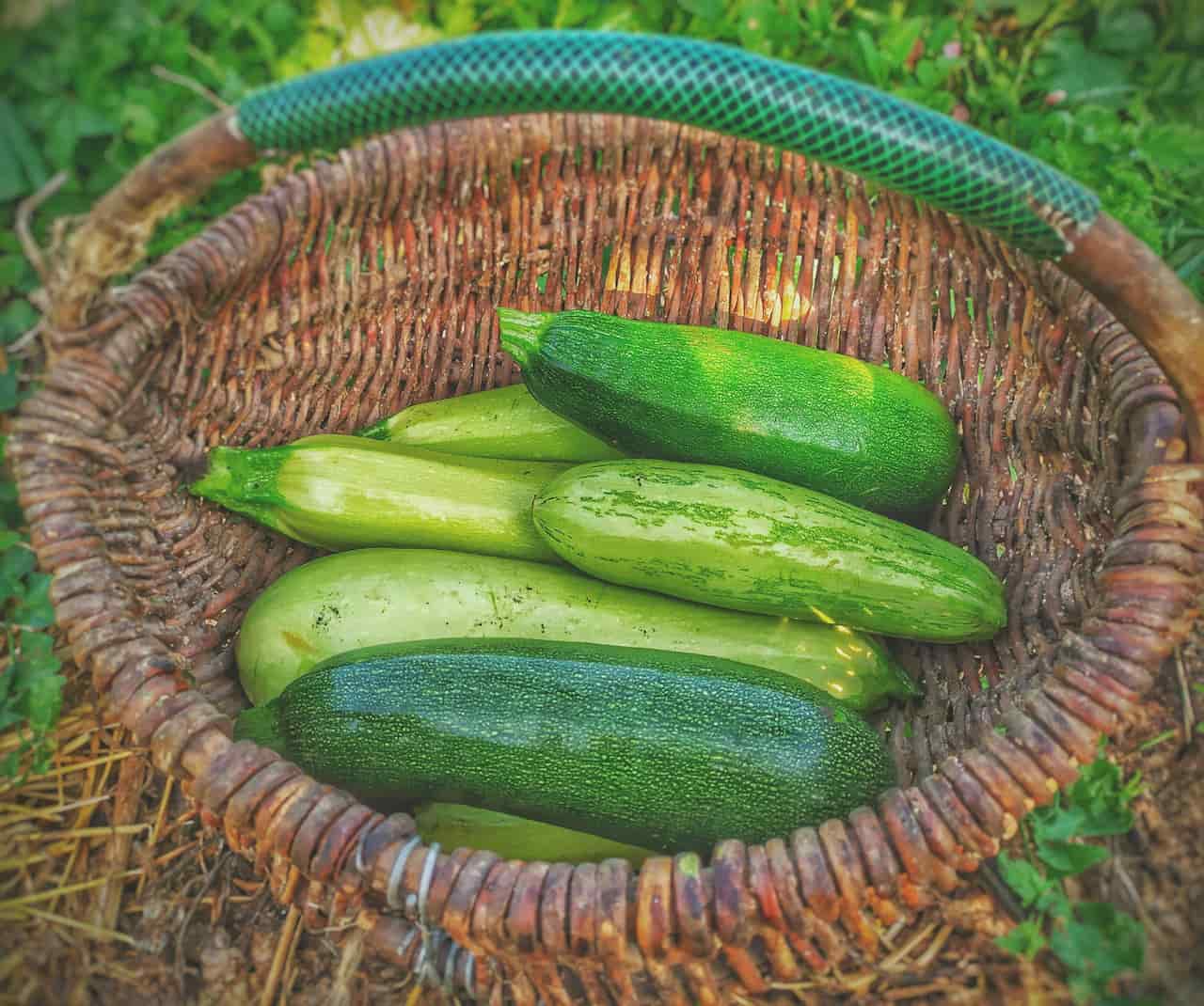
The majority of UK gardeners grow green-fruited bush courgettes, and for reliable production that is the right choice. Defender F1 is the benchmark – disease resistant, heavy cropping and robust in typical UK conditions. But there is real variety available beyond the standard green: yellow varieties bring colour to the harvest, compact varieties suit smaller growing spaces, and the Italian heritage varieties reward those who want maximum flavour over maximum yield.

Defender F1
Dark green, bush
Disease resistant, most reliable UK variety, heavy cropper
Patio Star F1
Green, compact bush
Ideal for containers and small spaces, very manageable
Soleil F1
Yellow, bush
Best yellow variety, attractive and good flavour
Romanesco
Pale ribbed, bush
Italian heritage, best for flavour, nutty texture when young
Tromboncino
Pale green, climbing
Trains up a support, good for vertical growing spaces
One Ball F1
Yellow round, bush
Round fruits the size of a cricket ball, novel and productive
💡

Two plants is the right number for most UK households. The temptation when sowing is to start six or eight seeds and grow them all on. Two healthy plants in a good summer will produce more fruit than a family of four can eat. Sow four seeds for insurance, grow on the two strongest plants and compost the rest. Your neighbours will be grateful regardless.

Sowing indoors

Courgettes are frost-tender and must be started indoors in the UK. Sow from late April to mid-May for planting out in late May or early June after the last frost. Do not sow too early – courgette seedlings grow quickly and become pot-bound and stressed if kept indoors too long waiting for frost-free conditions. A seedling sown in mid-May and planted out in early June will catch up with and overtake one sown in March and held back in a pot for two months.

1
Sow one seed per 9cm pot, placed on its side
Courgette seeds germinate best sown on their side rather than flat or point-down. Use good quality seed compost and sow 2cm deep. One seed per pot – germination rates are high and you do not need multiples.
2
Keep warm at 18 to 21°C for germination
Place on a warm windowsill or in a heated propagator. Germination takes 5 to 7 days at the right temperature. Once germinated, move to the brightest available windowsill to prevent leggy etiolated growth – courgettes need maximum light at seedling stage.
3
Pot on if needed but do not delay planting
If plants outgrow their 9cm pots before outdoor conditions allow planting out, move to a 15cm pot with fresh compost. Do not allow plants to become root-bound – a cramped courgette seedling checks growth and takes weeks to recover after planting out.
4
Harden off for 7 to 10 days before planting out
Move plants outside to a sheltered spot for increasing periods each day in the week or so before the planned planting date. Skipping this step results in transplant shock – plants wilt and stall for up to two weeks after going out.

Planting out

Courgettes can only go outside after the last frost date for your area. A single frost night will kill even a well-hardened plant – the leaves blacken overnight and the plant is finished. The last frost date varies significantly: the south-west and coastal areas can often plant out in mid-May, central England in late May, and northern England and Scotland should typically wait until early June. Check the Met Office 10-day forecast before planting and keep fleece to hand for the first few weeks after planting out regardless of region.

Sunlight
Full sun strongly preferred. At least 6 hours of direct sun per day. Against a south-facing fence or wall is ideal – the warmth boosts early-season growth.
Water
High water requirement once established. Consistent moisture drives fruit production. Waterlogging is fatal – drainage is essential, especially in clay soils.
Soil
Rich, moisture-retentive but free-draining. Dig in generous quantities of well-rotted compost or manure before planting. Courgettes are very hungry feeders.
Spacing
Minimum 90cm between plants in the ground. Courgettes spread dramatically – a single bush variety can occupy a 1.2m circle by late July. In containers, use a minimum 40-litre pot per plant.
⚠️

Never plant courgettes out before the last frost – a single frost night will kill them. South-west England and coastal areas can plant mid-May. Northern England and Scotland should wait until early June. Check your local last frost date and keep fleece to hand for the first few weeks regardless. A fleece thrown over plants takes two minutes; replacing killed plants costs two to three weeks of the growing season.

Amazon Courgette growing essentials – UK picks

Courgette Seeds Defender F1 UK

★★★★★

~£4

View on Amazon

Large Planter Pot 40 Litre UK Garden

★★★★☆

~£15

View on Amazon

Tomato Feed High Potash Liquid UK

★★★★★

~£10

View on Amazon

As an Amazon Associate I earn from qualifying purchases. Prices correct at time of publishing.

Care and feeding

Once established, courgettes are low-maintenance but high-demand plants. They need water, food and attention to pollination through the growing season. The care calendar breaks into two distinct phases: a vegetative phase before first fruit appears, where nitrogen drives leaf and stem growth, and a fruiting phase from first fruit set onward, where high-potash feed drives production.

May – Jun
After planting out, water in thoroughly and mulch around the base to retain moisture. Apply a balanced liquid feed every two weeks to encourage rapid establishment. Keep slug protection in place – young courgette plants are particularly vulnerable in the first two weeks after planting out.
Jul – Aug
Peak production. Switch to a high-potash liquid feed (tomato feed works well) applied weekly once the first fruits appear. Water at the base rather than overhead to reduce powdery mildew risk. In hot weather a thorough watering every other day is appropriate – courgettes wilt quickly in heat and fruit quality drops in stressed plants.
Sep
Plants typically look tired and powdery mildew will be widespread on the older leaves by September – this is normal and not a reason to remove plants that are still producing. Remove the most badly affected leaves to slow the spread and continue harvesting until the first autumn frost kills the plants.

Pollination is one of the most misunderstood aspects of courgette growing. Courgettes produce separate male and female flowers on the same plant – male flowers appear first (no swelling behind the petals) and female flowers follow about a week later (with a tiny courgette visible behind the petals). If fruit is not setting in early summer, it is often simply because female flowers have not yet appeared, not because pollination is failing. If both male and female flowers are present but fruit is not setting, hand pollinate by transferring pollen from a male flower to the centre of a female flower using a small brush or the male flower itself.

Harvesting correctly

Harvesting frequency is the most important management task once courgettes get going. Fruit left on the plant beyond the ideal size does two things: it depletes the plant’s energy as it swells into a marrow, and it signals to the plant that it has completed its reproductive mission, causing a significant slowdown in new fruit production. Regular harvesting is not optional – it is the mechanism that keeps the plant producing through August and into September.

Harvest guide – size, frequency and storage
Ideal size
10 to 15cm long – firm, glossy skin, dense flesh with tiny undeveloped seeds. At this size the flavour is at its best. The stem end should feel solid when pressed.
Too large
Over 20cm is a marrow – watery flesh, large seedy core, tougher skin. Still edible but best used stuffed or in soups. Remove immediately regardless – leaving it on the plant dramatically reduces new fruit production.
Frequency
Check plants every day or two in peak summer. A fruit that is 10cm today can be 25cm tomorrow in warm weather. Missing one check in a July heatwave can mean a marrow where a courgette was.
Storage
Cut fruits with a sharp knife, leaving a short stalk attached. Room temperature for 3 to 4 days. Refrigerator for up to a week. Courgettes do not freeze well raw – blanch briefly before freezing if needed.

Common problems and fixes

Most courgette problems are either environmental – caused by poor drainage, inconsistent watering or cold – or pest-related. The majority resolve themselves with a straightforward cultural adjustment rather than any intervention. The only problem that reliably defeats courgettes is waterlogged soil in a cold, wet spring – which is why site preparation and drainage are worth getting right before planting.

85%
Powdery mildew
Expected late season
50%
Slug damage
High risk first 2 weeks
40%
Poor fruit set
Usually pollination
30%
Root rot
Waterlogged soil
Problem diagnosis and fix
Problem
Cause
Fix
Powdery mildew on leaves
Fungal – very common in late season, especially in dry weather
Water at base, remove worst leaves, accept as normal from August onward
Fruit rotting at tip end
Poor pollination or blossom end rot from calcium deficiency
Hand pollinate, water consistently, add calcium if deficient
No fruit setting
Only male flowers out, or pollination failure in cold/wet weather
Wait for female flowers; hand pollinate with a brush in bad weather
Slug damage on new plants
Slugs – acute risk in first two weeks after planting out
Slug protection essential at planting. Nematodes, copper rings or pellets
Wilting despite watering
Root rot from waterlogging or vine weevil larvae in containers
Check roots and drainage. In pots treat with vine weevil nematodes in spring

Two courgette plants grown well will keep a UK household in summer vegetables for three months. Plant after the last frost date for your area, feed generously once fruiting begins and harvest every couple of days to keep plants productive through to the first autumn frost.

Amazon Courgette growing essentials – UK picks

Courgette Seeds Defender F1 UK

★★★★★

~£4

View on Amazon

Large Planter Pot 40 Litre UK Garden

★★★★☆

~£15

View on Amazon

Tomato Feed High Potash Liquid UK

★★★★★

~£10

View on Amazon

As an Amazon Associate I earn from qualifying purchases. Prices correct at time of publishing.

Share on socials:

About the writer

James

Greater Manchester, England

Forty-something allotment holder, hobby gardener, and occasional sufferer of clay soil. I write about what actually works in a real British garden - not what looks good on a mood board.