At a glance
Vine weevil is one of the most damaging garden pests in the UK and one of the most frustrating – its primary damage is invisible until the plant wilts and collapses, at which point the roots are often already destroyed beyond recovery. A healthy-looking container plant can go from apparently thriving to dead within days once larval damage reaches a critical level, and the first sign of a problem is frequently a plant that cannot be saved. Unlike most garden pests where the damage alerts you to the cause, vine weevil announces itself only through the final consequences of an infestation that may have been developing for months.
The good news is that effective control is well-established and widely available. Nematode biological control applied at the correct time of year is one of the most reliable pest management methods available to UK home gardeners – more effective than most chemical alternatives and entirely safe for wildlife, pets, children and soil organisms. Understanding the vine weevil’s lifecycle is the key to timing treatment correctly, and getting that timing right makes the difference between comprehensive control and a treatment that misses the target window entirely.
Identifying vine weevil – adult and grub
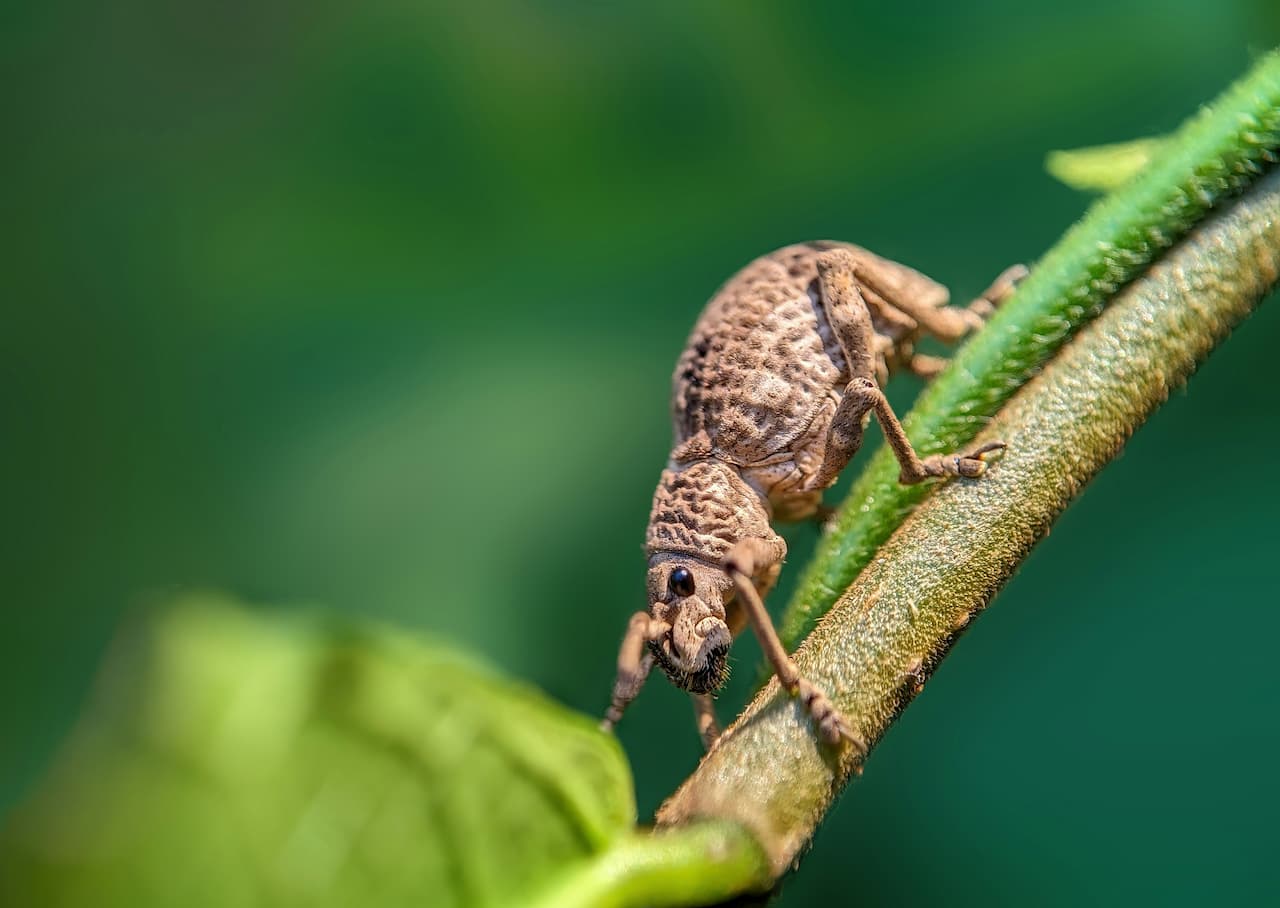
Vine weevil has two damaging life stages and both are worth recognising. The adult is a dull black beetle approximately 9mm long with a characteristic elongated snout, giving it a distinctive silhouette that makes it identifiable once you have seen it. Adults cannot fly – their wing cases are permanently fused – and they move only by walking, which limits their spread but does not prevent significant population build-up over a season. They are nocturnal, spending daylight hours hidden under pot rims, in leaf litter, in crevices and under debris. The most obvious sign of adult presence is the characteristic notched or scalloped damage they leave on leaf margins – semicircular bites taken from the edges of leaves, particularly on rhododendrons, hostas, heucheras, strawberries and euonymus.
The larvae are the more destructive stage but the less visible one. They live entirely within the compost or soil, feeding on roots. If you tip out a container plant that has been wilting unexpectedly and find several creamy-white, C-shaped grubs around the root ball, vine weevil larvae are the cause. In a badly infested pot there can be 20-30 grubs in a single 30cm container – enough to completely sever the root system of a heuchera, strawberry or hosta within weeks of hatching.
Lifecycle and damage explained
Understanding when each stage occurs is the foundation of effective control. All adult vine weevils are female – they reproduce without mating, which means a single adult introduced on a bought plant can establish an infestation independently. Each female lays up to 1,000 eggs near the roots of host plants from May through to September. The eggs are tiny and invisible in compost. They hatch into microscopic grubs that begin feeding on roots immediately, growing rapidly through late summer and autumn as soil temperatures remain warm. The most intensive root damage occurs from August to October. Through winter the grubs slow down but continue feeding at low levels, overwintering as large grubs or pupae in the soil before adult beetles emerge the following spring.
Container plants are far more vulnerable than open-ground plants. In open soil, larvae disperse widely and plants usually have enough root system to compensate for some feeding. In a 30cm pot, a dozen grubs developing from a single egg batch can consume the entire root system of a heuchera or strawberry in a matter of weeks. Containers must be treated every August without fail if vine weevil is present in your garden.
Nematode treatment – timing and method
Nematode treatment is the most effective control available to UK home gardeners and the method recommended above all chemical alternatives. The product – sold as Nemasys Vine Weevil Killer or similar – contains microscopic nematode worms (Steinernema kraussei) that actively seek vine weevil larvae in the compost, penetrate them and release bacteria that kill the grub within a few days. The nematodes themselves are harmless to plants, earthworms, soil organisms, pets and humans. They die naturally once the larval population is exhausted and leave no chemical residue in the growing medium.
Order nematodes in advance – do not leave it until August. Nematodes must be used fresh and cannot be stored once received. Many UK suppliers sell out during peak demand in late July and August, and delivery times can stretch to two weeks. Order in early to mid-July for an August application. The product arrives chilled and has a refrigerator shelf life of a few weeks if conditions delay application.
Chemical and physical controls
Chemical vine weevil treatments for outdoor use have become significantly more restricted in the UK. Imidacloprid-based products – formerly the standard chemical approach – were banned for outdoor use due to their well-documented impact on bees and other pollinators. Products containing acetamiprid remain available as a compost drench and can be applied to protect containers. Chemical treatment is less targeted and generally less effective than nematodes, and carries a greater risk to non-target soil organisms. For the majority of gardeners, nematodes are the clearly superior choice. Chemical treatment may be worth considering as a supplementary measure for high-value or particularly vulnerable plants in situations where nematode treatment alone has not provided sufficient control.
Physical night patrol is a genuinely effective supplementary method, particularly for smaller container collections. Adults are slow-moving and easily visible on leaves under torchlight from May through September. Drop them into a container of soapy water. This approach works well combined with slug patrols – both pests are active at night and a single circuit of the garden deals with both. For a larger garden or extensive collection of containers, physical removal alone is insufficient and nematode treatment remains essential.
Prevention and most vulnerable plants
Prevention is considerably easier than treatment once an infestation is established, and several practical measures reduce risk substantially. Always check the compost of any new plants purchased from a nursery or garden centre before adding them to an existing collection – look for C-shaped white grubs around the root ball and in the compost. Vine weevil spreads readily through nursery stock and bought-in plants are the most common source of new infestations. Inspect the undersides and margins of leaves on susceptible plants from May onwards for the distinctive notched feeding damage that indicates adult weevil activity.
Never compost vine weevil-infested material. Grubs survive the temperatures generated in most home compost systems and will emerge in the finished compost to re-infest wherever it is spread. Infested compost must be bagged and placed in general waste, not the garden bin. This applies equally to roots and compost from any plant killed by vine weevil – the grubs present are still alive and viable.
Share on socials: