At a glance
Citrus trees are absolutely achievable in the UK – but only if you understand from the outset that they are not garden trees in the British sense. They cannot survive outdoors year-round in most parts of the country, and attempting to grow them in open ground will end in failure at the first hard frost. The UK approach to citrus is a container approach: pots that spend late spring and summer outside in full sun and come back inside – into a conservatory, a heated greenhouse, a bright porch or a well-lit room – for the colder months. Get this fundamental right and citrus trees are surprisingly rewarding, producing scented flowers, ornamental foliage and genuine crops of fruit from even a modestly sized plant on a sunny terrace.
The range of citrus available to UK growers has expanded enormously over the past decade. Beyond the classic lemon, growers now have access to reliable-fruiting limes, blood oranges, mandarins, kumquats and the calamondins that are among the hardiest and most manageable of all the citrus group. Each species has slightly different requirements and slightly different tolerances, and choosing the variety that suits your growing space and indoor conditions is the most important decision you will make before buying.
Choosing your variety
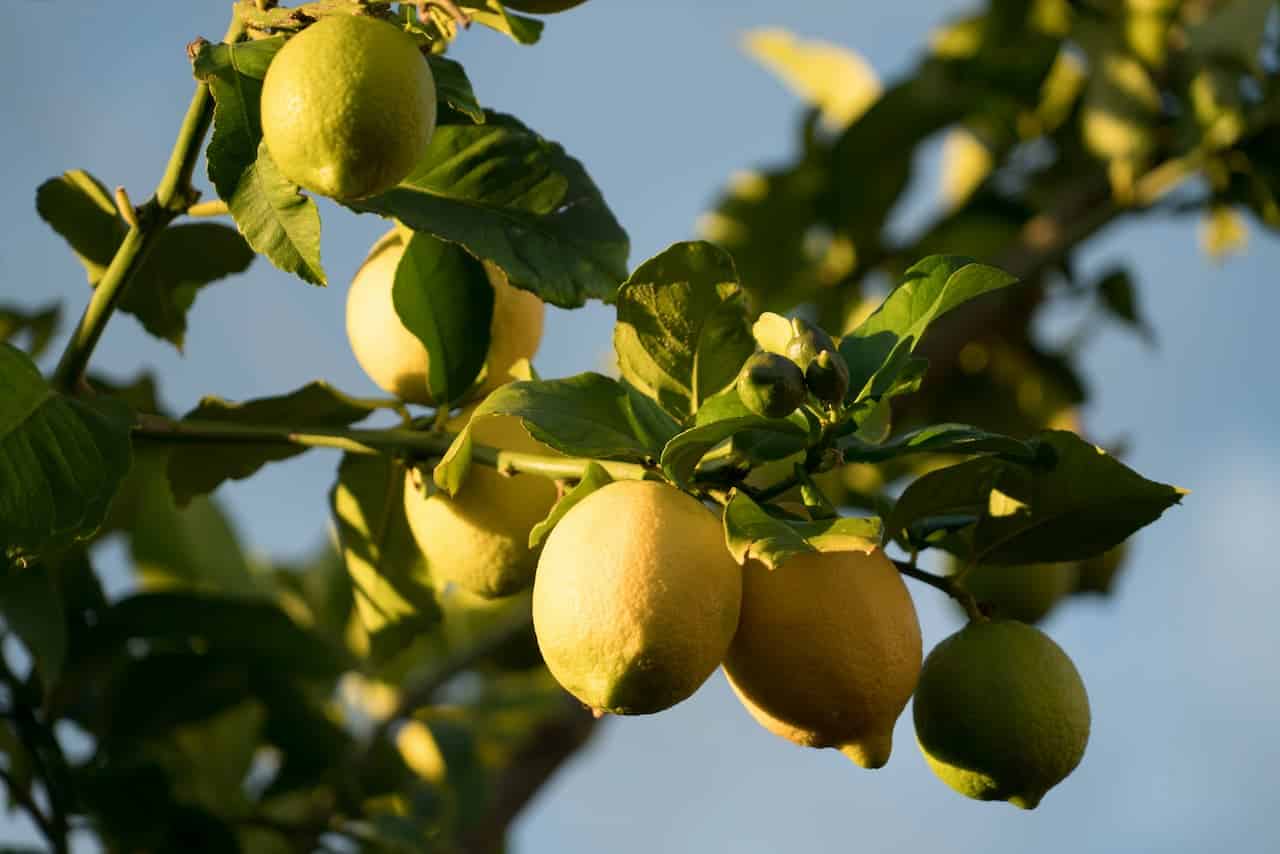
The most commonly grown citrus in UK homes and gardens are lemons, limes, oranges and the smaller ornamental-fruiting types. Within each category there are specific varieties that perform considerably better in UK conditions than others – not all lemons are equally reliable, and some varieties have been specifically selected for container performance and cool-climate resilience. The most popular lemon for UK growing is ‘Eureka’ or ‘Lisbon’ for consistent heavy cropping, and ‘Meyer’ for compact habit and sweeter fruit that is easier to use fresh. For limes, the kaffir lime (Citrus hystrix) is grown primarily for its aromatic leaves rather than fruit, while the Tahitian and Persian limes crop more reliably and produce the flavour most associated with cooking. For oranges, the calamondin is the most practical for small spaces and cool conservatories.
Containers, compost and potting
Container choice matters enormously for citrus. The most common mistake is a pot that is either too large or has inadequate drainage. A pot that is significantly larger than the rootball holds excess moisture in the compost that the roots cannot access, and this wet, stagnant zone encourages root rot – the most common cause of sudden citrus collapse. The principle is to pot up in stages: start in a pot that allows roughly 5 centimetres of space around the rootball, and move up only when roots begin to emerge from the drainage holes. A 25-30 centimetre pot for a young plant, moving to a 40-50 centimetre pot as it matures, is usually sufficient for a well-managed specimen.
Compost is another area where the wrong choice causes prolonged problems. Standard multi-purpose compost holds too much moisture and breaks down too quickly, compacting around the roots and reducing drainage over time. Citrus-specific compost is available and worth buying for its adjusted pH (citrus prefers slightly acidic conditions at pH 6.0-6.5), open structure and slower breakdown rate. If mixing your own, a blend of two parts John Innes No.3 to one part horticultural grit or perlite produces an appropriate growing medium. Repotting should happen every 2-3 years in spring, moving to a pot only fractionally larger each time and refreshing the compost entirely.
Pot material has a genuine effect on moisture management. Terracotta pots are often recommended for citrus because they are porous and allow the compost to dry out more evenly through the walls as well as from the surface – this is genuinely useful in reducing the overwatering risk that kills more UK citrus trees than any other single cause. The trade-off is weight: a large terracotta pot filled with citrus compost is very heavy and difficult to move, which matters when the plant needs to come indoors each autumn. Plastic pots are lighter and retain moisture longer, which makes them more demanding to manage but more practical for larger plants that need to be moved regularly. Whatever material is chosen, ensure there are multiple drainage holes at the base and that the pot is not standing in a saucer of water – citrus roots must never sit in standing water, even briefly.
Watering and feeding
Watering is the skill that separates successful citrus growers from unsuccessful ones, and the problem almost invariably runs in one direction: overwatering. Citrus roots need to dry out slightly between waterings – not to the point of the leaves wilting, but to the point where the top inch or two of compost is dry to the touch. In summer, outdoors in warm weather, this might mean watering every two to three days. In winter indoors, with cooler temperatures and lower light, the same pot might need watering only once a fortnight. The plant’s water requirements follow its metabolic rate, which slows considerably in winter. Checking the weight of the pot before watering – a heavy pot still has moisture, a noticeably lighter one needs water – is more reliable than any fixed schedule.
Yellow leaves are the most common complaint with citrus and almost never mean what people assume. Yellow leaves in winter usually indicate overwatering, not underwatering. Yellow leaves with green veins in summer indicate magnesium deficiency. Yellowing of all leaves at once with leaf drop suggests cold shock or root disturbance. Correct diagnosis before any treatment – watering more when the problem is overwatering will kill the plant.
Winter care and temperature
Bringing citrus indoors for winter is not optional in the UK – it is the non-negotiable condition on which the entire growing approach rests. Most citrus species will tolerate brief dips to 5 degrees Celsius but will suffer leaf drop and root damage at anything lower, and sustained cold below this point will kill them. The move indoors should happen before the first frost risk, typically in October for most of the UK, and plants should return outside only once night temperatures are reliably above 10 degrees, which in most years means late May.
Indoor winter conditions present their own challenges. The combination of low light levels, dry air from central heating and reduced watering requirements creates a stressful environment that many plants handle by dropping leaves. The priority indoors is maximum light – a south-facing window is ideal, and supplemental grow lighting for 12-14 hours per day is genuinely worthwhile for plants in a room that does not receive strong winter light. Humidity can be improved by placing the pot on a tray of damp gravel and misting the foliage occasionally. Avoid placing plants near radiators, which create a dry heat pocket that desiccates the foliage regardless of how much watering is done.
Pests, problems and yellow leaves
Citrus indoors in winter are vulnerable to scale insects and vine weevil, while outdoors in summer they attract red spider mite in hot, dry conditions. Scale insects appear as small brown or cream discs on stems and the undersides of leaves, producing sticky honeydew that attracts sooty mould. They are best dealt with by wiping off with a damp cloth and treating with a diluted neem oil spray or a physical horticultural oil. Red spider mite is harder to spot – look for very fine webbing on leaf undersides and a characteristic bronze stippling of the upper leaf surface. Increasing humidity dramatically reduces spider mite pressure, which is another reason to mist citrus regularly in summer.
Seasonal care calendar
Citrus care is genuinely seasonal in a way that catches out many growers who apply the same routine year-round. The plant’s requirements change significantly as it moves between outdoor summer growth, the autumn transition period, indoor winter rest and the spring awakening. Following the seasonal rhythm rather than a fixed schedule makes an enormous difference to plant health and fruit production. The biggest errors happen at the transitions: bringing plants in too late in autumn, putting them out too early in spring, or failing to adjust watering and feeding frequency to match the reduced growth rate through winter.
Never move citrus from outdoors to a warm room directly. The shock of moving a plant from cool autumn air into a centrally heated living room triggers immediate and often catastrophic leaf drop. Acclimatise gradually – move to a cool porch or unheated greenhouse for a week or two before the plant reaches its final indoor winter position. The same applies in reverse in spring: harden off for two weeks in a sheltered spot before moving to a fully exposed outdoor position.
Share on socials: