At a glance
Most tired or damaged lawns in the UK do not need to be stripped and re-laid. What they need is a correct diagnosis followed by the right combination of physical treatment and seeding at the right time of year. The most common mistake in lawn restoration is applying the wrong treatment – reseeding a compacted, poorly-draining lawn before addressing the soil structure, for example, produces new grass that dies within a season for exactly the same reason the old grass did. Treating the underlying cause first, then reseeding into improved conditions, produces lasting results.
Lawn restoration in the UK operates within a narrow seasonal window. Grass seed germinates reliably when soil temperature is above 8-10°C and moisture is consistent – conditions that exist in the UK from late March through to October, with the peak window being September to mid-October when the soil is still warm from summer but rainfall is more reliable. Work done in that autumn window establishes before winter and produces a strong lawn the following spring. Work done in early summer often struggles with drought stress before the new grass has rooted deeply enough to survive.
Diagnosing What’s Wrong Before You Start
Before any repair or restoration work begins, the lawn needs to be assessed against four criteria: soil structure, thatch depth, drainage, and the condition of the existing grass. Each of these affects which treatments are needed and in what order. A lawn that looks bad for multiple reasons needs those reasons addressed in the right sequence – thatch removal before aeration, aeration before topdressing, topdressing before overseeding – rather than all at once or in the wrong order.
Repairing Bare Patches
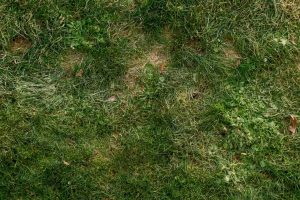
Bare patches are the most visible and most commonly tackled lawn repair job. The repair method depends on the size and cause of the patch. For patches smaller than a dinner plate, scarifying the soil surface with a hand rake, scattering seed at the correct rate and firming it into the soil with the back of a rake is sufficient. For larger areas or patches in heavily worn zones such as goalposts, paths or gate openings, the soil condition needs to be improved before seeding or the new grass will fail for the same reason the original grass did.
Match the seed mix to the rest of your lawn. Using a general hard-wearing seed mix in a lawn that was originally sown with a finer ornamental mix produces patches of coarser, visually distinct grass that are obvious for years. Check what the existing lawn is and buy a seed mix to match. Most garden centres stock both hard-wearing and ornamental mixes, and many sell shade-tolerant mixes for patches under trees.
Dealing with Compaction, Thatch and Poor Drainage
Compaction is the most significant limiting factor for lawn health in the UK. Clay-heavy soils – common across much of England and Wales – compact progressively under foot traffic and lawn mower weight, reducing the oxygen available to grass roots and preventing water from draining freely. Compacted soil also prevents roots from penetrating deeply, making grass more vulnerable to drought in summer and more susceptible to waterlogging in winter. Hollow-tine aeration – using a tool that removes cores of soil rather than simply piercing it – is significantly more effective at breaking compaction than solid-tine aeration and should be used for any lawn that shows clear compaction signs.
Thatch – the layer of dead grass stems, roots and other organic matter that accumulates between the grass blades and the soil – becomes a problem when it exceeds approximately 1cm in depth. A thin thatch layer is normal and beneficial, helping to retain moisture and cushion the surface. A deep thatch layer prevents water and nutrients from reaching the soil, encourages shallow roots, and provides habitat for fungal disease. Scarification with a powered scarifier or a hand rake (for small areas) removes excess thatch. The best time to scarify is late summer or early autumn – late enough that the summer drought stress has passed, early enough that new growth can fill in before winter.
Full Lawn Renovation
Full renovation – as opposed to patch repair – is needed when more than 50% of the lawn surface is bare, weedy or dominated by moss, or when the underlying soil structure is so poor that no amount of patching will produce lasting results. Full renovation involves killing or removing the existing lawn, addressing any drainage or soil structure issues at depth, and then establishing new grass from seed or turf. It is more disruptive and takes the lawn out of use for a full growing season, but produces results that patch repairs cannot achieve when the underlying problems are severe.
Feeding, Watering and the Recovery Period
Newly seeded or overseeded lawn sections need consistent moisture at the soil surface for the first two to three weeks. Grass seed does not tolerate drying out during germination – even a single day without adequate moisture during the emergence phase can kill germinating seedlings before they are established enough to recover. A fine-spray oscillating sprinkler set on a timer is the most reliable approach for larger areas, as hand watering tends to be inconsistent and is difficult to sustain daily over a three-week period.
Feeding strategy during renovation should be divided into three phases. Pre-seeding, a phosphate-rich fertiliser applied to the prepared soil encourages strong early root development. Once the new grass is established and has been cut twice, a balanced feed supports leaf growth and helps the new grass compete. In the following spring, a high-nitrogen spring feed drives the recovery and thickening that converts a thin, newly established lawn into one that properly fills in.
Lawn Repair Timing – Month by Month
Knowing when to do each task is as important as knowing what to do. Scarifying in May kills grass that cannot recover before summer drought. Reseeding in November means soil is too cold for germination. The table below covers the key lawn repair tasks and their optimal windows for UK conditions.
Share on socials: