At a glance
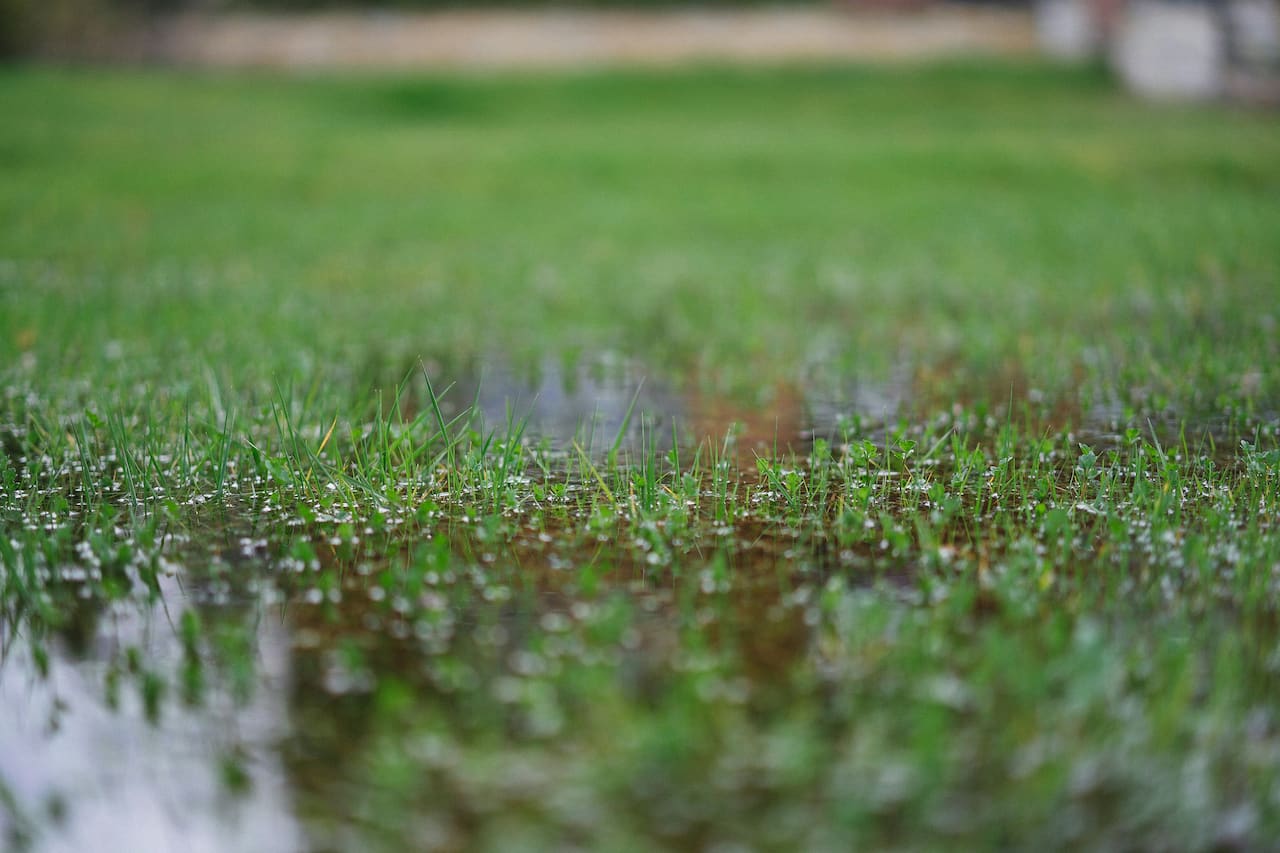
A waterlogged lawn is one of the most demoralising sights in a UK garden – standing water that persists for days after rain, grass that squelches underfoot through winter, and bare muddy patches where the turf has given up entirely. The good news is that most cases of lawn waterlogging are caused by compaction or a thatch layer that has built up over years of use, and both are straightforwardly fixable with the right tools and a couple of days of effort in autumn. Understanding the cause before attempting the fix is the critical first step – spending a weekend aerating a lawn whose drainage problem is actually caused by an impermeable clay subsoil or a blocked soakaway delivers very little improvement and wastes considerable effort.
The UK climate makes waterlogging a near-universal problem for lawn owners. Heavy autumns and winters deliver sustained rainfall onto ground that is already wet, and lawns that cope adequately in summer can become saturated from October onwards. A lawn that only waterlogged after an exceptional wet period and drained within a day or two has no structural problem – it simply received more water than any soil could absorb quickly. A lawn that holds water for several days after moderate rainfall, or that stays boggy from November to March regardless of rainfall intensity, has an underlying drainage problem that warrants investigation and treatment. Regular aeration is the single most effective preventive maintenance task for avoiding this situation developing.
Diagnosing the cause
The simplest diagnostic test for compaction is to push a screwdriver or garden cane firmly into the lawn surface. On healthy, uncompacted soil it should penetrate 10-15cm with moderate hand pressure. On compacted soil it meets firm resistance within the first few centimetres and requires significant force. Compaction is most severe in high-traffic areas – paths across the lawn, the space in front of garden gates, areas where children play – but can affect the whole lawn if it has never been aerated. A thatch layer problem is diagnosed by cutting a small plug from the turf with a spade and examining the profile – more than 10-15mm of brown spongy organic material between the grass leaves and the soil surface indicates thatch that is preventing water infiltration.
Clay subsoil is the most challenging cause because it is not fixable by surface treatment alone – clay particles pack tightly and hold water for extended periods regardless of what is done to the grass surface above. You can confirm clay by digging a hole 30-40cm deep in the waterlogged area and examining the subsoil – clay is grey, sticky when wet and holds its shape when rolled into a ball. Sandy or loamy subsoil falls apart. A lawn over clay subsoil will always drain more slowly than one over free-draining ground, but drainage can still be significantly improved with the right approach.
Immediate steps
The first and most important immediate action when a lawn is waterlogged is to stay off it. Walking on a saturated lawn compacts the already-stressed soil further, damages the grass crowns, and creates ruts and bare patches that take months to recover. Lay scaffold boards or stepping stones if access is genuinely needed, spreading the weight across a larger area. If children or pets need the space, mark the lawn as off-limits until it drains and the surface firms up.
Once the lawn has drained sufficiently to walk on without squelching – typically two to three days after rainfall ceases in mild compaction cases – assess the damage. Areas where grass has died completely due to prolonged submersion will need reseeding in spring once drainage is improved. Areas that are simply yellowed and flattened will generally recover on their own once light and air return. Resist the temptation to feed the lawn immediately after waterlogging – fertiliser applied to stressed, wet grass achieves little and risks scorching once conditions dry. Wait until the lawn is growing actively again before feeding. The moss that often colonises waterlogged lawns – which thrives where grass is thin and drainage poor – will reduce naturally once the underlying drainage problem is addressed, though a moss treatment as part of a broader programme including scarification helps speed recovery.
Aeration and top dressing
Hollow tine aeration is the most effective DIY treatment for compaction-related waterlogging. A hollow tine aerator – available as a manual tool for small lawns or as a pedestrian machine hired from a tool hire centre for larger areas – removes plugs of soil approximately 10mm in diameter and 75-100mm deep across the lawn surface. These holes create drainage channels that allow water to penetrate the compacted layer and reach the more permeable subsoil below. The visual effect is alarming – the lawn looks like it has been attacked – but the improvement in drainage after the first significant rainfall following aeration is usually dramatic.
Hollow tine aeration is most effective when followed immediately by a top dressing of sharp sand brushed into the holes. Sharp sand is a coarse, angular sand – not builder’s sand or play sand, which pack tightly – that fills the aeration channels with free-draining material, preventing them from closing back up as the soil settles. Apply 2-3kg of sharp sand per square metre, broadcast it across the lawn and work it into the holes using a stiff brush or the back of a rake. This combined treatment of aeration and sand top dressing, repeated annually for two to three years, permanently improves drainage in most compaction-affected lawns and is the approach recommended by groundskeepers for waterlogged sports turf. Follow up with a light application of top dressing of compost and sand mix to level the surface and feed recovery.
Installing drainage
Where aeration and top dressing do not resolve the waterlogging after two or three seasons of treatment – typically because the underlying cause is heavy clay subsoil or a genuine low point that collects run-off from surrounding areas – installing a drainage system is the long-term solution. The two approaches most practical for domestic gardens are a French drain and a slit drain system.
A French drain consists of a trench 30-45cm deep and 30cm wide, filled with permeable material – typically gravel or crushed stone – and laid with a slight fall toward a soakaway or boundary drain. The trench is lined with a permeable geotextile membrane before filling to prevent fine soil particles from clogging the gravel over time. Water percolates down through the lawn, enters the gravel-filled trench, and flows along the slight gradient to the outlet point. For a persistent boggy area in the middle of a lawn, a herringbone pattern of French drains leading to a central collector is more effective than a single line. This is a significant digging project – access to a mini-digger or at minimum a rotary spade significantly reduces the effort involved.
Slit drainage – narrow slots cut into the lawn surface with a specialised machine, filled with sharp sand or gravel – is a less disruptive alternative used on sports pitches and high-quality domestic lawns. The equipment is available from larger tool hire centres. Slit drains connect to a collector drain at the perimeter of the lawn. After installation and sand filling, the turf recovers over the slits within a few weeks and the improvement in drainage is immediate and lasting. This is significantly less disruptive than excavating French drain trenches and is worth considering for established lawns where preserving the turf is a priority.
Seasonal action plan
Common problems and solutions
Share on socials: