At a glance
No wire, but no zero-setup camera-only freedom either. This one finds the lawn using satellite positioning fused with a camera, which means a genuinely separate piece of hardware, an antenna, has to go somewhere specific before any of it works. After two wire-guided mowers and one pure-vision mower, this is a third, distinct approach to the same problem, and the antenna placement turned out to matter more than almost anything else about owning it.
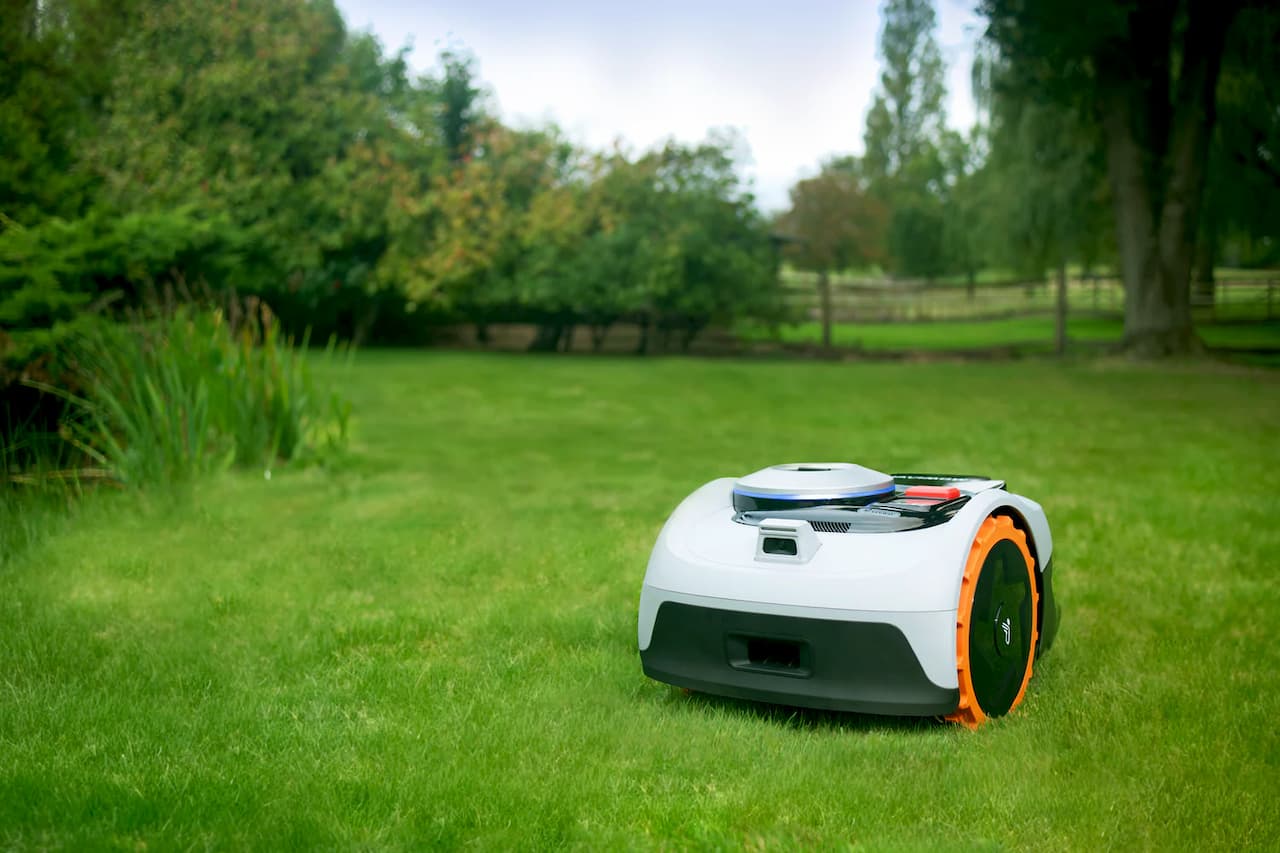
It covers up to 500m², handles slopes up to 30% inside the lawn, and weighs 10.9kg. Three separate components make up the system rather than just the mower alone: the mower itself, a charging station, and a satellite antenna connected between them.
Overview and first impressions
Cutting height adjusts via a manual knob on top, 20-60mm, no app control here unlike the height adjustment seen on some pricier mowers in Segway’s own range. Cutting width is 18cm with three dual-edged blades underneath, which periodically reverse spin direction to even out wear and extend their life.
The 2.55Ah removable battery charges in around 90 minutes for roughly 60 minutes of mowing. Noise is rated at 58dB(A), and the whole system, mower, charging station and power supply, carries an IP66 rating, genuinely higher than the weatherproofing seen on some other mowers in this category.
Bluetooth and Wi-Fi come as standard, but a separate 4G module is needed specifically to get remote control away from home and the anti-theft GPS tracking feature, neither works on Wi-Fi alone once you’ve left the property. It’s compatible with Alexa and Google Home too, a genuine smart-home extra most wire-guided mowers in this series don’t offer.
The onboard camera, VisionFence, identifies over 150 obstacle types across three categories, animals, tools and everyday clutter, and includes an Animal Friendly Mode that detects a pet or piece of wildlife within 5 metres and recalculates its path to keep a 1 metre buffer around it. It also won’t mow at night by default, since slugs, snails and other nocturnal visitors are more active after dark; you can override that, though doing so disables the closer-cutting Ride-on boundary mode specifically.
Cut the lawn properly before the first run. The manual is specific: grass should be down to 6cm or less before Navimow’s first pass, with debris, toys and stones cleared, and children and pets kept off the lawn entirely while it works.
Specifications and scores
How it performed in our tests
Rather than wandering at random, this works the lawn systematically, varying the angle it approaches each pass to avoid repetitive wear tracks, and genuinely returns to dock once an area is fully covered rather than carrying on pointlessly until a scheduled time runs out. Longer grass triggers a spin-on-the-spot for a closer second pass; shorter grass just gets a single clean sweep.
A deliberately messy test, a garden table, a stray shoe and a clothes horse all left out, saw it approach each obstacle then either turn away or skirt around without getting stuck or knocking anything over. It also coped genuinely well with an uneven patch of ground, powering straight over shallow divots rather than getting bogged down or confused.
There’s some run-to-run variation in exactly how close it gets to a boundary, ordinary GPS variance rather than a fault, but it evens out with regular use and made no visible difference to the finished cut over time. There are genuinely two boundary modes on offer here, not just one fixed behaviour. Standard mode, the default, keeps the mower a small gap inside the true edge, which is where that uncut strip comes from. Ride-on mode lets it straddle the actual line between grass and path or patio for a proper close cut, but only where that gap is under 1cm and nothing solid sits within 20cm of it, so it suits a clean path edge far better than a flower bed or an uneven wall base.
Blade upkeep is light but not zero: Segway recommend replacing all three blades and their screws together every one to two months with regular use, never reusing the old screws, to keep the cutting disc properly balanced.
Redrawing the map is genuinely easy compared to a wire. Leaving a wild patch for wildlife one month, or even turning a corner into a small wildflower patch, and mowing it again the next is just an app edit here, not a re-laid boundary.
Setup and navigation
The antenna is the single most important decision in the whole setup. It needs to sit more than 2 metres from houses, trees and walls with a clear view of the sky, ideally the southern sky kept open above all else in the UK. Both the antenna and the mower need to see the same satellites, called Co-visible Satellites, at least 5 of them for reliable positioning, and the app includes a built-in Satellite Signal Analyzer specifically to check this before anything gets bolted down.
Moving the antenna or the charging station after mapping invalidates the whole map, a full remap is the only fix, so getting the position right the first time matters more than it might seem. An Antenna Extension Pole can lift it up to 2 metres to clear low obstructions, and an Antenna Extension Kit allows wall or roof mounting with up to 30 metres of cable for genuinely awkward gardens. Any DIY shelter for the unit needs to be metal-free, plastic rather than anything metallic, to avoid interfering with the signal.
Mapping itself mixes manual driving with the camera’s automatic edge-following, and the two can be toggled freely mid-map. Automatic detection worked best against a strong, clear boundary like a fence, and noticeably less well against a soft edge like a flower bed, so a mix of both methods got the most reliable result. An erase function undoes mistakes immediately rather than forcing a restart.
Performance and limitations
What this does genuinely well is exactly what satellite-plus-vision navigation promises: systematic, complete coverage rather than random wandering, real flexibility to redraw the map whenever the garden changes, and obstacle avoidance that held up against deliberately awkward clutter. The IP66 rating is a real, tangible step up in weatherproofing over plenty of the competition too.
The genuine cost is upfront effort rather than ongoing hassle. Getting the antenna position right the first time is worth taking seriously, since getting it wrong means redoing the whole map rather than a quick fix. Manual height adjustment is a small but real step back from pricier alternatives with electronic control. And the cutting deck sitting centred in the chassis leaves a strip at true physical edges, flower beds, walls, anywhere the mower can’t safely straddle, that still needs a trimmer.
None of that undoes what satellite-plus-vision genuinely achieves here. It’s a different category of compromise to a wire that’s been nicked or a camera struggling with deep shadow, mostly a one-time setup cost rather than something that nags at you every week after.
- Genuinely systematic, complete coverage
- Map edits are genuinely easy, no wire to relay
- IP66, genuinely strong weatherproofing
- Alexa and Google Home compatible
- Antenna placement genuinely matters
- Manual, not electronic, height adjustment
- Moving the antenna means remapping from scratch
- Full remote control needs a separate 4G module
- Suburban gardens with a genuinely open sky view
- Anyone who changes their lawn layout often
- Households wanting smart home integration
- Heavily shaded gardens with dense tree cover
- Anyone wanting electronic height adjustment
- Anyone unwilling to plan antenna placement carefully
Final verdict
Satellite-plus-vision navigation genuinely delivers what it promises here. Systematic coverage rather than random wandering, real obstacle avoidance against deliberately messy clutter, and a map that’s genuinely easy to redraw whenever the garden itself changes shape. That last point matters more day to day than the spec sheet suggests.
The honest cost sits almost entirely at the start. Get the antenna in the right spot, with a proper view of the sky and enough Co-visible Satellites, and the rest genuinely looks after itself. Get it wrong, and the fix is a full remap rather than a quick tweak.
For a typical suburban garden with a reasonably open sky, this earns its place comfortably. For a garden buried under tree cover, that one upfront decision is worth thinking through properly before committing.
A genuinely capable satellite-and-vision mower with systematic, complete coverage and real flexibility to redraw the map as the garden changes. Held back by manual height adjustment, a separate module needed for full remote control, and an antenna placement that genuinely has to be got right first time.
Share on socials: