At a glance
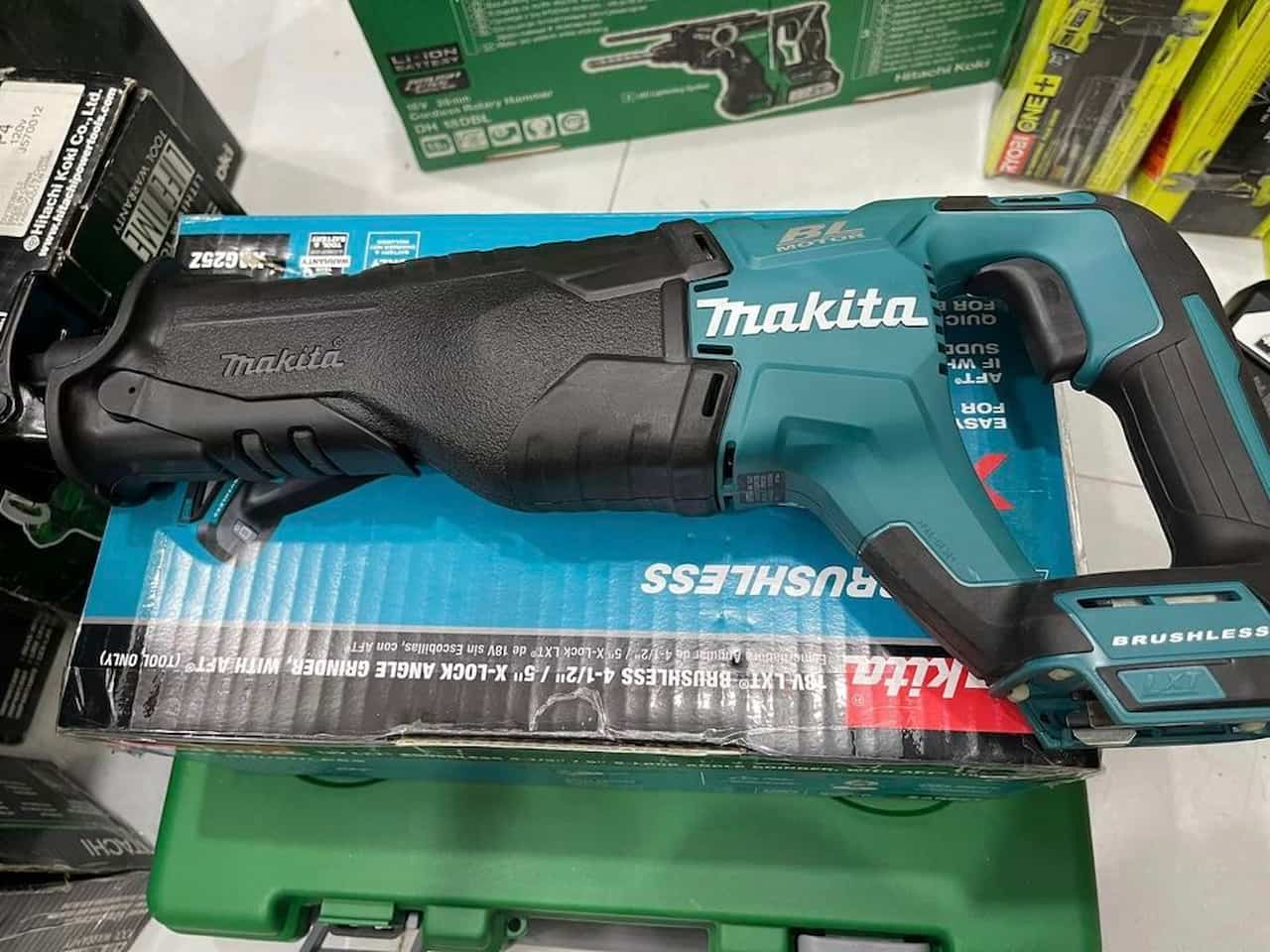
The reciprocating saw is the demolition tool that no other type can replace. Where a circular saw needs a flat reference surface and a jigsaw needs access from above, a reciprocating saw cuts through timber, copper pipe, plasterboard, roofing felt and old fixings in positions and spaces that nothing else can reach. It is the first tool onto a site during a strip-out and the one still in use long after everything else has been put away. The DJR187Z brings a brushless motor and three-position orbital action to Makita’s 18V LXT platform, and it does so at a price point that positions it as a serious alternative to heavier, pricier options from competing platforms.
We tested the DJR187Z across timber demolition, copper pipe cutting, plasterboard removal and structural timber cuts over a four-week period on a residential renovation project. The brushless motor is the headline specification that separates this from the older DJR185 it replaces – brushless means more torque at lower speeds, better battery efficiency and a longer motor lifespan. For a tool that regularly runs under heavy load in confined spaces for extended periods, those gains are meaningful rather than theoretical. The test results speak for themselves across a wide range of materials.
Overview and first impressions
The DJR187Z is a compact tool for its class, running to 2.0kg body only. Reciprocating saws are inherently bulky because the blade extends forward from the body rather than below it, but Makita has kept the housing tight around the motor and the grip sits at an angle that naturally puts the blade on line with the forearm, reducing wrist fatigue on extended cuts. The over-moulded rubber grip is generous and well-positioned – both a full two-handed grip from behind the shoe and a cross-body grip with one hand forward of the motor feel controlled and stable.
The tool-less blade change system operates via a collar on the blade clamp that rotates to release and lock. It is genuinely fast – blade changes that take thirty seconds on screw-clamp systems happen in five on the DJR187Z – which matters enormously on a working site where you switch between wood blades and bi-metal blades dozens of times per day. The variable-speed trigger provides a useful range from slow-starting for controlled entry cuts to full 3,000 SPM for ripping through bulk material. The orbital action dial at the back of the body switches between straight cut, mild orbital, medium orbital and aggressive orbital – the aggressive setting dramatically improves cutting speed through timber at the cost of some surface finish quality, which is exactly the right trade-off for demolition work.
Always fit the blade correctly before starting. The DJR187Z’s blade clamp will accept blades in two orientations – teeth up or teeth down. For most applications teeth face down toward the shoe. Cutting with the blade inverted reduces control and increases blade deflection risk on harder materials. Check orientation before every new blade fitting.
Specifications and scores
How it performed in our tests
Through 47mm structural timber the DJR187Z is fast with the orbital action set to maximum. A length of 4×2 PAR softwood cuts in roughly 4 seconds with a standard wood blade – competitive with any cordless option in this class. Through 100mm x 100mm hardwood posts the cut time rises to around 12-14 seconds, which is respectable and only marginally behind top-tier options from DeWalt and Milwaukee that cost significantly more. The 32mm stroke length is the key driver here – more blade exposed per stroke means faster material removal, and Makita’s 32mm is at the top end of the 18V cordless class.
Pipe cutting performance deserves specific mention. The bi-metal blade provided cuts copper without grabbing or binding, and the variable speed trigger allows a controlled low-speed entry that prevents blade skating on round pipe surfaces. For a plumber using this tool in tight positions under kitchen units or in service voids, the compact head and the ability to control starting speed are genuinely useful characteristics rather than marketing claims.
Set orbital action to straight for pipe and metal cutting. Orbital action improves timber cutting speed by moving the blade in an elliptical path that clears sawdust more aggressively. For metal and pipe cutting this motion causes blade deflection and premature wear. Straight setting always for metal – orbital for timber only.
Battery system and runtime
Reciprocating saws are power-hungry tools, particularly under heavy load through dense hardwood or when cutting material with embedded fixings. A 3.0Ah LXT battery lasts a typical morning’s demolition work involving a mix of timber, plasterboard and light metalwork before needing a recharge – reasonable but not exceptional. The brushless motor makes a measurable difference here: compared to the brushed DJR185, runtime on a like-for-like battery is noticeably extended, particularly on the lighter cutting tasks where the motor efficiency advantage is most pronounced.
For heavy sustained demolition – stripping a whole room back to brickwork in a single session – a 5.0Ah or 6.0Ah battery is the right pairing. Makita’s larger cells are available across the LXT range and the DJR187Z draws from the same pool as the full LXT toolkit, which means existing LXT users can put their biggest batteries in without any compatibility issue. The tool does not have a battery charge indicator, which means watching the tool power indicator LED rather than counting cells remaining.
Performance and limitations
The DJR187Z has very few meaningful limitations for the tasks it is designed for. The main constraint is class-level: it is an 18V tool in a category where 36V or twin-battery platforms cut faster through the very thickest material. For cutting 200mm x 200mm hardwood beams or structural steel, a higher-voltage tool has a performance advantage that is real rather than marginal. For the 95% of site work that involves timber up to 150mm, copper and steel pipe, plasterboard, roofing felt and mixed demolition material, the DJR187Z is not the limiting factor in the work.
- Brushless motor – efficient and durable
- 32mm stroke – top of the 18V class
- 3-position orbital action
- Fast tool-free blade change
- Low vibration for the class
- No charge indicator on tool
- Higher-voltage tools cut dense hardwood faster
- No LED light
- LXT platform users
- Builders, joiners, plumbers
- Renovation and demolition work
- Mixed material cutting on site
- Heavy structural steel cutting
- Non-LXT platform users
- Occasional DIY use (overkill at this price)
Final verdict – is it worth it?
The DJR187Z is the reciprocating saw the Makita LXT platform has needed. The DJR185 it replaces was capable but the brushless upgrade is not incremental – it produces a meaningfully more efficient tool that runs longer per battery charge, delivers more consistent torque under heavy load, and will outlast its predecessor in service life. For a trade tool that goes into a bag every morning and comes out every working day, longevity is a budget consideration that the headline price does not capture.
Against the field at this price point the DJR187Z competes well. The 32mm stroke and three-position orbital action match or exceed what competing 18V platforms offer for similar money. LXT’s reputation for battery quality and widespread charger availability across the UK makes this a practical choice for trade use where sharing batteries between multiple tools across a working day is standard practice. For someone already running LXT across their kit, the case for the DJR187Z is simple: it is the best reciprocating saw the platform currently offers.
Where it sits in context: the DJR187Z is not the fastest cutting reciprocating saw available, and heavy structural steel work or very dense hardwood beams will push a 36V tool ahead noticeably. Those are edge cases for most trades. For the daily reality of a building site – cutting back timber, removing old pipework, trimming plasterboard, cutting roof battens with nails in – the DJR187Z handles everything without being asked to exceed its capabilities. The tool is equally at home in garden construction projects: cutting back old deck joists, trimming fence posts flush, removing overgrown tree stumps at ground level, cutting pergola timbers to length in awkward positions where a circular saw cannot reach. It is a tool that earns a permanent place in the van rather than one that comes out for specific jobs and sits idle the rest of the time.
The DJR187Z is the strongest reciprocating saw in the 18V LXT lineup. Brushless efficiency, 32mm stroke and three-position orbital action make it a capable professional tool that earns its place on any trade vehicle. If you are on LXT, this is the one to buy.
Share on socials: