At a glance
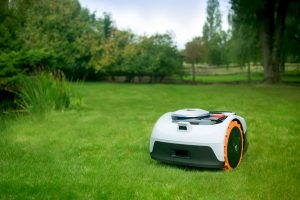
No wire, no antenna, no charging station, no app. After four mowers that each asked for some form of permanent outdoor installation, this one asks for almost nothing at all. Charge the battery indoors like any other cordless tool, carry the mower out, put it down, press a button. The genuine question was whether stripping away that much actually makes for a simpler robotic mower, or just a more limited one.
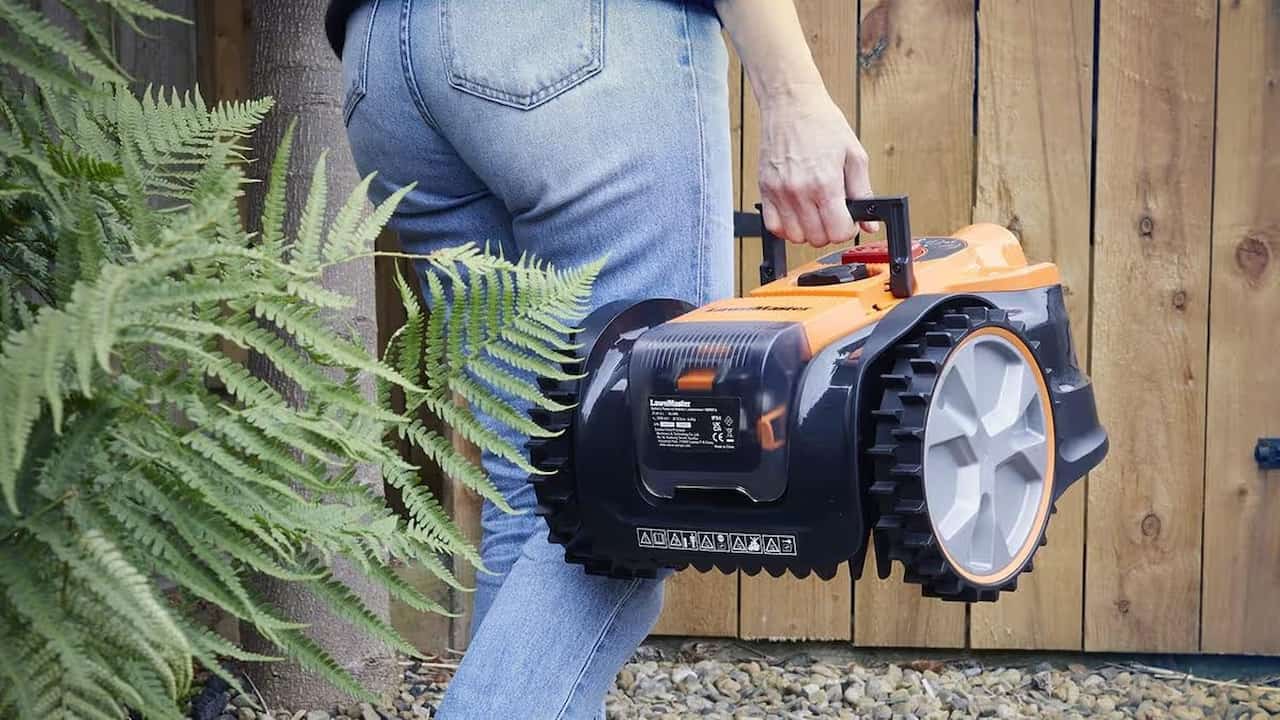
It covers up to 150m², handles slopes up to 35%, and weighs a genuinely light 6.6kg, by far the lightest mower in this whole series.
Overview and first impressions
Cutting height adjusts via a dial on top across five fixed positions, 20, 30, 40, 50 and 60mm, and three pivoting blades sit underneath a 16cm cutting deck. The 24V 4.0Ah battery charges in an hour on an ordinary household socket, the same MX 24V platform LawnMaster use across their wider cordless range, hedge trimmers and grass trimmers included, so the battery and charger genuinely earn their keep beyond just this one mower.
In the box: the mower itself, the battery, the charger, a printed manual, a physical safety key, and spare blades. That key matters more than it sounds, it’s a removable key just like the ones found on some cordless push mowers, and without it inserted the mower simply won’t start at all, even with a charged battery fitted, genuinely reassuring in a household with children around.
There’s no rain sensor and no automatic return to base, because there’s no base to return to. The mower runs until the battery’s spent or you bring it in yourself, whichever comes first. Lift and tilt sensors stop the blades the moment it’s picked up or tipped, confirmed with a genuine beep and an immediate stop the moment it happened. It’s also not compatible with a magnetic No-Go strip at all, even a generic aftermarket one, so off-limit areas simply aren’t an option here. It carries a 2 year guarantee.
Watch the weather yourself. Without a rain sensor or a charging station, nothing brings this mower in automatically if it starts raining. That job is genuinely yours.
Specifications and scores
How it performed in our tests
A full run took a little over three hours on a lawn well within its rated capacity, finishing with battery still in reserve and no patches missed across the whole area. The random pattern it uses, drive forward, turn at a boundary or obstacle, repeat, sounds basic on paper but covered everything thoroughly given enough running time.
Obstacle detection held up well in a deliberately awkward test: another robot mower left sitting in the middle of the lawn was picked up by the camera and sensors well before contact, with the OcuMow 16 turning away cleanly rather than nudging or bumping it.
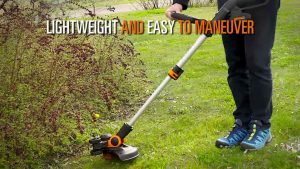
The spot cut function earned its place too, placed directly on a patch the main run had left a little long, it span outward from that point and tidied it up properly rather than needing a manual once-over with a trimmer. For the edges themselves, LawnMaster’s own grass trimmer can be bought bare, without its own battery, and run straight off the mower’s battery instead, a genuinely sensible touch that saves buying a second battery and charger just to tidy the strip the mower leaves behind. Clippings are mulched straight back into the lawn rather than collected, feeding the grass naturally provided it’s run regularly enough to keep them genuinely fine. Worth knowing too: this only works in daylight, the camera needs to see the lawn surface clearly, so an evening run after dusk simply isn’t an option.
Chipped bark and wood chip borders genuinely work as a boundary. They don’t need to be a wall or a kerb, just visually distinct and consistent enough for the camera to read confidently.
Setup and navigation
This is camera-only, no satellite, no wire, no app, navigation relies entirely on Optical Grass Recognition picking out the difference between grass and whatever borders it, paving, gravel, decking or a raised edge, plus two ultrasonic sensors catching anything taller than 6cm in its path. A flat border needs to be at least 35cm wide to register reliably; a raised edge needs to be at least 6cm tall. If your garden doesn’t already have something this clear-cut, proper lawn edging is genuinely worth sorting out before this mower will work reliably. Soft, undefined borders, overhanging plants, or any drop-off at the edge are all explicitly unsuitable, since the camera can read low-growing plants or weedy gravel as more lawn and try to mow straight into it.
Starting it up follows a fixed sequence: insert the charged battery and the safety key, press On/Start and wait for the battery light to turn green and a beep, since the camera needs a moment to initialise, then long-press Automow followed by Start. There’s no boundary to map and no zones to draw, the trade-off is that the border itself has to do the job a wire or a virtual map would otherwise do.
A pond on the lawn is usable but needs a proper safety margin, either a raised barrier or at least 75cm of paved or gravel border around it, since water damage from a fall isn’t covered under the guarantee.
Performance and limitations
What this does genuinely well is exactly what it promises: a properly simple, affordable route into robotic mowing with no wire to bury, no antenna to position, and no app to fight with. Stripping out the charging station has a real upside too, nothing valuable sits outside unattended between uses, a genuinely lower theft risk than every other mower in this series.
The honest cost of that simplicity is real ongoing effort rather than a one-off setup task. Without a rain sensor or a base to return to, watching the weather and physically bringing the mower in is a job that falls entirely on you, every single time. The roughly 20cm edge gap needs the same manual trimming any camera-guided mower in this category leaves behind, and a genuinely undefined or soft border simply won’t work at all, not just work less well.
None of that makes it a lesser robot mower so much as a different kind of commitment. Less to install once, more to remember every week after.
- Genuinely minimal setup, no wire or antenna
- Genuinely light at 6.6kg
- Lower theft risk, nothing left outside
- Battery shared across LawnMaster’s wider tool range
- No rain sensor, no automatic return
- Genuinely demands a hard, defined border
- No app, no remote monitoring at all
- Manual carrying out and bringing in every use
- Smaller lawns with a genuinely clear, hard border
- Anyone new to robotic mowing wanting a low-cost first step
- Households already on the LawnMaster MX 24V platform
- Soft, undefined or overhanging garden borders
- Anyone wanting hands-off, fully autonomous operation
- Lawns genuinely larger than 150m²
Final verdict
This earns its place as a genuine entry point into robotic mowing rather than a compromised version of something more expensive. The cut itself was thorough and reliable, obstacle detection held up properly, and the lack of installation infrastructure is a real, tangible saving in time and effort up front.
What it asks in return is honest, ongoing involvement rather than a one-time setup cost. Bringing it in before the rain, carrying it between charges, accepting that a soft border simply won’t work, these are recurring small jobs rather than problems solved once and forgotten.
For a smaller garden with a properly defined edge and an owner happy to stay a little more hands-on, this is a genuinely sensible, affordable way into the category.
A genuinely simple, affordable entry point into robotic mowing, light, easy to set up, and properly thorough on a lawn with a clear, hard border. Held back by the lack of a rain sensor or auto-return, and the need to carry it out and bring it in by hand every time.
Share on socials: