At a glance
This is the one I’d recommend to someone who’s outgrown hiring a pressure washer twice a year. The Hyundai HYW3100P2 sits in genuine all-rounder territory, powerful enough for proper jobs without tipping into the trade-only weight class, and it’s the first petrol machine I’ve used that felt like it was built for repeated home use rather than the occasional weekend blast.
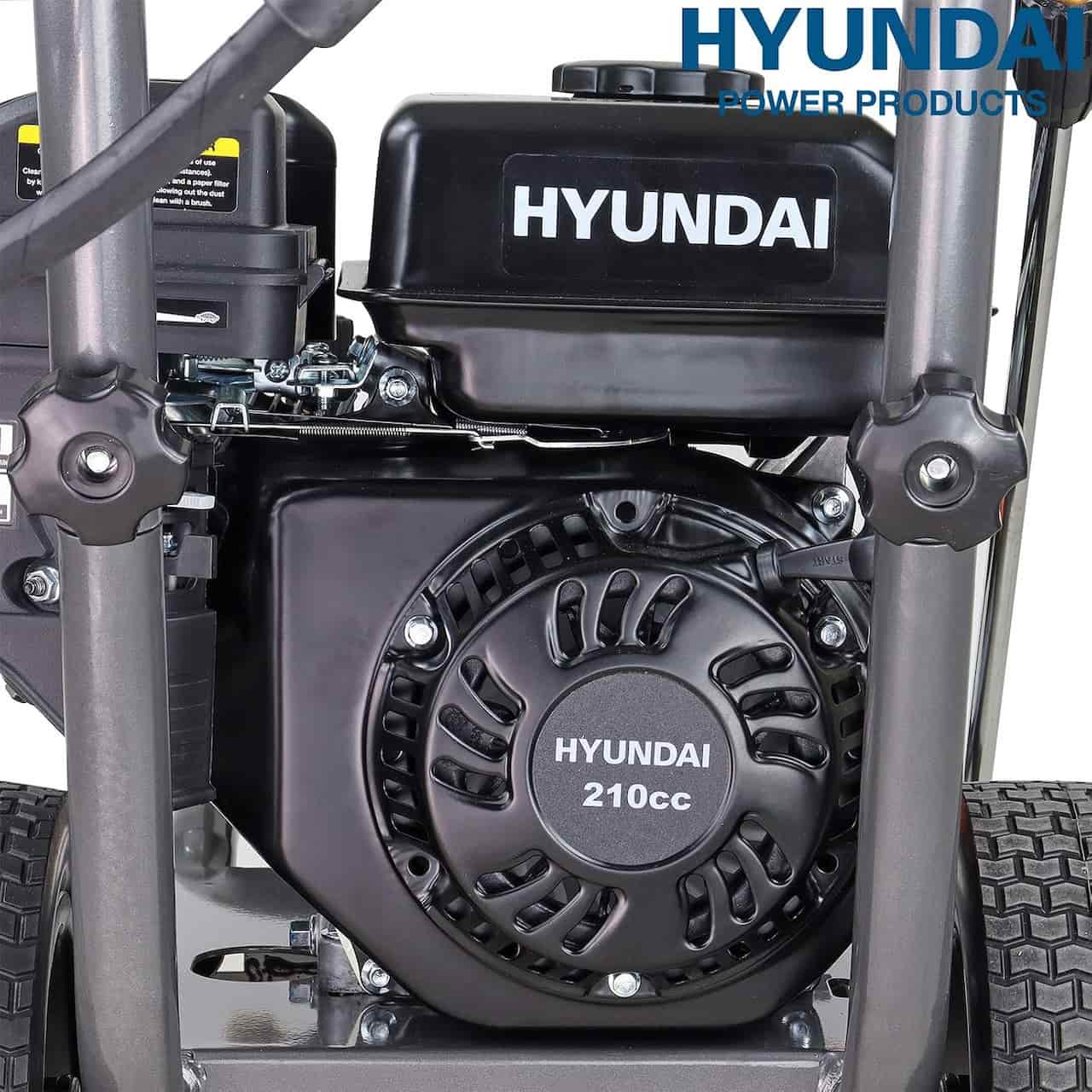
It runs a 212cc Hyundai engine, 5.25kW at its peak, putting out 3100psi, 213 bar, at a flow rate of 600 litres an hour. Net weight is 38kg. The question was whether that genuinely all-round positioning holds up once you’re actually using it on the jobs it’s pitched at.
Overview and first impressions
Assembly is the usual petrol-machine process: frame, wheels and handle all need fitting before the engine and pump are usable, no quick clip-together shortcuts here. Once it’s together, the tubular steel frame with anti-vibration feet feels properly stable, and the pneumatic tyres make a genuine difference moving it around the garden compared with the hard wheels some cheaper machines use, especially if there’s any real distance between where it’s stored and where you’re working.
It’ll run from either a mains cold water tap or by gravity feed from a butt or tank, with a maximum suction lift of 2 metres if you’re drawing from a barrel rather than a pressurised supply. A built-in unloader valve regulates the system’s temperature specifically to stop the pump overheating, a sensible safeguard given how much this gets asked to do on a proper job.
The trigger gun and lance have a built-in rest on the frame itself, and the four quick-release nozzles, 0°, 15°, 40° and a standard soap nozzle, clip into a dedicated storage compartment rather than rattling around loose. A separate Turbo Nozzle is included too, rated to cut cleaning time in half on heavy dirt and grime, and in practice that claim held up better than I expected on the toughest spots.
One thing worth knowing before you buy: the 3 year warranty Hyundai advertises isn’t automatic. It’s sold with a 1 year warranty as standard, and only extends to 3 years for domestic use if you register it with Hyundai within 30 days of purchase. Miss that window and you’re on the shorter cover. Commercial use is capped at 1 year regardless.
Check your water source can actually keep up. This pump wants to draw 10 litres a minute. A garden tap or a slow-filling butt that can’t supply that will leave you with less pressure than the spec sheet promises, not because the machine is underperforming, but because it isn’t getting fed fast enough.
Specifications and scores
How it performed in our tests
Decking was the surface I was most cautious with, and the 40° nozzle on a moderate setting cleaned it up without raising the grain, while the 0° tip handled a few stubborn dark patches that the wider angle wouldn’t touch on its own. Patio slabs took the rotary-feeling bite of the 15° nozzle well, lifting two seasons of grime in a single pass rather than the two or three I’d have expected from something smaller.
The car was where the Turbo Nozzle earned its keep, wheel arches and lower panels that usually need a proper scrub came clean with a single pass on the toughest setting, genuinely closer to halving the time as advertised rather than just a marketing line. The soap nozzle gave even, proper foam coverage rather than a thin, runny mess.
An old brick wall by the side return was the real stress test, years of green staining that I’d normally tackle with a stiff brush and patience. The 0° and 15° nozzles together brought it back close to bare brick in around twenty minutes, the kind of result that justifies the extra weight and the engine over anything smaller. Worth a word of caution on brick this old though: 213 bar held too close or too long in one spot can rake out soft, weathered mortar or contribute to spalling brickwork, so keep the lance moving and don’t linger.
Start with the widest nozzle angle and step down only if you need to. The 40° and 15° settings cover most jobs without any real risk to the surface. Save the 0° pin-point for the spots the wider angles genuinely can’t shift.
Engine and running costs
The 212cc engine starts with a recoil pull and a CDI ignition system, and settles into a steady run without needing full revs to deliver proper pressure, which the engine’s mid-range torque is specifically tuned for. It’s noticeably loud at full throttle, rated at 108 decibels measured at seven metres, so hearing protection is worth having for anything beyond a quick job, and it’s not one to run early on a weekend near neighbours.
It takes SAE30 oil with a 550ml capacity and runs on unleaded petrol from a 3.6 litre tank, enough for a proper session without needing to stop and refuel partway through most jobs. Like any 4-stroke engine, check the oil level before every use rather than assuming it’s topped up from new.
The Annovi Reverberi pump, with its ceramic pistons and brass head, is built to be serviced rather than replaced, and being a major brand means spare parts and support are genuinely easy to come by, a real advantage over smaller, niche pressure washer brands where sourcing a replacement part can be its own project.
Performance and limitations
What this does well is be genuinely versatile rather than specialised. Decking, patios, cars and brickwork all came up properly, and the combination of the Turbo Nozzle and the four standard nozzles meant I never felt like I was missing the right tool for the job in front of me.
The trade-offs are honest rather than hidden. At 38kg it’s genuinely heavy, manageable thanks to the pneumatic tyres but not something to casually lift, and the noise means early starts or built-up areas need some consideration. The warranty catch is worth repeating: register within 30 days or you’re on a single year of cover rather than three.
For someone only ever washing a car once or twice a year, this is more machine than the job needs, and the cost and weight will feel disproportionate to that use. For anything heavier or more frequent, that same capability stops being excessive and starts being the reason to buy it.
- Genuinely versatile across decking, patios, cars and brick
- Turbo Nozzle genuinely speeds up the toughest jobs
- Pneumatic tyres make moving it genuinely easier
- Big-brand parts and support availability
- Genuinely heavy at 38kg
- Loud, 108dB rated at 7 metres
- Full warranty needs registering within 30 days
- Overkill for only occasional light car washing
- Regular, varied cleaning across decking, patios and cars
- Anyone who’s outgrown hiring a pressure washer
- Gardens with real distance to cover between jobs
- Anyone only washing a car once or twice a year
- Anyone needing to lift it rather than wheel it
- Anyone in earshot of close neighbours early on weekends
Final verdict
This earns the all-rounder label honestly. Decking, patios, a proper car wash and an old brick wall all came up properly, and the Turbo Nozzle’s time-saving claim held up rather than being marketing fluff. For anyone with genuinely regular or varied cleaning needs, it’s a strong, dependable choice.
It’s not the machine for someone who only wants to wash a car a couple of times a year, the weight and the noise are real considerations that don’t disappear just because the results are good. And don’t skip registering it within 30 days, that single step is the difference between one year of cover and three.
Match the job to the machine here rather than buying on capability alone, and this is genuinely one of the better all-round petrol washers I’ve used.
A genuinely versatile petrol pressure washer that handles decking, patios, cars and brickwork with real confidence. Held back only by its weight, its noise, and a warranty that needs registering promptly to get full value from.
Share on socials: