At a glance
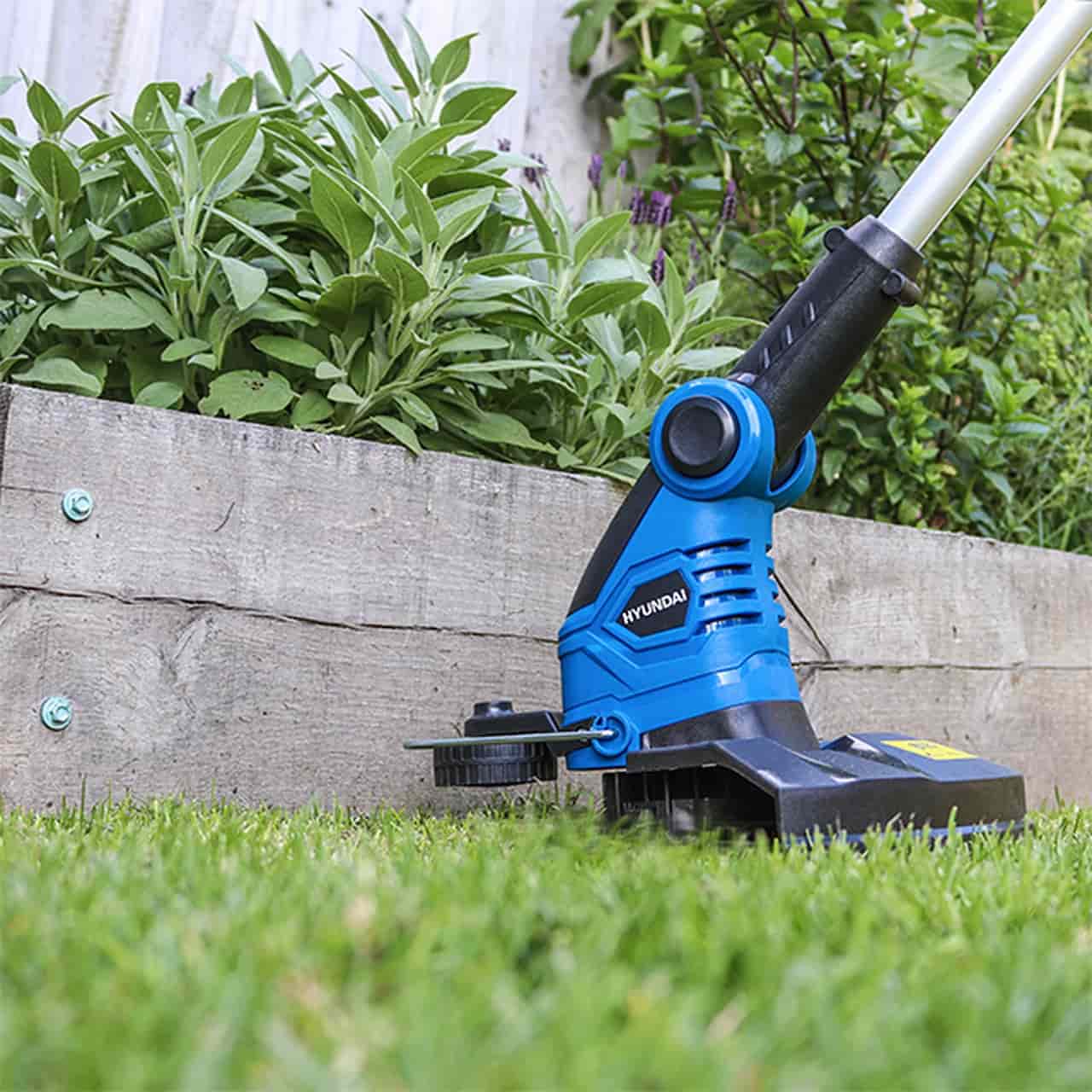
I’d been putting off sorting the bottom hedge line for most of the summer, the bit where the lawn meets the path and turns into a scruffy mess if you leave it more than a fortnight. My old strimmer had finally given up the line feed for good, so when the Hyundai HYTR600E arrived I plugged it in straight away rather than letting it sit in the shed the way I usually do with new things.
It’s a 600 watt electric trimmer that twists round to become an edger as well, telescopic handle, no petrol or batteries to think about, which suited exactly what that bit of lawn needed.
Overview and first impressions
Out of the box you get the main unit, the lawn edging wheel, three screws, a guard, and a cable tidy for storage. That’s the lot, and it matches what the manual itself lists, no surprises there. The cable runs to a proper UK plug rather than a bare end, which sounds like a small thing until you’ve had to fit one yourself on something cheaper.
It’s licensed from a Korean name but made in China, the same pattern I’ve come to expect from this brand by now. Doesn’t change how it runs, just worth knowing if you’re picturing the wrong factory.
Check the lawn before you start. Sprinkler heads, washing line bases, hidden cables, anything fixed in the ground gets missed at a glance and the manual’s specific that you should work round these rather than over them. Keep anyone else at least 15 metres clear while it’s running. If you’ve got a pacemaker or any other medical implant, the manual recommends a word with your doctor first, the motor throws off an electromagnetic field while it’s running. A residual current device on the circuit, rated no higher than 30mA, is advisable too if you’re working anywhere damp.
Specifications and scores
This is the one that had me properly stumped. I weighed mine out of curiosity after reading the spec sheet, and depending on which bit of Hyundai’s own paperwork I went back to, I got a different answer every time. The manual’s own technical data table says 2.5 kilograms. The same company’s product page says 3 kilograms net and 4.05 kilograms gross in the very same table. The official spec sheet that came bundled with the listing says 3.5. Four numbers, one machine, and not one of them agrees with another.
The cutting width has its own version of the same problem. The manual’s opening section states it plainly as 300 millimetres. The spec sheet backs that up. But the same company’s own product page lists 290, and that’s the figure that’s ended up copied across nearly every shop selling it. I measured the line at full stretch myself and it sat closer to the manual’s number, for what that’s worth.
How it performed in our tests
Line feed is fully automatic, nothing to press, a built in cutter trims it to length the moment you switch on. The cutting head needs to come to a complete stop before you switch on again, which the manual’s specific about, and I’ve got into the habit of just waiting a beat rather than rushing it.
The hedge line came up clean in one pass, the cable reaching the whole stretch without me needing the extension lead I’d half expected to dig out. Round the base of the apple tree where the mower never quite gets close enough, the telescopic handle let me get right in without crouching, which has been the actual win of owning this thing over what I had before. It’s not built for anything with a proper stem, mind, this is grass and light weeds territory, not brambles.
Don’t let the line snap right down before topping it up. There’s a small manual override button for exactly that, press it and pull an extra centimetre out at a time rather than waiting until you’re cutting with almost nothing left.
Assembly and the edging function
Seven steps, none of them difficult, guard on first with the single screw, then the D handle adjusted to a comfortable angle, then the height set on the telescopic pole, then the plant guard, then the edging wheel with its two screws, then the cable plugged in, then a small loop of cable hooked over the handle to take the strain off the plug. Took me about ten minutes including reading the instructions properly, which I don’t always bother doing.
Converting to an edger is a button on each side, squeezed together, then a slide switch that rotates the head a full half turn. The plant guard has to be up for edging and down for trimming, easy to forget the first few times and end up with the guard catching where it shouldn’t.
Performance and limitations
It’s a domestic tool through and through, grass and light weeds, not hedges, not anything with a proper stem, and the manual’s explicit that fitting anything metal isn’t permitted. Ear protection is worth taking seriously, the sound pressure at the operator’s ear comes in at 82 decibels and the measured sound power at 94.76, with a guaranteed figure of 96 once you allow for the usual production tolerance, higher than I’d expected from something this light. Long sessions have left my hands with that faint buzzy feeling afterwards, the kind the manual links to white finger and carpal tunnel risk from prolonged vibration rather than anything wrong with the unit, and it’s the same reason I keep a pair of gloves with it now rather than going bare handed.
Maintenance is about as light as it gets, wipe it down, keep the vents clear, swap the line or the whole spool when it runs out using the part number printed in the back of the manual, 1317019 if you ever need to order one. The troubleshooting table itself only runs to six entries, the first being a blown fuse in the plug if it won’t start at all, and most of the rest end in contact your service dealer rather than anything you’d fix yourself, which says this is built to be replaced under warranty rather than tinkered with. The declaration of conformity at the back is signed off by Genpower’s own managing director rather than anyone at Hyundai itself, which is a fair reflection of how the whole supply chain actually works behind the badge on the box.
- Telescopic handle reaches awkward spots without crouching
- Genuinely long 10 metre cable, no extension needed on a normal plot
- Fully automatic line feed, never bumped, never pressed
- Edging conversion is quick once you’ve learned the order
- Four different weights printed across Hyundai’s own paperwork
- Cutting width and warranty length both vary by document
- Louder than its weight suggests, ear defenders aren’t optional
- Most faults route straight to contact your service dealer
Final verdict
For the bit of lawn a mower can’t quite reach, this has done exactly what I needed it to. The telescopic handle and the edger conversion are the two things that actually changed how I work round the plot, not just features sitting on the box unused.
The paperwork is where it loses marks, and not by a small margin either. A company that can print four different weights for the same product across its own manual, its own product page and its own spec sheet hasn’t been careful with the one thing a buyer actually relies on before they part with any money. None of that changes how it cuts, but it does mean treating every number on the box as a rough guide rather than a fact.
If your garden’s the right size for it, small to medium with grass and light weeds rather than anything tougher, this earns its place. Just don’t go to the wall to settle an argument about exactly how much it weighs.
A capable, good value 2-in-1 for a small to medium garden, let down by paperwork that can’t agree with itself on weight, width or warranty. The telescopic handle and edger conversion make it worth the inconsistency.
Share on socials: