At a glance
Every other portable washer I’ve tried still asks you to think about water beforehand, a bucket, a tap, something to draw from when you get there. The Bosch Fontus Gen II carries its own with it. Fill the 15 litre tank before you leave the house and you genuinely don’t need to find anything once you arrive.
It runs at a modest 20 bar across three pressure modes, weighs 9.8kg with the tank empty, and that’s before you’ve added any water at all. The question was whether carrying your own supply is worth the extra weight, or whether you’d be better off just finding a tap like everything else does.
Overview and first impressions
Setup is straightforward: charge the battery fully first, connect the hose and water filter, fill the tank, and you’re ready. There’s a telescopic handle and wheels for moving it around once it’s loaded, which you’ll appreciate, because a full 15 litre tank adds something like 15kg on top of the empty weight, tipping the whole thing past 25kg once it’s loaded and ready to go.
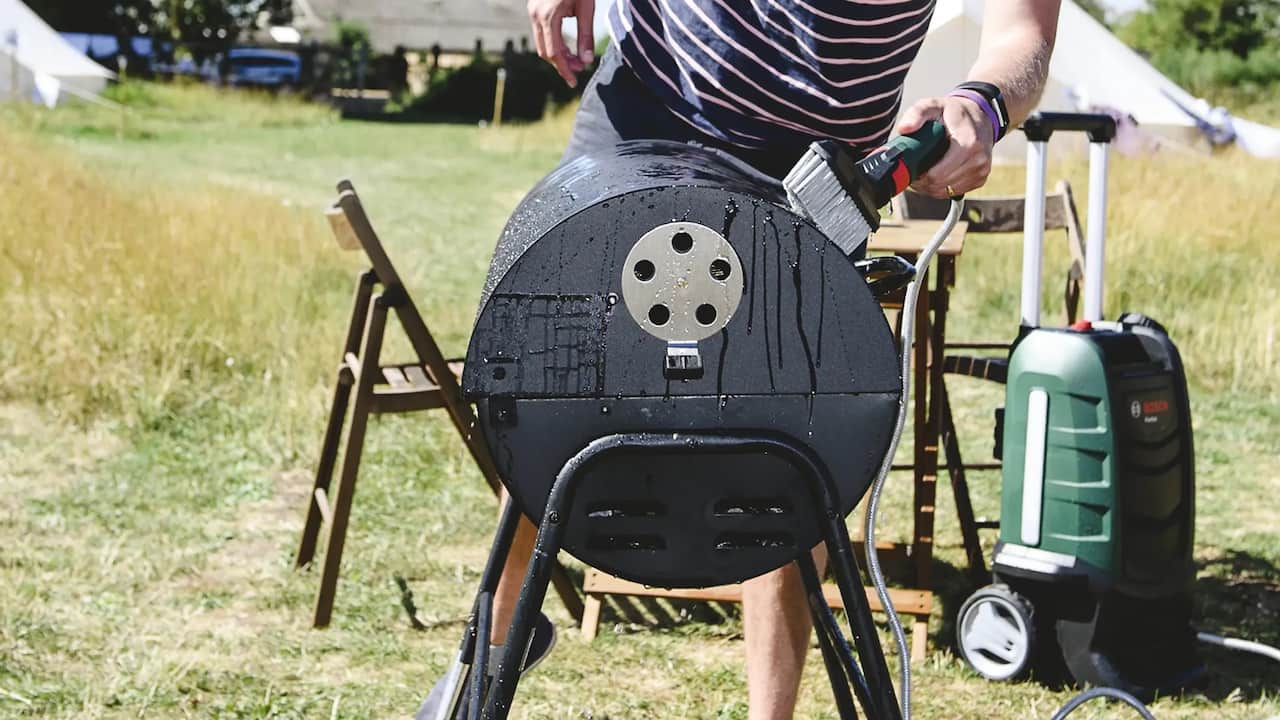
The spray gun has four patterns built in, a pencil jet, a narrow 15° fan, a wider 50° fan and a gentle shower setting, and the SmartBrush clips straight onto the front of it so you can spray and scrub in one motion rather than swapping tools mid-job. Everything, hose, gun, brush and battery, has somewhere to clip onto the body for storage, which is more thoughtfully done than I expected.
One genuine safety habit worth adopting: disconnect the battery before you move it anywhere, even just into the boot. If the unit powers on without the hose properly seated, water discharges straight out of the bottom connector, and one tester had several litres end up in the back of a van after something fell against the unit in transit.
Release the pressure before disconnecting the hose. Switch it off, give the trigger a squeeze to bleed off what’s left in the line, then disconnect. Skip this and the connectors can be genuinely difficult to undo.
Specifications and scores
How it performed in our tests
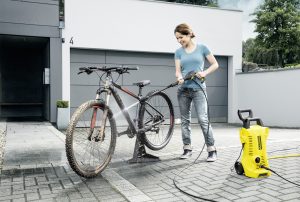
The bike got the most genuine use out of this. Mud worked into the frame and chain after a wet ride came off cleanly on the narrow fan setting, and being able to rinse muddy shoes straight afterwards without trailing mess through the house has been a small but real bonus I didn’t expect to value as much as I do.
The car managed a full rinse from one tank, though general road grime and light dirt are realistically the limit, this isn’t shifting anything properly baked on. The wide 50° fan pattern was honestly weak unless held close to the surface, while the narrow fan covered nearly everything else I tried it on.
The pencil jet earned its place on a stubborn patch of bird mess on a windowsill, and a wider pass over the rest of the glass with the narrow fan left it streak-free without needing a separate window cleaner. The SmartBrush made short work of garden furniture, scrubbing and rinsing in the same pass rather than doing each separately, and a small section of decking by the back step came up well on the narrow fan, though I’d think twice about relying on a single 15 litre tank for anything bigger than a step or two.
Stick to the narrow fan for almost everything. It covers nearly every job, save the pencil jet for genuinely stubborn spots and don’t bother with the wide fan unless you’re already holding the gun right up against the surface.
Battery system and runtime
This runs on Bosch’s 18V Power For All Alliance platform, which is shared not just across Bosch’s own range but with other manufacturers’ tools too, so existing batteries from that ecosystem will work here without buying a dedicated one. The included 2.5Ah battery charges in roughly two hours, and Bosch’s own claimed runtime is up to 60 minutes.
In practice, the tank runs out long before the battery does on anything beyond a single car or a couple of bikes, so the battery’s real limit rarely comes into play unless you’re refilling the tank repeatedly in one session.
Performance and limitations
What this does that nothing else in its class manages is remove the water problem entirely. No hunting for a tap, no carrying a bucket separately, fill it once at home and everything else is genuinely self-contained. For bikes, shoes, garden furniture and a general car rinse, it does the job well and the SmartBrush is a properly useful addition rather than a gimmick.
The trade-offs are real, though. 20 bar is honestly modest, closer to a budget mains washer than a proper one, and build quality, the plastic body specifically, doesn’t feel like it would shrug off a hard knock. The weight is also a genuine consideration once the tank is filled, this isn’t something you casually lift in and out of a car boot fully loaded.
The accidental-discharge risk is worth taking seriously rather than treating as a minor footnote. Get into the habit of disconnecting the battery before moving it, and it stops being a concern at all.
- Built-in tank means no water source needed at all
- SmartBrush genuinely useful, not a gimmick
- Shares a battery with the wider Power For All platform
- Thoughtful onboard storage for every accessory
- Heavy once the tank is filled
- 20 bar is genuinely modest pressure
- Plastic build doesn’t feel like it’d take a hard knock
- Can discharge water if powered on with the hose loose
- Anyone without easy access to a tap or bucket of water
- Bikes, shoes, garden furniture and a routine car rinse
- Existing Bosch or Power For All Alliance battery owners
- Anyone with a tap already close to the job
- Anyone wanting genuine power rather than convenience
- Anyone who’ll be carrying it loaded regularly
Final verdict
The Bosch Fontus Gen II solves a genuinely specific problem well: cleaning something when there’s no water source anywhere nearby. The bike, the shoes, the garden furniture and a routine car rinse have all benefited from never needing to think about where the water’s coming from.
It’s not pretending to be powerful, and you shouldn’t buy it expecting that. 20 bar does light and moderate jobs properly and nothing more, the weight once loaded is real, and the build quality is the area I’d most like to see improved. None of that changes what it’s actually good at.
If a tap or a bucket is always within reach for you anyway, the self-contained tank stops being an advantage and just becomes extra weight to carry. If it genuinely isn’t, this earns its place.
A genuinely useful solution to a specific problem, cleaning where there’s no water nearby, let down by modest pressure and a build that feels less robust than the rest of the design suggests. Worth it for the right need, not for raw power.
Share on socials: