At a glance
Container vegetable growing has expanded enormously in UK gardens over the past decade, driven by the growth in urban gardening, smaller plot sizes and a general interest in growing food wherever space exists – patios, balconies, doorsteps and windowsills included. The good news is that a significant number of vegetables genuinely thrive in containers when given the right conditions, producing harvests that compare well with open-ground growing. The challenge is knowing which vegetables suit container life and which do not, and understanding the additional care that containers require compared to growing in the ground.
The biggest difference between container and ground growing is that containers depend entirely on you for water and nutrients. There is no soil moisture reserve to fall back on in dry weather, no slow release of nutrients from surrounding soil, and no tolerance for inconsistency. Get those two factors right and container vegetable growing is highly rewarding. Get them wrong and even the most suitable crops will disappoint.
What makes a good container vegetable
The vegetables that work best in containers share a few common characteristics. They are compact or can be trained to remain compact, which means they do not exhaust their root space too quickly. They produce a meaningful harvest relative to the space and compost they occupy – a crop that takes up a large container and produces very little is a poor use of limited space. And they respond well to the enriched compost environment of a container, where nutrient availability is higher than in typical garden soil.
Crops that do not suit containers well are typically those with extensive root systems that need deep or wide soil to develop – parsnips, main crop potatoes, sweetcorn and sprawling squash are the most common examples. These crops can technically be grown in containers but the containers required are so large and the yields so reduced that the exercise rarely justifies the effort. The ten crops below represent the best-performing, most practical choices for UK container growing across a range of sizes.
Top 10 vegetables for containers
Tomatoes are the most popular container vegetable in the UK by some margin, and for good reason – a single well-grown cordon or bush tomato plant in a 30-litre pot can produce several kilos of fruit across a summer season. Bush varieties like Tumbling Tom or Maskotka are well suited to hanging baskets and smaller containers; cordon varieties like Gardener’s Delight or Sungold need a larger pot and a cane for support but reward with heavier yields. Chillies are the other standout performer – they thrive in containers, take up minimal space, produce abundantly through summer and autumn, and can even be overwintered on a warm windowsill and grown for a second season.
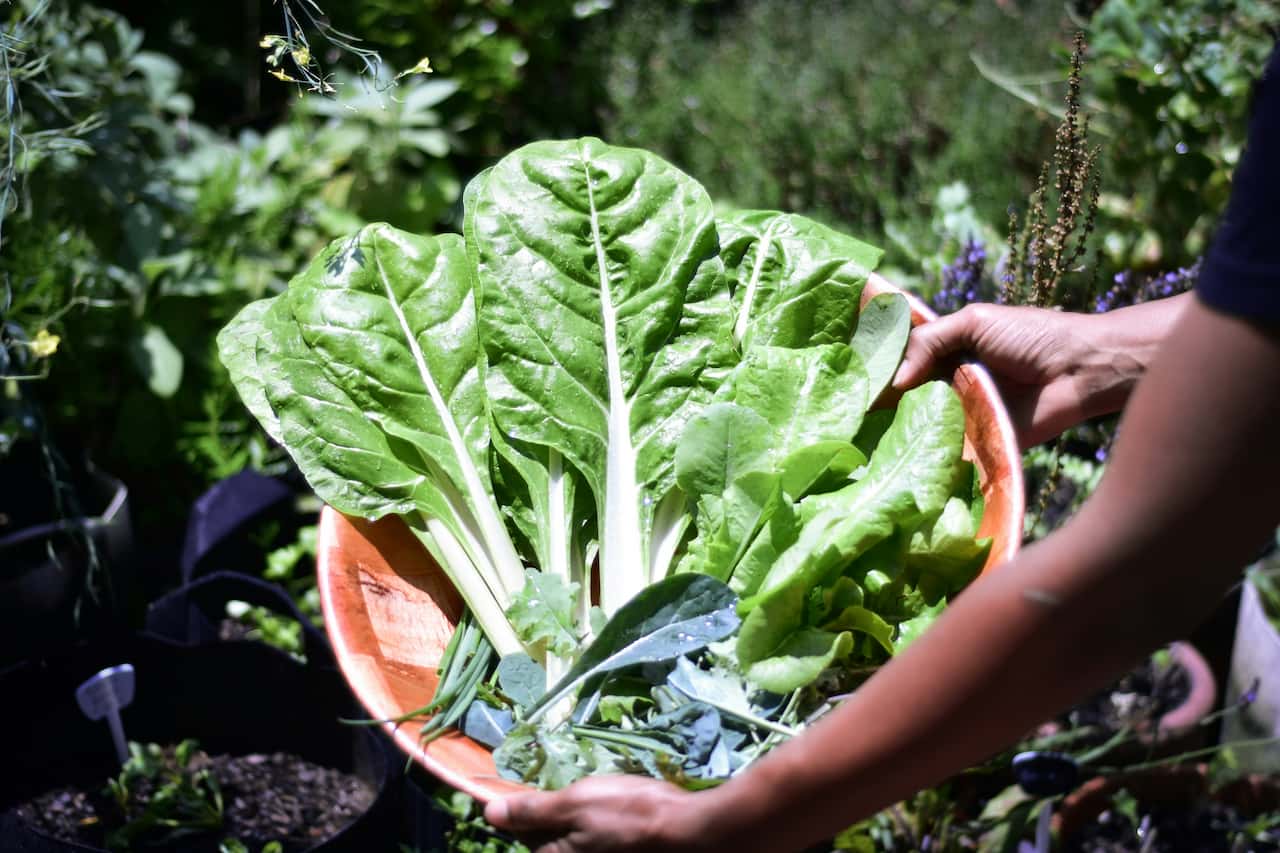
Salad leaves and radishes are the ideal starting crops for anyone new to container growing. Both are fast, require minimal space and care, and give a quick sense of reward. Salad leaves can be cut-and-come-again across a long season and are productive from early spring to late autumn in succession sowings. Spring onions are similarly low-effort and suit any container with at least 15cm depth. Garlic is worth including for its ease – cloves planted in autumn need almost no attention and are ready to harvest the following summer. Early potatoes in grow bags or deep containers produce a satisfying harvest and suit the container environment particularly well, as harvesting simply involves tipping out the bag rather than digging.
Choosing the right container
The material of the container matters more than many beginners realise. Terracotta is porous and dries out faster than plastic, which means more frequent watering in summer but better air circulation around the roots. Plastic retains moisture longer and is lighter – useful on balconies where weight is a consideration. Fabric grow bags are excellent for potatoes and any crop that benefits from air pruning of roots, which prevents the roots circling the pot and improves overall root health. Whatever material is used, drainage is non-negotiable – containers without adequate drainage holes will waterlog and kill roots within days in wet weather.
Size is the most common mistake in container selection. The instinct to use a smaller container to save space almost always backfires – an undersized container dries out faster, limits root development, and produces a fraction of the yield a correctly sized container would deliver. When in doubt, go larger. A 30-litre container for tomatoes will consistently outperform a 10-litre container of the same variety, and the additional watering required for a larger container is minimal.
Watering, feeding and care
The most rewarding aspect of container growing is that it is genuinely accessible regardless of space – a south-facing doorstep with three large pots can produce a meaningful amount of fresh food across a summer season. Once the principles of watering and feeding are understood, the crops largely look after themselves and the main task is simply keeping up with the harvest.
Consistent watering is the single most important factor in container vegetable success, and the one most commonly mismanaged. Containers in full sun in summer can need watering once or even twice daily during hot dry spells – the soil should never be allowed to dry out completely, as stress from moisture fluctuation causes blossom end rot in tomatoes, split fruits, and premature bolting in salad crops. A simple test is to push a finger 2-3cm into the compost – if it feels dry at that depth, water thoroughly until water runs freely from the drainage holes.
Feeding is equally important and more frequently overlooked. Container compost exhausts its nutrients within four to six weeks of planting as the plant grows and each watering leaches nutrients from the limited soil volume. After the first six weeks, a weekly liquid feed with a balanced vegetable fertiliser is essential for continued productivity. For fruiting crops – tomatoes, chillies, courgettes – switch to a high-potash tomato feed once the first flowers appear to encourage fruit set over leafy growth.
Position matters more than many container growers account for. Most vegetables need a minimum of six hours of direct sunlight to produce well – tomatoes, chillies, courgettes and beans all need full sun for the best yields. Salad leaves and radishes tolerate partial shade and are the better choice for a north-facing space or a spot that receives only morning sun. Placing containers against a south-facing wall provides both maximum light and reflected warmth which extends the growing season and is particularly valuable for heat-loving crops like tomatoes and chillies in the UK’s variable climate.
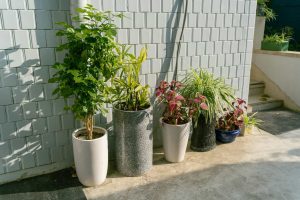
Group containers together to reduce watering frequency. Containers grouped closely together create a microclimate that reduces evaporation from both the compost surface and the surrounding area. A cluster of pots on a patio will dry out noticeably more slowly than the same pots spread out individually. This is particularly useful on a south-facing patio or balcony where individual containers can dry out very rapidly in summer heat.
Common mistakes to avoid
Share on socials: