At a glance
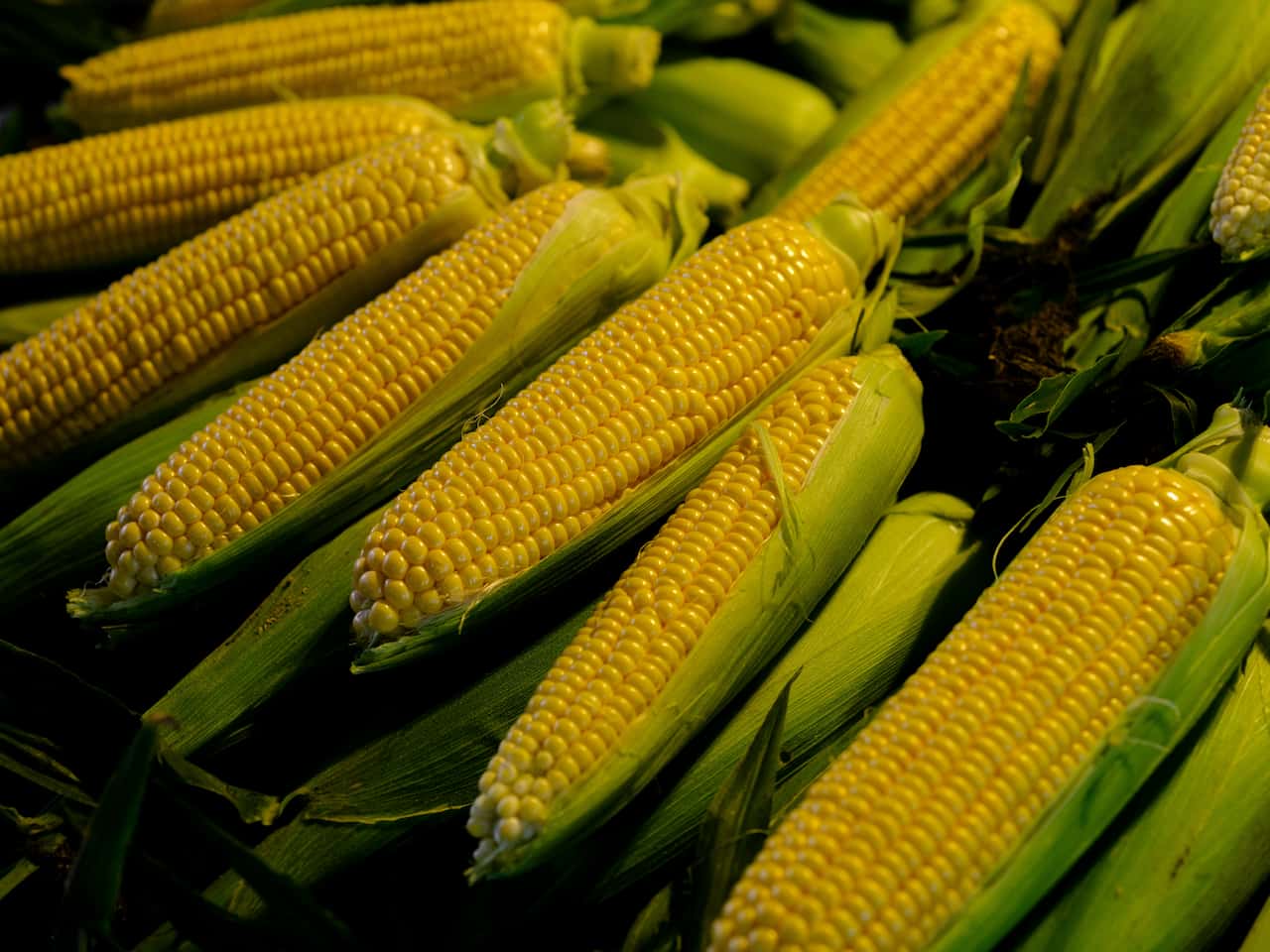
Freshly picked sweetcorn eaten within an hour of harvest is one of those vegetable experiences that stops people in their tracks. The sugar content of a sweetcorn cob begins converting to starch the moment it is picked – which is why even the best supermarket sweetcorn cannot compare to something collected from ten metres away and dropped straight into boiling water. The difference is not subtle. It is the kind of difference that makes growing your own feel genuinely worthwhile rather than merely satisfying in principle.
Sweetcorn is entirely achievable in a UK garden, but it needs full sun, warm soil, a block planting approach that most beginners do not know about, and early UK-adapted varieties rather than the American and continental cultivars bred for longer, hotter summers. Getting these fundamentals right is what separates a reliable harvest from a disappointing one. A poor summer will always limit what is possible, but the right variety grown correctly gives you the best possible chance across the full range of UK conditions from southern England to northern Scotland. The rest of the care – watering, feeding and earthing up – follows naturally once the position, planting layout and variety are correct.
Best Varieties for the UK Climate
Variety choice is the most important decision in UK sweetcorn growing. American and many continental European varieties are bred for longer, warmer seasons than most of the UK reliably provides – they mature too late in a typical British summer and the cobs fail to fill fully before autumn cold sets in. UK-specific and early-maturing varieties are essential. The difference between a variety bred for UK conditions and one selected without that criterion is often the difference between a usable harvest and a disappointing season regardless of how well everything else is managed. Swift F1 and Earlibird F1 are the two most reliably recommended for all UK regions including northern England and Scotland, where the season is shortest and the stakes of variety choice are highest.
Do not mix supersweet and standard varieties in the same planting. If a supersweet variety is pollinated by a standard variety – or vice versa – the resulting cobs will be starchy rather than sweet. This genetic interaction ruins both crops. Keep varieties at least ten metres apart, or time sowings so they tassel at different periods if you want to grow more than one type in the same season.
Sowing and Planting Out
Sweetcorn must be started indoors in the UK – the season is too short to direct sow outdoors and expect ripe cobs before the first autumn frosts. Sow in April for most of the UK, or early May in Scotland and northern England where the growing season is shorter. Use deep 9cm pots rather than shallow trays – sweetcorn develops a deep tap root quickly and resents being pot-bound before it is planted out.
Block Planting and Pollination
This is the single most important thing to understand about growing sweetcorn and the piece of information most gardening guides bury or omit entirely. Sweetcorn is wind-pollinated. The tassel at the top of each plant produces pollen that must land on the silks emerging from the developing cobs lower down. If you plant sweetcorn in a single row, the wind carries pollen away from the plants rather than across them. The result is poorly filled cobs with many missing kernels where pollination failed – a common disappointment for first-time growers who do not know why it happened, and who often blame variety choice or soil when the cause is layout. The fix costs nothing: simply arrange the same plants in a square block rather than a line.
Plant in a block of at least 4 plants x 4 plants (16 plants minimum). In a block, wind blows pollen across the group and every plant pollinates its neighbours. Even a 3×3 block of 9 plants gives dramatically better results than a single row of 9. This is non-negotiable for a decent harvest. Sweetcorn grown in blocks is a natural companion to squash and courgettes in the traditional “three sisters” approach – the large squash leaves shade the ground between plants, suppressing weeds and retaining moisture throughout the growing season.
Never plant sweetcorn in a single row. A row of ten sweetcorn plants will produce poorly filled cobs because wind carries pollen along and away from the silks rather than across them. A 2×5 block from the same ten plants produces dramatically better results. If space forces a row, hand-pollinate by snapping off a tassel when fully open and brushing it directly across the silks on each plant every day during tasselling.
Watering, Feeding and Earthing Up
Sweetcorn is a hungry, thirsty plant that grows rapidly in warm conditions. It needs consistent watering throughout the growing season, particularly once the silks appear and cobs are developing. Drought stress at this point produces poor kernel fill and stunted cobs – the developing kernels abort rather than fill when the plant cannot access sufficient water, and no amount of catch-up watering once the damage is done will restore them. In a hot UK July, a block of sixteen sweetcorn plants can consume a surprising volume of water – check the soil around the base of plants daily once cobs are swelling and water deeply rather than lightly.
Earth up the base of each plant when it reaches about 60cm tall – draw soil up around the stem base to a depth of 10-15cm. This encourages brace roots to develop from the lower stem nodes, anchoring the plant against wind rock. Sweetcorn plants in exposed UK gardens are vulnerable to being blown over in summer storms, and a plant that has been knocked horizontal rarely recovers fully. Earthing up provides significant additional stability and is particularly important on lighter soils. Feed with a high-nitrogen fertiliser when plants are 30-40cm tall to drive strong leafy growth, then switch to a balanced feed once the tassels appear – excessive nitrogen after tasselling promotes leaf growth at the expense of cob development.
Common Problems
How to Tell When Cobs Are Ready
Getting the harvest timing right is where most first-time sweetcorn growers go wrong – either picking too early when the kernels are watery and underdeveloped, or too late when the sugars have already converted to starch and the fresh flavour is lost. The sugar-to-starch conversion that happens within hours of harvest is well known, but the slower conversion that happens on the plant as a cob over-ripens is less understood by beginners. Both go in the wrong direction once the optimal window is passed, and the window itself – typically only five to seven days per cob in a UK summer – is shorter than most people expect.
The reliable indicators of readiness are: the silks have turned completely brown and dry, the cob feels firm and full when squeezed gently through the outer leaves, and when you peel back a section of husk and pierce a kernel with a fingernail, a milky white liquid squirts out. Clear liquid means too early. No liquid and a starchy paste means too late. Milky white liquid is the exact moment to harvest. Pick by snapping the cob downward with a sharp twist. Cook immediately – the sugar-to-starch conversion begins the moment the cob leaves the plant. If you cannot cook within an hour, refrigerate immediately to slow the conversion and preserve as much of the flavour as possible.
Share on socials: