At a glance
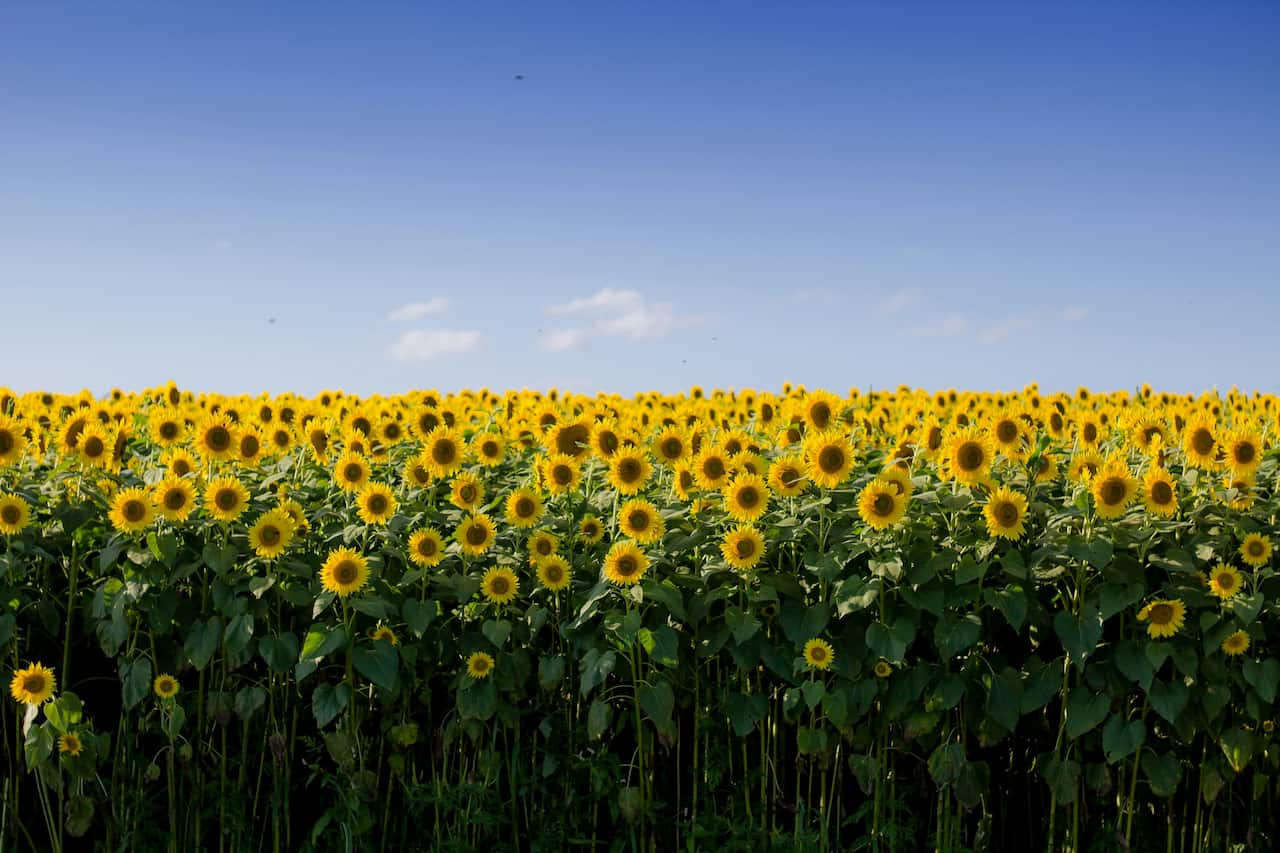
Sunflowers are one of the most rewarding plants you can grow in a UK garden. They are fast-growing, largely trouble-free and produce blooms from July through to September that transform any garden from ordinary to striking. Whether you are growing a single giant variety against a fence, planting a cut flower patch or growing compact varieties in containers on a sunny patio, the basic principles are the same – and they are simpler than most people expect.
The UK climate suits sunflowers well. A long warm summer is not required – what sunflowers need is a frost-free period of roughly 70 to 90 days from sowing to flower, which the British growing season reliably provides from a May outdoor sowing. If you are growing sunflowers alongside vegetables, they make useful companions in a raised garden bed – their height provides shelter for lower-growing crops and their roots do not compete aggressively below ground.
Why grow sunflowers in the UK
Beyond the visual impact, sunflowers earn their place in a UK garden for several practical reasons. They are exceptionally good for pollinators – bees and hoverflies work sunflower heads heavily through August, which benefits every other flowering plant nearby. If you are trying to attract bees to your garden, a row of sunflowers is one of the most effective things you can plant. The seeds are also valuable wildlife food in autumn and winter – leaving seed heads standing rather than deadheading them provides a reliable food source for finches and other seed-eating birds through the colder months.
For families with children, sunflowers are a near-perfect growing project. Seeds are large and easy to handle, germination is fast and reliable, and the visual progress from seedling to towering plant is dramatic enough to hold a child’s attention through the season. Sunflower growing competitions – measuring height, counting petals, timing first bloom – are a genuine gateway to a lifelong interest in gardening.
Best varieties to grow
For most UK gardens, a mix of a tall variety for impact and a compact variety for containers gives the best of both. Pollen-free varieties like Sunrich Lemon are worth considering if you are growing primarily for cut flowers – they last longer in a vase and do not shed pollen onto surfaces.
When and how to sow
Sunflowers are frost-tender and should not go outside until all risk of frost has passed – typically late May in most of the UK. The two main approaches are indoor sowing in April or direct outdoor sowing in May. Indoor sowing gives a head start and is particularly useful in northern England and Scotland where the growing season is shorter. Sow one seed per 9cm pot filled with peat-free multipurpose compost, pushing the seed approximately 2cm deep. Germination typically takes 7-14 days at 18-20°C. Avoid sowing too early – sunflowers grow very quickly and a plant sown in March will be large and root-bound long before it is safe to plant outside. Late April is the sweet spot for most of the UK.
Direct outdoor sowing in May is simpler and often produces equally good results. Sow seeds 2cm deep where they are to grow, thinning to the strongest seedling once they reach 10cm tall. Direct-sown plants tend to establish quickly once soil temperatures rise and rarely suffer the root disturbance that can check transplanted seedlings.
Sow in succession for a longer season. A single sowing will give you several weeks of flowers. Sowing in three batches – late April indoors, mid-May outdoors and early June outdoors – extends the flowering period from July right through to September, keeping your garden colourful for much longer.
Soil, position and planting out
Sunflowers need two things above all else: full sun and well-drained soil. A south or west-facing position with at least six hours of direct sun daily will produce the strongest plants and largest heads. They will tolerate most soil types but perform best in a reasonably fertile, free-draining soil. If your soil is heavy clay, incorporating grit and organic matter before planting will improve drainage significantly.
When planting out indoor-sown seedlings, harden them off over 10-14 days before transplanting. Plant at the same depth as they were growing in the pot. Spacing depends on variety: giant varieties need 60-90cm between plants, compact varieties can be grown at 30-45cm. For container growing, choose the largest pot you can accommodate – a 40-50cm container with good quality peat-free compost and reliable drainage will produce excellent results with Teddy Bear or Pacino varieties.
Watering, feeding and staking
Young sunflower seedlings need consistent moisture while establishing, but once plants reach 30cm or so they become considerably more drought-tolerant than most people expect. In a typical UK summer, established garden-grown sunflowers often need no supplementary watering at all. Container-grown plants are the exception – they need watering daily in warm dry weather as pots dry out much faster than open ground.
Feeding is not essential but does produce noticeably better results. A balanced granular fertiliser worked into the soil at planting, followed by a liquid high-potash feed once flower buds appear, produces larger heads and stronger stems. Avoid high-nitrogen feeds once the plant is established – too much nitrogen promotes leafy growth at the expense of flowers.
Staking is necessary for tall varieties in exposed positions. A single bamboo cane pushed firmly into the ground close to the stem, with the plant tied loosely using soft twine at two or three points up the stem, is all that is needed. In a sheltered garden or against a fence or wall, staking is often unnecessary even for plants reaching 2m or more.
Do not stake too early or too tightly. Sunflowers grown without early staking develop stronger, thicker stems through the natural movement caused by wind. Stake only once the plant shows signs of leaning, and always tie loosely with soft twine. A stem tied too tightly to a cane will be damaged as it thickens.
Common problems
Slugs are the most serious threat to young seedlings in May and early June. Starting seeds indoors removes most of the risk – by the time plants go out they are robust enough to survive most slug attention. If you are direct sowing, surround the sowing area with protection and check regularly.
Harvesting seeds and cut flowers
Cut sunflowers make excellent vase flowers and last well with a little care. Cut stems in the early morning when the flower has just fully opened, immediately plunging the cut end into water. Recut the stem at an angle before placing in a vase and change the water every two days. Pollen-free varieties such as Sunrich Lemon last noticeably longer in a vase – up to two weeks compared to five to seven days for standard varieties.
For seed harvest, leave the heads on the plant until the back of the flower head turns from green to yellow and the seeds are clearly visible and plump. Cut the head with 30cm of stem attached and hang upside down in a dry shed for two to three weeks. Rub the seeds free with your fingers once dry. Store in a paper bag in a cool dry place – viability typically holds for three years.
Leaving some heads standing through autumn and winter rather than cutting them all is one of the simplest things you can do to support garden wildlife. Finches, sparrows and tits all feed on sunflower seeds and a single large head can feed birds for several weeks. If you are building a more wildlife-friendly garden overall, our guide to creating a wildlife garden covers the full range of steps that make the biggest difference through all seasons.
Save your own seeds every year. Sunflower seeds are among the easiest to save and store. Home-saved seeds from open-pollinated varieties perform just as well as bought seed. A packet bought once can keep your garden in sunflowers indefinitely at no further cost – and the plants you select seed from each year gradually adapt to your specific soil and conditions.
Share on socials: