At a glance
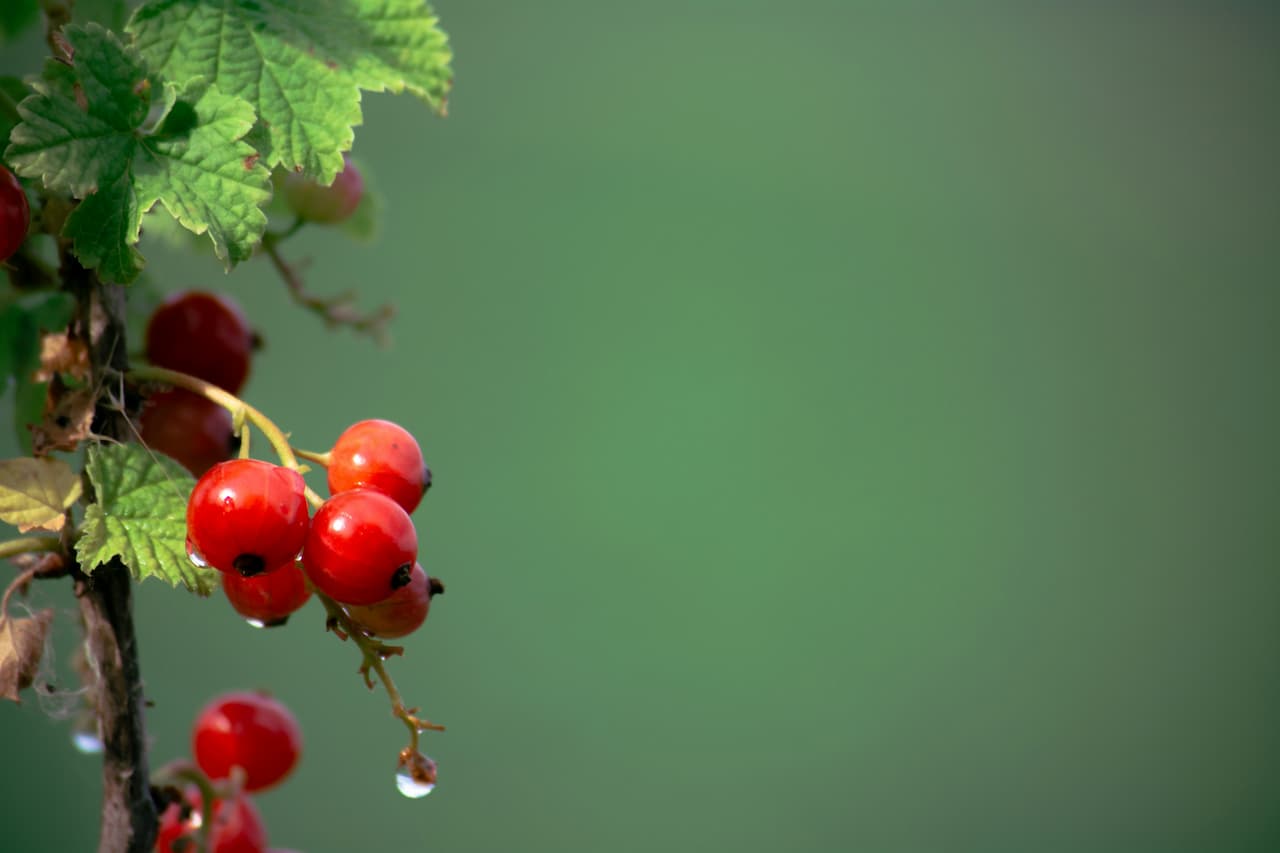
Redcurrants are one of the most underused fruits in UK gardens, which is surprising given how easy they are to grow and how striking the translucent red clusters look hanging from the stems in July. Unlike blackcurrants, which need moisture-retentive fertile soil and full sun for best results, redcurrants are remarkably adaptable – they will produce a useful crop on a north-facing wall or fence where almost nothing else fruiting will grow, making them uniquely valuable in shaded gardens and north-facing borders where other fruit crops would fail entirely.
The fruit is sharp and intensely flavoured, excellent for jelly, summer pudding, cordials and decoration on desserts. Fresh redcurrant jelly made in July is one of the most satisfying products of a small kitchen garden, and a few jars from a single bush’s annual harvest can supply a household for most of the year. They are also highly ornamental – a well-trained redcurrant cordon against a wall is attractive through spring, summer and into autumn when the leaves turn before falling, making it a productive and decorative feature in one.
Why Grow Redcurrants
The north-wall argument alone justifies growing redcurrants in most UK gardens. A north or east-facing fence or wall that receives little direct sun will produce a reasonable redcurrant crop year after year – not as heavy as a south-facing plant, but consistent and worthwhile. In gardens where every sunny position is already committed to more sun-demanding crops, redcurrants on the shaded boundary make productive use of otherwise marginal space. No other commonly grown UK fruit crop tolerates shade as well.
Redcurrants are also long-lived and low-maintenance. A well-planted and regularly pruned bush or cordon can remain productive for 20 years or more, requiring only the annual summer and winter pruning that takes 20-30 minutes per plant. The initial investment of time and money pays dividends over a very long period compared to annual crops that must be resown every year. Once established – typically in the second or third season – a redcurrant plant largely looks after itself between pruning sessions, needing only a feed in late winter and netting in July when the fruit ripens.
Best Varieties
Rovada is the best overall variety for most UK gardeners – the very long strigs of large fruit make harvesting efficient and yields are exceptional. Pairing it with the early Jonkheer van Tets extends the harvest from early to late July. White Versailles is a white currant with a milder, sweeter flavour than red – an attractive addition to summer fruit desserts and worth including as a third variety if space allows.
Planting
Plant bare-root redcurrants from November to March, or container-grown plants at any time of year. Unlike blackcurrants, redcurrants should be planted at the same depth as previously grown rather than deeper – they are grown on a short leg (clear stem) rather than as a multi-stemmed stool. This leg is the permanent framework from which the fruiting branches develop, and burying it disrupts the plant’s structure. Space bushes 1.5 metres apart. For cordon training against a wall or fence, space plants 45cm apart – cordons are far more space-efficient and are the best choice for small gardens or productive wall space.
Redcurrants tolerate most soils but prefer reasonably well-drained conditions – waterlogged soil causes root problems and reduces productive life significantly. Incorporate compost into the planting hole and mulch well after planting. Feed with sulphate of potash in late winter each year to build fruit production. Unlike heavy feeders such as blackcurrants, redcurrants are relatively undemanding and do not need rich soil or heavy nitrogen feeding, which would produce excessive leafy growth at the expense of fruit.
Training as a Bush or Cordon
Redcurrants can be grown as open-centred bushes or trained as cordons against a wall or fence. Cordons – single vertical stems trained against horizontal wires – are the space-efficient choice for small gardens and the best method for making use of a north-facing wall. A single cordon takes only 45cm of wall width while producing a surprising quantity of fruit from the short lateral branches that develop along the main stem.
To train a cordon, select the strongest upright shoot as the main leader and tie it to a cane attached to the wires. Remove all other main shoots entirely. As the plant grows, tie the leader to the cane each season, continuing vertically until the desired height is reached – typically 1.5-1.8m. Lateral shoots that develop along the leader are allowed to grow during the season to produce fruit, then pruned back to 2-3 buds in winter. This spur system, maintained annually, keeps the cordon productive indefinitely within a narrow, manageable space that no other training method can match for sheer productivity per square metre of garden. A north wall fitted with three cordons at 45cm spacing is genuinely one of the most efficient uses of otherwise unproductive space in a UK garden.
Pruning Redcurrants
Redcurrant pruning differs significantly from blackcurrant pruning and from stone fruit pruning. Redcurrants fruit on spurs developed on older wood – the aim is to build and maintain a permanent framework of branches and then develop short fruiting spurs along those branches, similar in principle to pruning an apple tree on a spur system. Understanding this distinction – that you are building permanent structure and feeding spurs, not cutting out old wood as you would with blackcurrants – is the key to getting it right. New gardeners who apply blackcurrant pruning logic to redcurrants often remove the productive wood and wonder why yields decline.
Redcurrant pruning can be done in winter, unlike stone fruits. Redcurrants are not susceptible to silver leaf disease and can be pruned at any time during the dormant season from November to February. This makes winter the practical time for thorough pruning, as the bare framework is visible and there is no pressure of other seasonal jobs. Summer pruning is a light additional step in June-July to improve fruit quality.
Harvesting and Uses
Pick redcurrants as whole strigs when the berries are fully coloured and translucent. Hold the strig at the tip and strip the berries by running a fork along the strig over a bowl – this is faster and less damaging than picking individual berries. Redcurrants do not keep long once picked – use within two to three days or freeze immediately. They freeze well and can be used from frozen in cooked recipes without any loss of quality.
Redcurrant jelly is the classic preserve – simmered with sugar and strained through a jelly bag, it sets firmly and keeps for a year in sealed jars. The high pectin content of redcurrants makes jelly-making reliable even without added pectin, unlike lower-pectin fruits that can be unpredictable to set. A single well-cropped bush in July can yield enough fruit for several jars of jelly, making the annual harvest genuinely productive relative to the minimal care the plant requires through the rest of the year. The jelly is the traditional accompaniment to roast lamb but works equally well with game birds, cold meats and strong cheeses – a versatile preserve that earns its shelf space in a way that few other homemade products do.
Common Problems
Share on socials: