At a glance
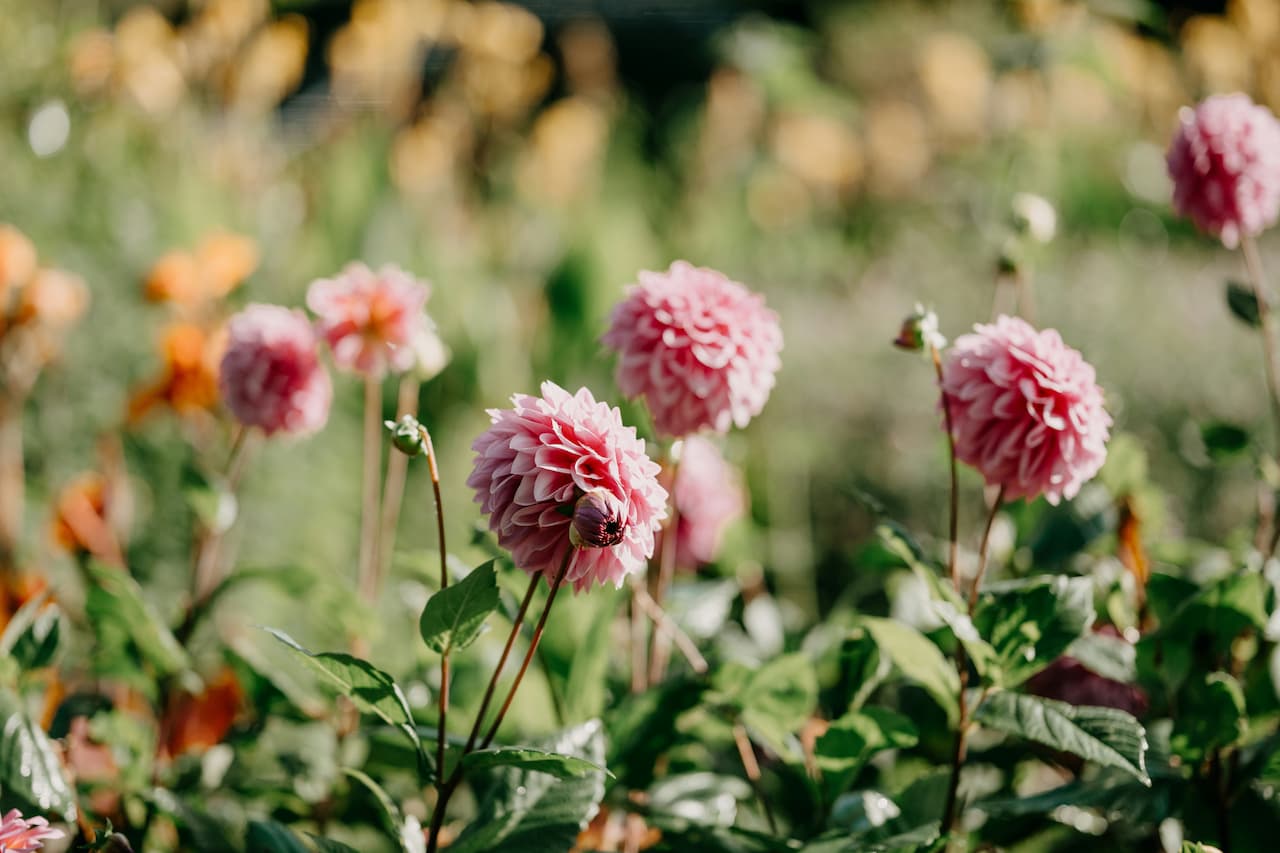
Dahlias are one of the most rewarding flowers in the UK garden calendar. From July until the first hard frosts – typically October or November across most of the country – a well-grown dahlia produces an extraordinary abundance of flowers in an enormous range of colours, forms and sizes. A single established tuber planted in late May can produce fifty or more flowers across a season. A bed of mixed dahlias provides cut flowers for the house from midsummer through to autumn that rival anything from a florist at a fraction of the cost.
They are not difficult to grow but they do have specific requirements. They need a frost-free start, regular deadheading to maintain continuous flowering, and in most UK gardens the tubers need lifting and storing over winter rather than being left in the ground. Getting these three things right is essentially the whole story of successful dahlia growing. This guide covers every stage from variety selection through to storing tubers in November, with the key techniques that make the difference between a plant that produces adequately and one that flowers spectacularly.
Types and varieties
Dahlias are classified by flower form into groups including pompom, cactus, decorative, ball, collerette and single. The choice of type has practical implications beyond aesthetics. Open-centred single and collerette types are accessible to bees and pollinators – fully double pompom and decorative types, while spectacular, offer very little to visiting insects. For cut flowers, pompom and ball dahlias last best in a vase. For dramatic border display, decorative and cactus types produce the most impact. For small gardens and containers, compact single and collerette varieties are the most manageable.
Planting dahlias
Dahlia tubers are frost-tender and should not be planted outside until the risk of ground frost has passed. Late May is the safe date for most of England and Wales; gardeners in northern England and Scotland should wait until early June. Planting in a sunny, sheltered position in well-drained fertile soil is essential – dahlias hate waterlogged conditions. If your soil is heavy clay, improve drainage by incorporating grit and plant on a slight mound or in a raised bed.
Put the stake in before or at planting time
Inserting a stake through an established dahlia’s root system later in the season damages the tuber and roots. Place a sturdy bamboo cane or dahlia stake at each planting position immediately, before covering the tuber. Use 1.5m stakes for tall varieties and 90cm for compact types. Tie in as the plant grows.
Plant tubers 10 to 15cm deep, old stem pointing up
The old stem from last year points upward – this is the growing point. Space larger varieties 60 to 90cm apart and compact varieties 45cm apart. Incorporate compost or well-rotted manure into the planting hole to give the tuber a rich, moisture-retentive root zone.
Start in pots from April for earlier flowers
Tubers started in pots of compost in a frost-free greenhouse or conservatory from April and planted out as growing plants in late May produce flowers two to three weeks earlier than direct-planted tubers. This is worthwhile for tall cutting varieties where an earlier crop is valued – simply pot into a 2 to 3 litre pot and keep frost-free until planting out.
Pinching out and staking
Pinching out is the single technique that separates a dahlia that produces a handful of flowers from one that produces dozens. When each plant reaches 40 to 45cm tall, remove the top pair of leaves and the growing point above them – this takes seconds with thumb and forefinger. The plant diverts all its energy into side shoots, transforming from a single-stemmed plant into a multi-branched bush that produces far more flowering stems across the season. The pinched plant takes two to three weeks longer to produce its first flower, but the total flower count over summer is dramatically higher.
Tall and medium varieties need firm staking regardless of how sheltered the garden appears. A stem loaded with large dahlia flowers is extremely vulnerable to wind and rain – one summer storm can devastate an unstaked plant. Use a stout bamboo cane positioned 10 to 15cm from the main stem and tie in loosely with soft garden twine at 30cm intervals as the plant grows. For a group planting, a ring of canes connected with twine around the whole clump is more effective than individual staking – it allows stems to support each other while preventing the group from splaying outward in wind. For exhibition growers, some also disbud – removing the two smaller flanking buds on each stem forces all energy into the central bloom, producing significantly larger individual flowers at the expense of total flower count.
Feeding, watering and deadheading
Once dahlias are growing strongly, the care routine through summer comes down to three consistent tasks. Getting all three right is what separates a plant that flowers adequately from one that flowers spectacularly through to the frosts.
Lifting and storing for winter
After the first hard frost blackens the foliage – typically late October or November across most of the UK – cut stems down to 15cm and carefully lift the tuber clumps with a fork. Work outward from the plant to avoid spearing the tubers. Shake off loose soil. The tubers need to drain before storage – hollow dahlia stems trap water that will cause rot if the tubers go straight into storage. Leave them inverted in a frost-free space for a week, stems pointing downward, to allow any trapped moisture to drain fully.
Once drained, store tubers in trays of dry compost, vermiculite or horticultural sand in a frost-free dry location. A garage, garden shed or cool spare room all work well provided temperatures stay above 0°C and the air is reasonably dry. Check stored tubers once a month through winter. Remove any that show soft spots or mould immediately – rot spreads rapidly through a storage tray and a single infected tuber can destroy several others within weeks if left unchecked. Any tuber that feels completely hollow or papery has desiccated beyond recovery and should be discarded.
Label tubers clearly before storing. After lifting, all dahlia tubers look remarkably similar. Write the variety name on a stick-on label attached directly to the tuber or on a tag tied to the stub of stem. Mixed-up tubers in a storage box are indistinguishable by spring, and replanting an unknown variety in the wrong position – expecting a 60cm compact variety and getting a 1.2m giant – is a frustrating and preventable outcome.
Common problems and fixes
Dahlias attract a small number of persistent pests – slugs in spring and earwigs through summer are the most consistent issues. Most problems are predictable and manageable with the right timing.
A dahlia that is pinched out, staked at planting, deadheaded consistently and lifted and stored correctly will reward you with fifty or more flowers across the season and return reliably for years. The tuber grows larger each season, producing more shoots and more flowers as it matures – a well-stored tuber after five years is dramatically more productive than a newly purchased one.
Share on socials: