At a glance
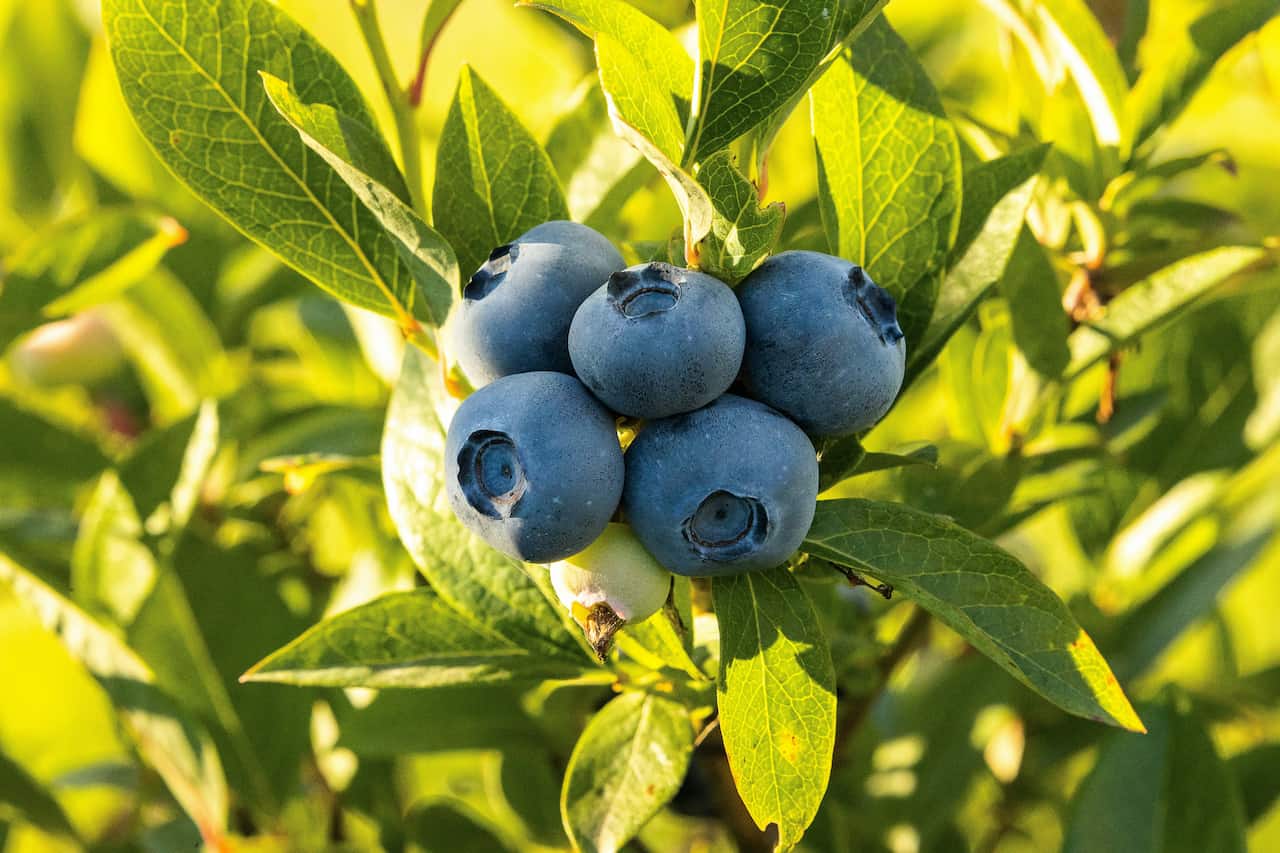
Blueberries are one of the most financially rewarding fruits to grow at home. A small supermarket punnet costs two to three pounds and lasts two days – a well-established bush produces several kilograms of fruit every summer for twenty to thirty years. The appeal is obvious. The catch is soil chemistry. Blueberries are ericaceous plants that require a genuinely acid soil with a pH between 4.5 and 5.5, and most UK garden soils are neutral to slightly alkaline. Plant a blueberry in the wrong soil and it will struggle visibly and produce almost nothing regardless of how well you otherwise care for it.
The practical solution for most UK gardeners is containers of ericaceous compost, watered exclusively with rainwater. This approach sidesteps the soil chemistry problem entirely by creating the right environment from scratch. It also suits blueberries particularly well – they are compact enough to thrive in a large pot, respond well to controlled feeding, and can be positioned on a sunny patio where they are easy to monitor and net against birds. This guide covers everything from soil pH through to annual pruning for a reliable, improving crop year on year.
Understanding the acid soil requirement
Blueberries evolved in the acidic, peaty woodlands of North America where the soil pH sits naturally between 4.0 and 5.5. The acidity is not a preference – it is a chemical necessity. At higher pH levels, the iron and other micronutrients that blueberries depend on become chemically locked in the soil and unavailable to the plant’s roots, regardless of how much fertiliser is applied. A blueberry in neutral or alkaline soil shows yellowing leaves, weak growth and almost no fruit. This condition is called chlorosis and it is irreversible in the same season – the only fix is correcting the pH.
Before planting blueberries in open ground, test your soil pH with an inexpensive test kit available from any garden centre. If your soil pH is above 6.0, containers of ericaceous compost are strongly recommended over attempting to acidify open-ground soil. Ground pH drifts back toward neutral within a season or two regardless of what acidifying agents you add, because the surrounding soil chemistry constantly moderates the treated area. Containers allow you to maintain precise pH control indefinitely.
Always water blueberries with rainwater, never tap water. UK mains tap water is typically alkaline at pH 7 to 8 and gradually raises the pH of ericaceous compost with every watering, slowly poisoning the acid conditions you are trying to maintain. Collect rainwater in a water butt and use it exclusively for blueberries. If rainwater is unavailable, use water that has been diluted with a small amount of sequestered iron solution to counteract the alkalising effect.
Best varieties for UK gardens
Blueberries are not fully self-fertile and two varieties are needed for reliable pollination and good fruit set. The exception is Sunshine Blue, which is partially self-fertile and can produce some fruit alone – but even this variety fruits far more heavily with a pollination partner. Choose two varieties with overlapping flowering times and you will see a dramatic difference in crop size compared to a single plant.
Growing in containers
Containers are the most reliable method for most UK gardeners because they allow complete control over soil chemistry. A 40 to 50cm diameter container with good drainage is the right size for an established blueberry bush – too small and the roots become cramped and the compost dries out too rapidly. Fill with ericaceous compost only, with no mixing with multipurpose compost. One bush per container.
The container will need repotting every two to three years as roots fill the pot. Repot in spring into the next size up using entirely fresh ericaceous compost – do not try to reuse old compost as the pH will have drifted and the nutrient base will be depleted. In years when you are not repotting, top-dress the surface of the compost in March with a 3 to 4cm layer of fresh ericaceous compost and a handful of ericaceous fertiliser granules. This top-dressing replaces the surface layer that depletes fastest and gives the plant a slow-release nutrient boost at the start of the growing season.
Net containers as soon as any berries start turning blue. Birds can strip an entire bush of ripe blueberries in a single morning – not over days, in a matter of hours. Blueberries are as attractive to blackbirds and thrushes as they are to us. Have netting ready before the crop ripens and cover immediately when the first berries begin to colour. A single day’s delay is often enough to lose the harvest.
Growing in prepared beds
If you have naturally acid soil – pH 4.5 to 5.5, which is common in parts of Scotland, Wales, and the north and west of England – blueberries can be grown directly in prepared garden beds. Dig in generous quantities of acidic organic matter before planting: composted pine bark, pine needle mulch or peat-free ericaceous compost all work well. Mulch the surface with pine bark each spring to maintain acidity and conserve moisture. Still water with rainwater where possible.
For the majority of UK gardens with neutral to slightly alkaline soil, the practical alternative to containers is a dedicated raised bed filled entirely with ericaceous compost and lined with a root-barrier membrane to prevent the surrounding soil chemistry mixing in. Build the sides high enough to hold at least 40 to 50cm of compost depth. This approach allows you to grow multiple bushes in a single space while maintaining the acid environment each needs – more economical in terms of compost volume than individual containers once you have four or more plants.
Feeding, pruning and care
Blueberries need consistent attention to feeding and annual pruning once they reach maturity. Young plants in years one to three need minimal pruning – just remove dead or damaged wood in late February. From year four onward, the pruning regime shifts to actively renewing the plant by removing the oldest, least productive stems.
Common problems and fixes
Almost every blueberry problem in UK gardens traces back to one root cause: pH that is too high. Yellow leaves, poor growth, no fruit and general decline are all symptoms of the same underlying chemistry issue. Getting the pH right at the start prevents the majority of problems. The table below covers all the situations you are likely to encounter.
Blueberries reward the gardener who gets the acid conditions right from the start and maintains them consistently. Ericaceous compost, rainwater and a second compatible variety are the three decisions that make the difference between a productive bush and a disappointing one. Plant both varieties, feed correctly through the growing season and net promptly when the berries begin to colour. A bush planted this year on the right foundation will still be producing a reliable crop in twenty-five years.
Share on socials: