At a glance
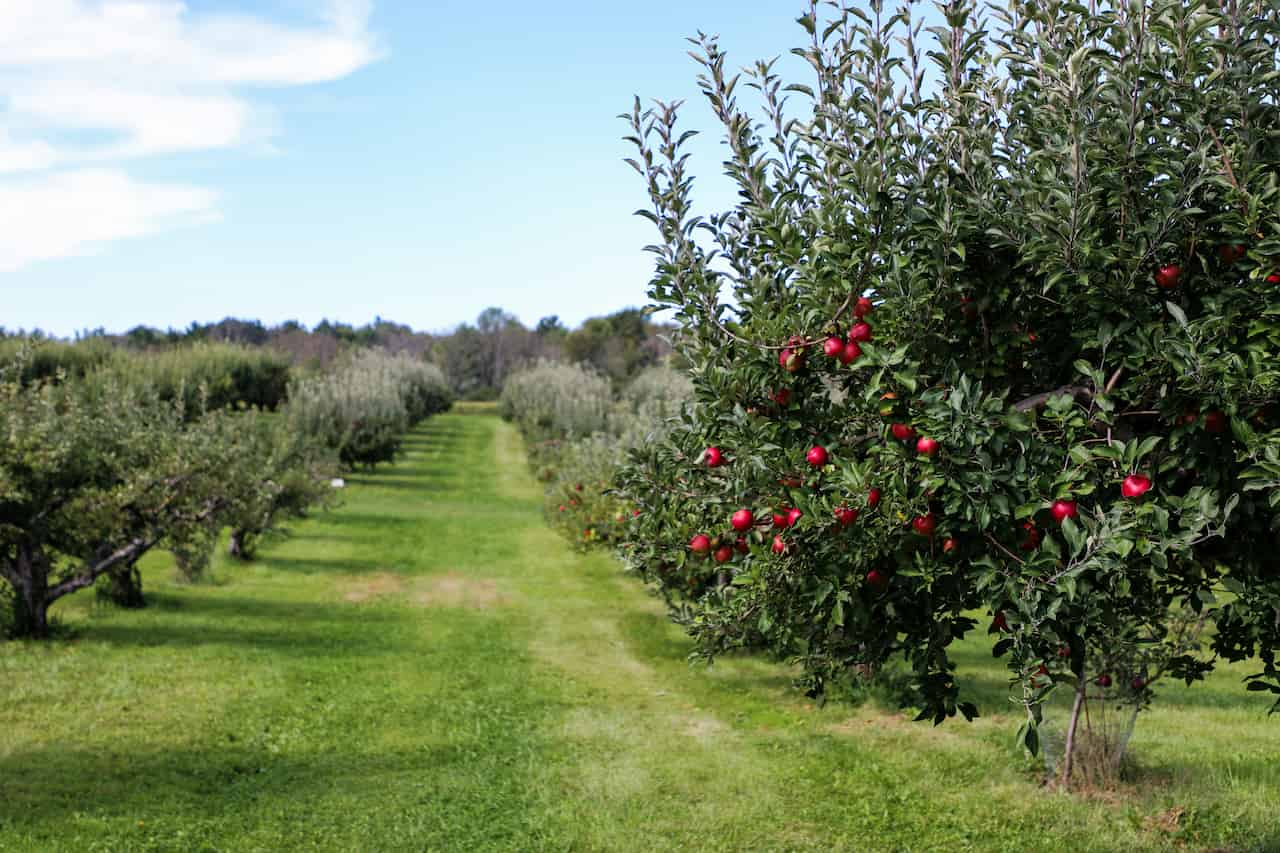
Apples are the most widely grown and most productive fruit tree for a UK garden. A single mature tree on a semi-dwarfing rootstock can produce 30 to 50kg of fruit in a good year – more than most families can eat, give away and process before it deteriorates. Apple trees are long-lived, relatively low-maintenance once established and provide spring blossom, summer shade and an autumn harvest in a single plant. They are one of the best long-term investments available to a UK gardener with any outdoor space.
The decisions that matter most are made before planting – choosing the right rootstock for the available space and selecting two varieties that pollinate each other. Get these right and the tree will largely look after itself, requiring only an annual winter prune and basic pest management. This guide covers every stage from rootstock selection through to storing the last of the late varieties in February.
Choosing a rootstock
Apple trees are always sold grafted onto a rootstock that controls the eventual size of the tree. This choice is the single most important decision when fitting an apple tree to available space – and the most commonly overlooked. Many gardeners plant a vigorous rootstock in a small garden and spend years fighting a tree that wants to be 6 metres tall. The rootstock should be chosen first, before any thought is given to variety.
M26 is the right choice for the vast majority of UK domestic gardens. It produces a tree that is large enough to be a satisfying presence in the garden, productive enough to deliver meaningful yields, and manageable enough to prune from the ground or a short step ladder without specialist equipment. Trees on M26 begin cropping within 3 to 4 years of planting and reach full productivity around year 6 to 8. They need a permanent stake for the first 5 years but not indefinitely. If space is genuinely tight – a small courtyard or patio area – M9 is the next choice and works well as an espalier or cordon trained against a wall.
Always plant bare-root trees between November and March – they establish far better than container-grown. Bare-root apple trees are significantly cheaper, offer a much wider variety selection and establish more quickly because the roots spread freely into surrounding soil from day one. Plant as soon as received and water in thoroughly. If conditions prevent immediate planting, heel the tree in temporarily in a sheltered spot until the weather improves.
Best apple varieties for UK gardens
Apple varieties are assigned to pollination groups numbered 1 to 7 based on their flowering time. For reliable fruit set, you need two varieties in the same or adjacent groups flowering at the same time. Most garden centres sell pre-selected pollination pairs, which simplifies the decision considerably. The varieties below are chosen for reliable performance across the range of UK growing conditions, from the warmer south to the cooler north.
Bramley is a triploid variety and cannot pollinate other trees. Unlike most apple varieties which both receive and donate pollen, Bramley produces sterile pollen. If you plant Bramley, you need two other compatible diploid varieties nearby to ensure pollination – one for Bramley and one to cross-pollinate each other. Most good nurseries flag this clearly on the label.
Planting correctly
The planting technique has a significant bearing on how quickly the tree establishes and begins to crop. The most common mistakes – planting too deep, adding compost to the hole and failing to stake correctly – all produce slow-establishing trees that are vulnerable to wind rock and waterlogging. None of these mistakes are hard to avoid.
Dig wide and shallow – not deep and narrow
The hole should be twice the width of the root ball but no deeper than the roots. The graft union – the swelling near the base of the trunk – must remain above soil level. Deep planting covers the union, promotes suckering from the rootstock and can suffocate the roots in heavy soils. This is the single most common planting error.
Drive in the stake before the tree goes in
A low angled stake driven in at 45 degrees supports the tree without restricting the trunk’s natural movement – which is what builds stem strength. Drive the stake before placing the tree to avoid spearing the root system. A short stake (reaching just below the first branches) is better than a tall one that immobilises the whole trunk.
Backfill with native soil – no compost in the hole
Adding compost or rich growing media to the planting hole creates a fertile pocket that encourages roots to circle within it rather than spreading into surrounding soil. Backfill with the soil that came out of the hole, firm gently in layers to eliminate air pockets and water thoroughly to settle the roots.
Mulch ring – but leave a clear gap at the trunk
Apply a 10cm mulch ring 60 to 90cm in diameter to retain moisture and suppress weeds in the critical first two growing seasons. Leave a clear 15cm gap around the trunk itself – mulch pressed against the bark traps moisture and promotes collar rot, which can kill an otherwise healthy young tree within a couple of seasons.
Annual pruning
Apple trees are pruned in winter – December to February – while fully dormant. The aim is to maintain an open, goblet-shaped framework that allows air and light into the centre of the tree. Good airflow significantly reduces disease pressure from scab and mildew, and adequate light reaching the fruiting spurs is essential for consistent cropping. Winter pruning on apple trees encourages vigorous new growth; summer pruning – used on trained forms like espaliers and cordons – has the opposite effect and is used to restrict growth.
Harvesting and storing
Apples are ready to harvest when they part from the tree with a gentle upward twist rather than requiring a pull. Do not wait for all the fruit to fall – once apples are dropping unprompted, many have already passed their eating peak. Test a few fruits by cupping and twisting from late August onward for early varieties, extending through to November for the latest storing kinds.
Harvest timing varies significantly by variety. Early varieties like Discovery and James Grieve ripen from August and do not store well – use within two to three weeks at room temperature or refrigerate to extend by another week or two. Mid-season varieties harvest in September and will keep for four to six weeks in cool conditions. Late varieties like Bramley and Egremont Russet harvest from October and, when stored correctly, last well into February. Wrap individual late-season apples in newspaper and store in single layers in a cool, dark, frost-free space – a garage, shed or unheated spare room. Check stored apples every two weeks and remove any that begin to deteriorate before they spread rot to neighbours.
Common problems and fixes
Apple trees are susceptible to a handful of recurring problems, most of which are manageable with good cultural practice rather than chemical intervention. Airflow through the canopy – maintained by annual pruning – is the single most effective preventative measure for the fungal diseases that are most common in UK conditions. The table below covers the problems you are most likely to encounter.
An apple tree planted today on the right rootstock, pruned annually and given basic pest management will be producing reliable crops for decades. The investment in getting the rootstock and variety pairing right at the outset pays dividends every autumn for the life of the tree – which on M26 can be 30 or more years of productive cropping.
Share on socials: