At a glance
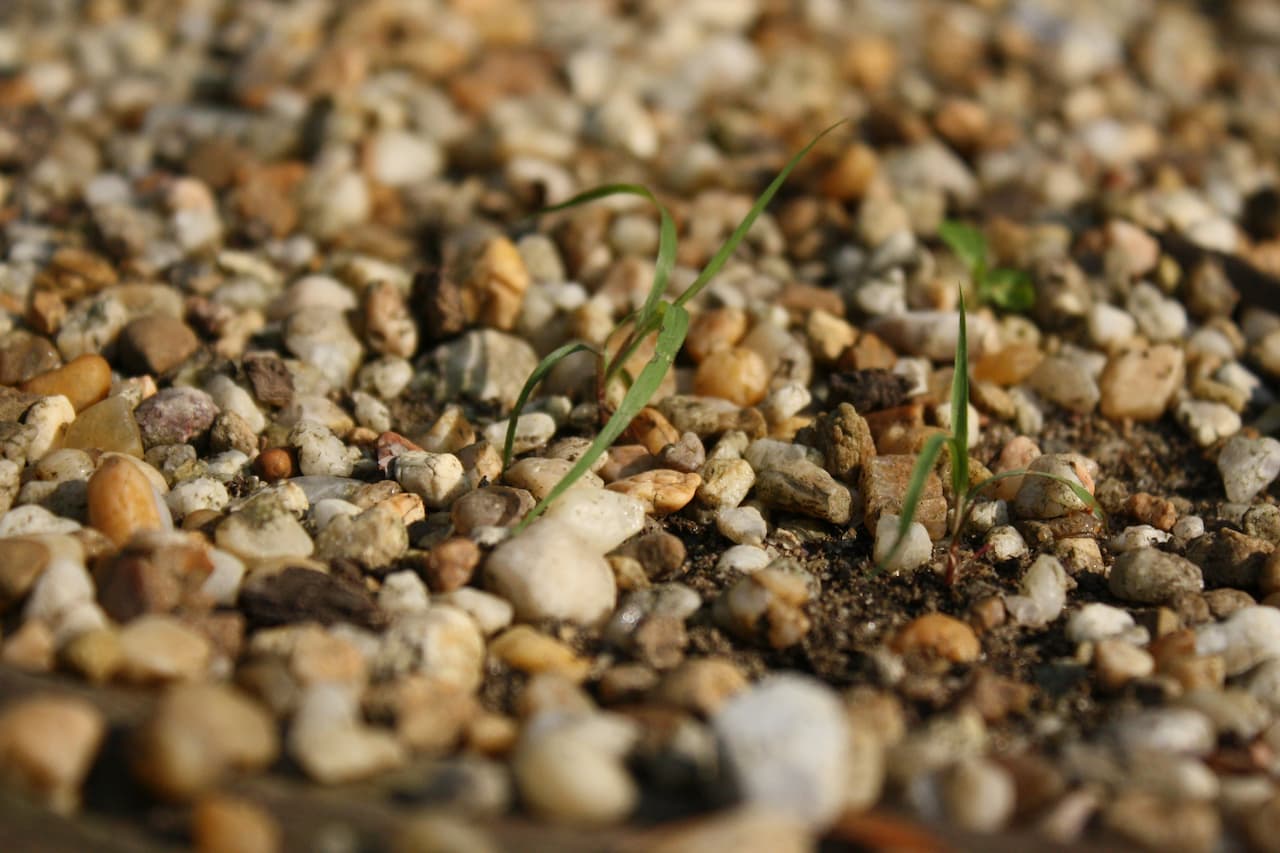
Weeds in gravel are one of the most persistent and frustrating maintenance problems in a UK garden, and understanding why they appear is the first step to controlling them effectively. The widely held assumption is that weeds push up through the gravel from the soil below – and this does happen, particularly with deeply rooted perennials like horsetail and bindweed. But the majority of weeds in gravel are not coming from below at all – they are germinating in the thin layer of organic debris, dust and blown soil that accumulates on the surface of the gravel over time. This distinction matters because it completely changes the approach to prevention and control.
A gravel path or driveway with no membrane underneath will have weed problems from both directions – established perennial weeds pushing up from below, and annual weeds germinating in the surface layer. A path with a correctly installed membrane beneath still develops annual weeds on top within a couple of years as the surface layer accumulates. Neither scenario is maintenance-free, but both are very manageable with the right approach applied at the right time.
Why weeds grow in gravel
Gravel provides surprisingly good conditions for weed germination. The stones absorb heat during the day and release it slowly, creating a warm microclimate at ground level. The gaps between stones trap dust, soil particles, organic debris and moisture – exactly the conditions a germinating weed seed needs. Birds and wind deposit seeds continuously, and any that land on a gravel surface with even a thin layer of accumulated debris will germinate readily given the right temperature and moisture conditions.
Perennial weeds approaching from below present a different challenge. Established plants with deep, extensive root systems – horsetail reaching 2 metres, bindweed with rhizomes extending metres in every direction, ground elder spreading by underground runners – have enough stored energy to push new shoots through several centimetres of gravel and even through small gaps in weed membrane. These weeds cannot be stopped by membrane alone and require repeated treatment of the emerging growth to gradually deplete the root reserves.
The worst offenders
Control methods compared
Installing weed membrane properly
Weed membrane laid correctly before gravel is installed is the single most effective measure for preventing surface weed germination. The key word is correctly – a poorly installed membrane causes almost as many problems as no membrane at all, as weeds find any gap, overlap or unsealed edge and establish themselves there rather than on the main surface.
Begin by clearing the area completely of all existing vegetation, including the roots of any perennial weeds. Any perennial root left in the soil will eventually push through even the best membrane. For persistent perennials, treat with glyphosate several weeks before installation and wait until the foliage has died back fully before laying the membrane. Level and firm the soil surface, then lay the membrane overlapping adjacent strips by at least 15cm – gaps at joins are one of the most common failure points. Pin the membrane every 30-40cm using ground staples, particularly along all edges and at any joins. Fold the membrane up against any walls, edging or borders and secure it firmly – an unsealed edge against a raised border is another common entry point for weeds growing from the adjacent soil.
Use woven polypropylene membrane rather than solid plastic sheeting. Woven membrane allows water to drain through while blocking light – solid plastic causes waterlogging in wet conditions and degrades faster. The weight and quality of membrane matters – a heavier, denser fabric lasts significantly longer and is less easily penetrated by vigorous weed roots. Cut the gravel depth at a minimum of 50mm over the membrane – thinner gravel allows light to penetrate to the membrane surface and encourages the surface organic layer to develop faster.
Chemical and non-chemical treatments
For established gravel areas with existing weeds, a combination approach works best. Glyphosate is the most effective chemical control – it kills the whole plant including the root system when absorbed through the leaves, making it more effective than contact-only weedkillers on established perennial weeds. Apply as a ready-to-use spray or diluted concentrate in dry weather when rain is not forecast for at least six hours. Weeds should die back within two to three weeks. Glyphosate does not leave residual activity in the soil, so regrowth from new seed will occur over time and repeat applications are needed seasonally.
Path weedkillers containing a residual active ingredient such as diflufenican or aclonifen kill existing weeds and prevent new seed germination for several weeks to months, reducing the maintenance interval compared to glyphosate alone. These are the products marketed as path and drive weedkillers and are suitable for gravel drives and paths where no planting is planned. Never use residual path weedkillers near borders, lawns or areas where desired plants grow – the residual activity affects any plant, not just weeds.
Non-chemical options are practical for small areas and regular maintenance. Boiling water poured directly over young weeds kills them on contact and has no residual environmental effect – it works best on small annual weeds in their early stages and is much less effective on established perennials with large root systems. A flame weeder – a gas torch designed for garden use – scorches and collapses weed cells effectively and works on a wider size range of weeds than boiling water, though it requires careful use around dry materials and does not kill perennial roots any more effectively than boiling water does.
Never use salt as a weedkiller on garden areas. Salt is often cited as a home remedy for gravel weeds but it causes lasting soil damage that persists for years, prevents anything growing in the area – including plants you may want – and can leach into adjacent borders and lawn edges. It also damages concrete and some types of block paving. Boiling water is a far better non-chemical option – it is equally effective on young weeds, costs nothing, and does not damage the soil beneath.
Common mistakes to avoid
Share on socials: