At a glance
Couch grass (Elymus repens) is one of the most persistent weeds in the UK garden. Known by a dozen regional names – twitch, scutch, quack grass, dog grass, witchgrass – it is the same plant wherever you find it and the same problem wherever it takes hold. The difficulty is not the plant itself but what it does underground: a spreading network of white rhizomes that can extend more than a metre in every direction from the parent plant, branching and rebranching until a single colony is occupying far more soil than the visible top growth suggests.
What makes couch grass particularly troublesome is the way those rhizomes respond to disturbance. Cut one with a spade and you do not kill it – you create two plants. Each fragment with a growing node, which can be as little as a few centimetres of rhizome, is capable of regenerating into a full plant. This is why rotovating or hoeing infested ground without removing the roots makes infestations dramatically worse, and why any control programme that does not address the root system comprehensively will fail. The good news is that couch grass can be removed, and in contained areas it can be eradicated permanently. The method depends on the situation – each one is covered here.
Identifying couch grass
Couch grass looks deceptively ordinary above ground. It grows as a grass-like plant with flat, ribbed leaves that are rough to the touch on the upper surface and hairless beneath. The leaves are typically 5-10mm wide – broader and coarser than fine lawn grasses such as fescue but easy to overlook in a mixed lawn or among border plants. In summer it produces upright flowering stems with seed heads that resemble a flattened ear of wheat, which is how it also spreads by seed as well as by rhizome.
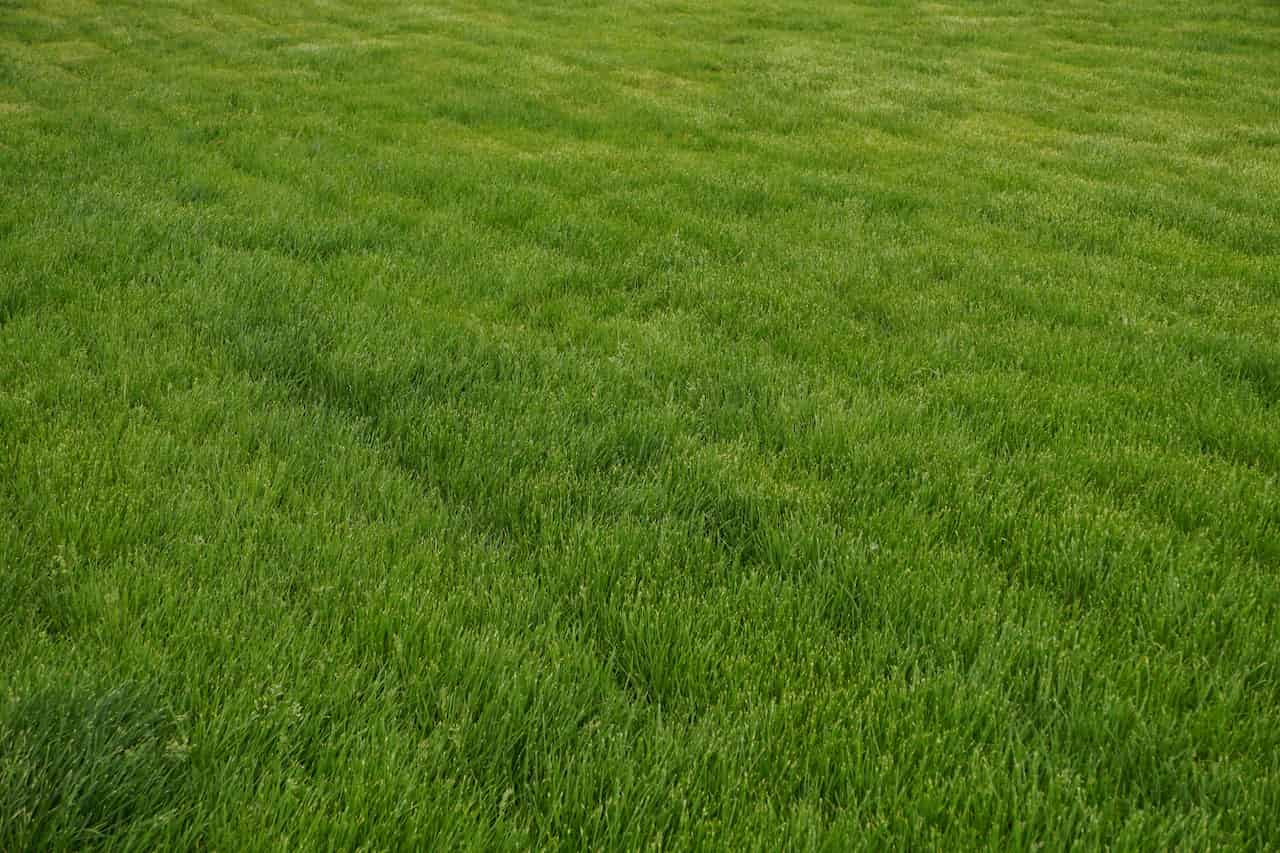
In a lawn, couch grass shows up as patches of coarser, faster-growing grass that stands proud of the rest of the turf after mowing and is a paler, slightly yellow-green compared to the surrounding sward. It can appear to die back slightly in winter then bounce back vigorously in spring, often before the lawn grasses around it have fully resumed growth. In borders it appears as grass-like growth pushing up through mulch or emerging from the base of other plants, often in places that make removal very fiddly.
The definitive identification is underground. Pull up a plant and look at the roots. Couch grass has white to pale cream rhizomes that are solid, pointed at the tips, and relatively firm – they snap rather than bend. They look almost like very thin pale parsnips and feel more like twigs than roots. The growing tips are slightly translucent and sharply pointed. These white rhizomes are unmistakeable once you have seen them and are the clearest way to distinguish couch grass from grass weeds that spread only by seed.
The white rhizomes are the definitive ID test. Pull up any suspicious grass-like weed and examine the roots. If you find solid, firm, pointed white underground stems rather than fibrous roots, you have couch grass. No other common UK garden grass weed has this root structure.
Why couch grass is so hard to remove
The rhizome network is the problem. A single couch grass plant that has been in the ground for two or three years can have rhizomes occupying several square metres of soil, woven through the roots of other plants, penetrating under paths and hard surfaces, and extending into adjacent beds. Each rhizome segment carries dormant buds at regular intervals, and any fragment that contains a bud will regenerate. Research into couch grass biology confirms that regeneration is possible from short fragments in cultivated soil – and that chopping rhizomes into smaller pieces by tillage actually increases the total number of new plants produced, even though individual plants from short fragments are weaker.
The depth factor compounds the problem. In cultivated soil, rhizomes typically run in the upper 10-15cm. In undisturbed borders and established ground they can penetrate considerably deeper. This means a single pass with a fork to remove visible rhizomes will miss a proportion of the root system, and the portion that remains will regrow. Couch grass also has a particular talent for growing through the crowns of other plants – threading its rhizomes through the root ball of hostas, into the crown of geraniums, through the base of salvias. Once established in another plant’s roots, physical removal without disturbing the wanted plant becomes extremely difficult.
Never rotovate couch grass infested ground. Rotovating chops the rhizome network into dozens or hundreds of fragments, each of which regenerates. An infestation that was manageable before becomes near-impossible after a single pass with a rotovator. The same applies to hoeing rhizomes back into the soil. Always remove extracted material from the garden – do not compost it.
Choosing the right method
The right removal method depends primarily on where the couch grass is growing and whether chemical treatment is acceptable. Open ground – a cleared vegetable bed, a patch of lawn, an empty border – is the easiest situation because you have full access and both chemical and physical methods are straightforward. Established borders with perennials are the hardest situation, because the rhizomes are growing through the roots of wanted plants and access is restricted. Use the decision guide below to identify the most appropriate approach for your situation before starting work.
Chemical control with glyphosate
Glyphosate is the most effective chemical control for couch grass currently available to UK gardeners. It is a systemic herbicide – absorbed through green leaf tissue and transported down through the plant into the rhizomes. This systemic action is what makes it effective against couch grass when surface treatments are not: it kills the underground root system, not just the top growth. Glyphosate is currently approved for use in Great Britain until December 2026, with a renewal review underway.
For glyphosate to work on couch grass, the plant must be actively growing. Leaves must be green, upright, and large enough to absorb a meaningful dose – this means not mowing or cutting back the couch grass for at least two weeks before treatment. Apply on a calm, dry day with no rain forecast for at least six hours. Do not disturb the soil for at least three weeks after application: the herbicide needs time to travel from the leaves down to the rhizomes, and digging immediately after treatment defeats the purpose entirely.
Most infestations require two to three treatments for full control. The first application kills actively growing top growth and the majority of the rhizomes. Any rhizomes that were dormant, or that received insufficient chemical, will send up new shoots four to six weeks later. This regrowth must be treated with a second application at the same growth stage – actively growing green leaves – before it re-establishes a significant root network. Heavy infestations frequently need a third treatment. Patience through this programme is what produces a permanent result.
Glyphosate kills all green plants it contacts – not just couch grass. Apply on calm days to prevent drift onto wanted plants. Use a ready-to-use product with a narrow applicator nozzle, or apply with a paintbrush for areas close to other plants. A split plastic bottle placed over the couch grass acts as a spray collar and prevents drift effectively. Never apply near ponds or watercourses – glyphosate is harmful to aquatic life.
Non-chemical removal
Where glyphosate cannot or will not be used – in an organic garden, near water, or where established plants make chemical treatment impractical – thorough physical removal combined with persistent follow-up is the alternative. It is slower and requires more consistent effort over the growing season, but it is entirely effective if done properly and not abandoned halfway through.
The method is systematic hand forking. Work across the infested area in sections, loosening the soil deeply with a fork before attempting to extract rhizomes. Dry soil causes rhizomes to snap, leaving regenerative fragments behind – work when the soil is moist, particularly after rain or irrigation. Work carefully and slowly, tracing each rhizome to its end or as far as it can be followed without breaking. Drop all removed material into a bucket as you go. Do not leave rhizomes on the soil surface – even a small fragment with a growing node can re-root if it contacts moist soil again. Do not compost them either – rhizomes can survive a domestic compost heap.
Sieving is valuable for heavy infestations. A coarse riddle (12mm or larger mesh) held over a wheelbarrow allows loosened soil to fall through while retaining rhizome fragments. It is slow work but it removes material that forking alone misses. Any fragment with a slightly pointed, translucent growing tip will regenerate if left in the soil.
Smothering infested ground with light-excluding material before forking is a useful preparation step. Thick cardboard weighed down with bark mulch, or commercial woven membrane, will weaken couch grass over one full growing season by depriving it of light. It will not kill it outright – rhizomes can persist in the soil for a year without light – but the plants it produces are weaker and the rhizomes are shallower, making subsequent forking significantly easier and more thorough.
Follow-up over the remainder of the growing season is non-negotiable. Fragments missed during initial removal will send up new shoots within two to four weeks. These must be dealt with immediately by forking out the new growth and tracing back to the source rhizome before it re-establishes. A programme of thorough initial removal followed by consistent follow-up for one full season will clear most areas permanently.
Couch grass in lawns
Couch grass in a lawn presents a specific challenge because the usual removal options also affect the lawn itself. Selective lawn weedkillers – the products that kill dandelions, plantains and clovers in grass – have no effect on couch grass because it is itself a grass. There is no lawn-safe chemical that will kill couch grass without also damaging or killing the lawn grasses around it. This limits the options to physical removal with patch reseeding, or full lawn renovation for widespread infestations.
For small, isolated patches of couch grass in a lawn, the practical approach is to cut out a section of turf with a sharp spade, remove as much rhizome as possible from the soil beneath, and reseed the cleared patch. Cut generously – take a slightly larger area than the visible couch grass to catch rhizomes extending beyond the obvious patch. Fill the cleared area with good quality topsoil or lawn dressing and sow with a grass seed mixture that matches the surrounding lawn. The reseeded area will establish within a few weeks during the growing season with adequate watering.
For a lawn where couch grass accounts for a significant proportion of the sward – patches throughout rather than isolated spots – full renovation is usually the better long-term solution. This involves killing the entire lawn with glyphosate, waiting three to four weeks, removing the dead material by raking or light forking, then reseeding or returfing into the cleared ground. It is disruptive and the garden will be without a lawn for a season, but it produces a genuinely clean result that repeated spot treatments cannot achieve when the infestation is widespread. The best time to renovate is late summer or early autumn when soil is still warm enough for grass seed to germinate.
After lawn renovation, monitor the edges carefully for two full seasons. Couch grass rhizomes from adjacent ground, paths, or neighbouring gardens are the primary source of reinfection. Deal with any regrowth at the margins immediately rather than waiting for it to spread inward again.
Couch grass in borders and beds
Couch grass growing through established perennials is the most difficult situation because the rhizomes weave through the root balls and crowns of wanted plants. You cannot fork out the couch grass without disturbing the plants it has colonised, and you cannot spray glyphosate without risking damage to the foliage of surrounding plants. The options depend on the severity of the infestation and how valuable the affected border plants are.
For a border where couch grass has colonised the majority of the plants and taken over the ground, the most effective approach is a full clear-out in autumn. Lift all the wanted perennials, wash their roots completely clean under running water to remove every rhizome fragment, and pot them temporarily into clean compost. Clear the empty border by glyphosate treatment of the regrowth – with no wanted plants present, you have unrestricted access – then follow up any regrowth with a second application four to six weeks later. Replant in spring into cleared ground that has been monitored over winter.
For lighter infestations where couch grass has colonised individual plants rather than the whole border, careful spot treatment with glyphosate gel is the most targeted approach. Apply the gel directly onto couch grass leaves using a brush or sponge applicator – commercial glyphosate gel products allow very precise application with far less risk of drift than a sprayed product. This requires patience and multiple applications over the season but avoids the disruption of lifting established plants. When dealing with bindweed in similar situations, the same brush-on technique works well – the key with both weeds is preventing any contact with the leaves of wanted plants.
On vegetable beds, couch grass growing through crops should be hand forked as thoroughly as possible at every opportunity. The regular cultivation of a veg plot naturally disrupts couch grass rhizomes, and while this does cause fragmentation it also brings fragments to the surface for removal. Consistent removal of every piece brought up during cultivation, combined with a clean-down of the whole bed in autumn when crops are cleared, will significantly reduce the population over successive seasons.
Stopping couch grass coming back
Once an area has been cleared, preventing reinfection is the priority. The most common source of new couch grass is rhizomes travelling under fences and paths from adjacent gardens or unkempt ground – the plants spread underground and are not always visible above the fence line until they have already crossed it. The two main preventative measures are physical barriers and consistent monitoring.
A root barrier membrane buried vertically to a depth of at least 30cm along the boundary with neighbouring ground provides reliable long-term protection. Use commercial root barrier membrane – a heavy-duty product specifically designed to resist rhizome penetration – rather than ordinary weed membrane, which is too light and will be penetrated in time. The barrier must be buried at the full depth to be effective: a shallow installation will be undercut. Join sections with generous overlaps and secure them firmly.
Monitoring cleared areas for the first two full seasons after treatment is essential. Couch grass regrowth from missed fragments or new incursion from outside shows as distinctive pale, coarse grass growth that looks slightly out of place among the surrounding planting. Deal with it immediately – a small regrowth caught early takes five minutes of careful forking. Left for a full season it rebuilds a significant rhizome network and the whole programme needs repeating.
On allotments and vegetable plots, regular hoeing of paths and plot edges prevents couch grass from establishing at the margins before it advances into the beds. A well-maintained 10-15cm clear margin around raised bed edges, kept hoed throughout the growing season, gives early warning of any encroachment and makes spot removal straightforward. A deep bark mulch on permanent beds is harder for couch grass to establish through than bare soil, though rhizomes can still penetrate mulch – it slows the process and makes the plants easier to pull when they do emerge.
Share on socials: