At a glance
Most houseplant problems have one of four causes: too much water, too little light, a temperature problem, or a combination of the first two working together. In UK homes, overwatering is by far the most common mistake – and it is made worse every autumn and winter by central heating reducing the rate at which plants use water while owners continue on their summer watering schedule. The result is compacted, airless compost that suffocates roots and invites the fungal pathogens responsible for root rot. The single most important habit any houseplant owner can develop is checking the soil before watering. Not looking at it. Actually touching it, pushing a finger in, checking whether it is still damp.
This guide works through every common houseplant problem in full. Each section covers how to positively identify the problem, what is actually causing it at a biological level, and what to do about it in the correct order. The order matters – the most common mistake when a plant is struggling is doing too much at once, adding fertiliser, repotting, moving and watering all in the same week. A plant that is already stressed cannot cope with compounded intervention. The correct approach is always to identify the primary cause, fix that one thing, and wait for the plant to respond before taking any further action.
Symptom quick reference
Use the table below to find the most likely cause for what you are seeing. Where a symptom has multiple causes, they are listed in order of likelihood for UK conditions. The severity rating indicates how quickly the plant can deteriorate if the cause is not addressed.
Overwatering – identification, causes and full recovery
Overwatering is the single most common cause of houseplant death in Britain. It is so common because it is counterintuitive – a drooping, yellowing plant looks like it needs help, and watering feels like helping. But the visual symptoms of overwatering are almost identical to the symptoms of underwatering, and applying the wrong treatment accelerates the plant’s decline rather than reversing it. Understanding why overwatering causes the damage it does makes identification much easier.
When compost stays wet for extended periods, the oxygen in the tiny air pockets between soil particles is displaced by water. Plant roots need oxygen just as much as they need water – without it, root cells cannot perform cellular respiration and begin to die. Dead roots cannot absorb water, which is why an overwatered plant droops despite having plenty of water available. The dead root tissue then becomes colonised by fungi and bacteria, which spread into the surviving root zone and accelerate the decay. This is the progression from overwatering to root rot. At any point before the entire root system is destroyed, the progression can be halted and reversed.
In UK homes, overwatering is made significantly worse by seasonal changes in heating and light. During autumn and winter, central heating runs for hours each day, keeping the air warm but dramatically reducing humidity. Low light levels mean plants photosynthesise slowly and use very little water. A plant that needed watering weekly in July may only need watering every two to three weeks in December. Owners who continue watering on their summer schedule – every seven days regardless of conditions – almost inevitably overwater their plants through the darker months.
The reliable check is physical. Push a finger or a wooden skewer 3-4cm into the compost. If it comes out damp, do not water. If it comes out dry, water thoroughly. Weight is also a reliable indicator – lift the pot. A dry pot is noticeably lighter than a wet one. Over time, this check becomes instinctive and takes seconds.
Recovery from overwatering without root rot is straightforward. Stop watering. Move the plant somewhere bright and warm – increased light and warmth accelerate the drying of the compost. Remove any outer decorative pot or saucer and let the nursery pot sit exposed so air can circulate around it. Do not remove the plant from its pot unless you are inspecting for root rot. In most cases, allowing the compost to dry completely and then resuming a correct watering regime is all that is needed. Leaves that have already yellowed from overwatering will not recover and can be removed once fully dead.
Underwatering – signs and recovery
Underwatering is less common than overwatering in UK homes but does occur, particularly with fast-draining, sandy composts in terracotta pots, with very root-bound plants whose roots fill the pot so tightly that water runs around the outside without being absorbed, and with plants left through summer in south-facing windows without supplementary watering. The visual symptoms – drooping, leaf curl, eventual leaf drop – look similar to overwatering, which is why checking the soil is non-negotiable.
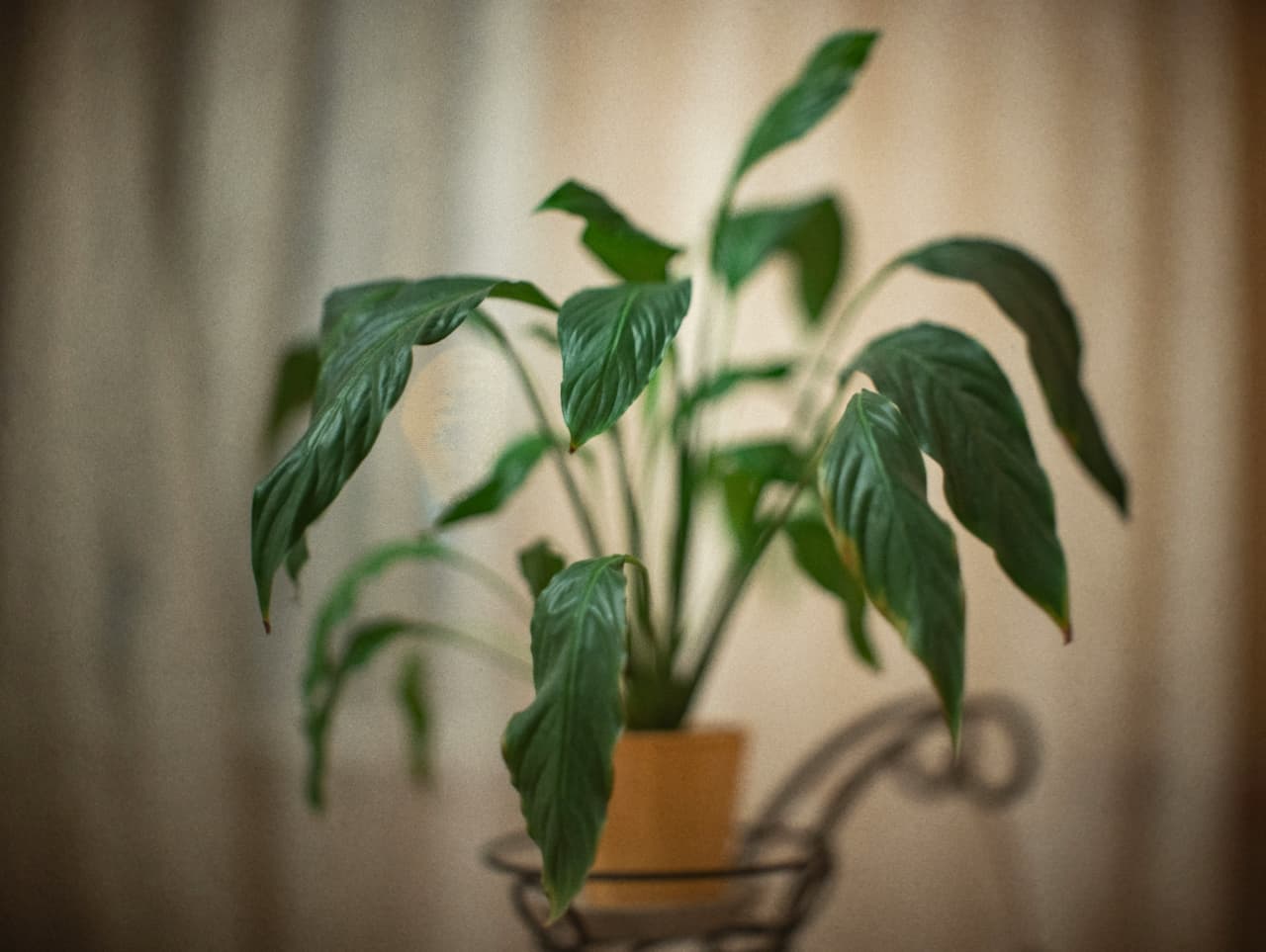
A severely underwatered plant has dry, loose compost that may have pulled away from the edges of the pot. The leaves will feel thinner and more papery than usual. Unlike overwatering, where leaves are soft and limp, underwatered leaves are drier and tend to curl at the edges or feel slightly crispy. The plant is lighter than normal when lifted. Lower leaves typically shrivel and drop first. In extreme cases, the entire plant may collapse very rapidly once the drought stress exceeds the plant’s reserves.
Recovering an underwatered plant is usually straightforward, but there is one complication: severely dry compost can become hydrophobic – water-repellent – after it dries out completely. When this happens, water poured onto the surface runs straight down the sides between the compost and the pot and out of the drainage holes without being absorbed by the root zone at all. The plant continues to decline despite being watered. The fix is bottom-watering: place the pot in a basin of room-temperature water deep enough to reach halfway up the pot. Leave it for 30 to 60 minutes. Water will be drawn up through the drainage holes by capillary action, rehydrating the compost from the base upward. Once the surface feels damp, remove from the basin and allow to drain fully before returning to its spot. This technique can also be used as a regular watering method for drought-sensitive plants like cacti and succulents.
After recovering an underwatered plant, review the conditions that led to the problem. Was the compost drying out too quickly? This can indicate the plant needs a larger pot to hold more moisture, or a compost mix with higher water retention. Is the location too hot or too sunny, driving excessive water loss through the leaves? Moving even a short distance from a south-facing window can reduce water demand substantially.
Root rot – identification, assessment and step-by-step rescue
Root rot is the end stage of prolonged overwatering, and it is the most serious commonly encountered houseplant problem. Once established, root rot does not resolve on its own. The cause – waterlogged, oxygen-deprived compost – must be eliminated, and the damaged root tissue must be physically removed. Leaving rotten roots in place allows the fungal and bacterial pathogens involved to continue spreading into the surviving root system. The good news is that plants with even a small proportion of healthy roots remaining can often be saved if the problem is caught and treated correctly.
Root rot is not always visible until it is advanced. The first signs are usually at leaf level: sudden unexplained wilting despite wet compost, accelerating yellowing of leaves, a musty or sour smell from the pot, and sometimes the appearance of fungus gnats, which are attracted to persistently wet compost. By the time the stem base begins to feel soft or dark and waterlogged, the root rot is already well established. If you notice any of these signs, do not wait – remove the plant from its pot and inspect the roots immediately.
Healthy roots are white or pale cream and firm to the touch. When bent, they flex rather than collapsing. Rotten roots are brown to black, soft, slimy when wet, and collapse or disintegrate when touched. They may smell unpleasant. The extent of the rot determines whether recovery is likely: if more than two-thirds of the root system is rotten, the prognosis is poor but still worth attempting. If less than half is affected, recovery is very achievable with correct treatment.
The root rot rescue process in detail: Remove the plant from its pot entirely and shake off as much compost as possible from the root ball. Rinse the roots gently under lukewarm water to make the extent of the damage visible. Using clean, sharp scissors or secateurs – disinfected with rubbing alcohol or a dilute bleach solution between cuts – remove all rotten root tissue. Cut back to firm, white, healthy wood. Do not leave any partially brown or soft tissue – it will continue to rot. If the rot has reached into the stem itself, cut the stem back until you reach clean, green tissue.
Once all diseased tissue is removed, dust the cut ends with powdered cinnamon, which has natural antifungal properties, or with horticultural activated charcoal. Both help seal the wounds and inhibit further fungal spread. Allow the roots to air dry for 30 minutes to an hour before repotting. Choose a new clean pot – disinfect any reused pot with a dilute bleach solution. Use fresh, well-draining compost mixed with perlite or horticultural grit to improve aeration. The new pot should be no larger than necessary to fit the remaining root system – excess compost around a reduced root ball stays wet and risks restarting the problem. Water lightly, just enough to settle the compost, and then hold back watering for at least two to three weeks while new roots establish. Place in bright indirect light and do not fertilise until the plant shows new growth.
Never reuse contaminated compost or pots without sterilising them. Root rot pathogens persist in old compost and on pot surfaces. Repotting a treated plant into the same environment restarts the problem from day one. If the original pot has sentimental value, wash it thoroughly and disinfect with a dilute bleach solution before reusing.
Brown tips – causes by type and fix for each
Brown leaf tips are one of the most reported houseplant problems in UK homes, and they have several distinct causes with different fixes. The pattern of browning is the key to identifying which cause is at work. Pure brown tips confined to the leaf edge with a sharp boundary and no yellowing suggest humidity or fluoride. Brown tips with surrounding yellow halos indicate more systemic problems like overwatering. Crispy brown patches in the middle of a leaf suggest scorch. Getting the diagnosis right before attempting any fix is essential.
One important point about brown tips: once the tissue is dead, it will not recover. Trimming brown tips with sharp scissors just inside the healthy tissue improves the plant’s appearance but the damage cannot be undone. The goal is always to address the underlying cause so that new growth comes through clean. Do not remove green leaves with only small brown tips – the green portion is still photosynthesising and contributing to the plant’s health.
Yellow leaves – diagnosis by pattern
Yellowing is one of the most common and most misdiagnosed houseplant symptoms. It is also one of the most contextual – a single yellowing lower leaf on an otherwise healthy plant almost always means nothing at all. Every plant sheds its oldest leaves as a normal part of growth, and in the absence of other symptoms, one yellowing leaf is not a problem. Multiple yellowing leaves across the plant at the same time, or a pattern of yellowing that starts at a specific location and spreads, indicates a genuine problem that needs identifying.
Dropping leaves – causes and what to do
Sudden and significant leaf drop is alarming but in most cases the plant is not dying – it is responding to a specific environmental trigger. Understanding which triggers cause leaf drop in which plants makes it much easier to identify the cause and stop it continuing.
Ficus species – particularly ficus benjamina – are the most notorious leaf-droppers in UK homes. They are acutely sensitive to any change in their environment: being moved to a new location, a drop in temperature, a cold draught from an opening window or door, a change in light levels, or even being moved into a cooler room for the winter. A ficus can shed the majority of its leaves within a week of being moved. The solution is straightforward but requires patience – return the plant to stable conditions (or leave it where it is if it has just been moved), stop moving it, eliminate any draught sources, and wait. New buds will begin to appear from the stems within a few weeks once the plant stabilises. This may take longer in winter when growth is slow.
Schefflera, money plants, and many tropical foliage plants show similar behaviour. Christmas cacti and kalanchoes drop buds rather than leaves when moved while in flower. Citrus trees and gardenias are extremely sensitive to draught and temperature fluctuation and will drop buds and leaves readily if conditions change.
Overwatering is the second most common cause of leaf drop. When roots fail due to overwatering or root rot, the plant cannot support all its leaves and begins shedding them to reduce the demand on the compromised root system. The distinction from environmental shock is that overwatering-related leaf drop typically starts with yellowing before the leaf falls, and is accompanied by wet compost. Environmental shock leaf drop often happens to otherwise green, healthy-looking leaves very rapidly.
Natural seasonal leaf drop occurs in some houseplants that are not truly tropical and have a natural growth cycle. Deciduous figs, some bulbs grown indoors, and plants like Fatshedera that have outdoor relatives will naturally reduce their foliage in winter and grow it back in spring. This is not a problem and requires no intervention other than reducing watering through the dormant period.
Root-bound plants – when and how to repot
A root-bound plant is one whose root system has outgrown its pot. The roots circle the inside of the pot, sometimes forming a dense mass that holds the shape of the container when removed. At this point, the plant has very little compost left and very little available nutrient, water drains through almost immediately, the plant dries out quickly between waterings, and growth typically slows or stops despite adequate light and feeding.
Root-bound plants need repotting, but repotting at the wrong time or into the wrong size pot creates new problems. The correct time to repot is spring, when the plant is entering its active growing season and can recover quickly from the disturbance. Repotting in autumn or winter stresses a plant that is slowing down for dormancy. The correct pot size is one size up from the current pot – typically 2-4cm larger in diameter. Going from a small pot to a very large one is a common mistake: the excess compost around the root ball holds water for far longer than the roots can use, which recreates the conditions for overwatering and root rot.
Signs that repotting is needed: roots visibly growing from the drainage holes, roots circling the surface of the compost, the plant drying out much more quickly than it used to, water running straight through the pot immediately on watering, or the plant becoming top-heavy and unstable. One sign that is often misread as root-bound is a plant that simply has not grown – before repotting, check whether low light or winter dormancy is the actual cause. A plant that is root-bound will also show the watering symptoms described above, not just a lack of growth.
When repotting, choose a pot one size up – 2-4cm wider than the current one. Add a layer of fresh compost to the base, position the plant so the top of the root ball will sit 2-3cm below the pot rim, and fill around the sides with fresh compost, firming gently. Water lightly to settle, then hold back for a week or two. Do not fertilise immediately after repotting – fresh compost contains nutrients, and the plant needs time to establish new roots into the new compost before feeding can be used effectively.
Light problems – leggy growth, pale leaves, sunburn
Light is the second most commonly mismanaged factor in UK houseplant care after watering. The problem almost always runs in one direction: too little. Most homes in Britain, particularly in autumn and winter when the sun is low and daylight hours are short, provide far less light than tropical houseplants are adapted to. Human eyes adapt to low light extremely efficiently, which means a room that feels bright and welcoming to us may be providing almost no usable light to a plant positioned more than 2 metres from a window.
The measurable unit for plant-usable light is foot-candles or lux. An overcast British winter day outdoors provides around 1,000-2,000 lux. A houseplant 2 metres from a north-facing window in January may be receiving 50-100 lux – barely enough for survival, let alone growth. Signs of insufficient light include: stems growing longer between leaf nodes (etiolation), the plant leaning toward the window, leaves smaller and more widely spaced than normal, and overall pale, slightly yellowed appearance. The fix is straightforward – move the plant closer to the light source. In very dark rooms without access to natural light, a dedicated grow light placed 30-60cm above the plant for 12-14 hours per day can substitute effectively.
Too much direct sun causes the opposite problem, most commonly in south-facing windows in UK summer. Direct sunlight through glass can concentrate heat and UV intensity far beyond what most tropical foliage plants can tolerate. Symptoms include pale bleached patches on the upper surfaces of leaves, brown crispy patches, and overall bleaching of the leaf colour. Move the plant back from the window or filter the light with a translucent curtain. South-facing windowsills are suitable in winter for sun-loving plants but too intense in summer for most tropical foliage.
Seasonal adjustment matters more in the UK than in many other climates. A plant that thrives on a windowsill from October through March may need to be moved back from the same window in June to avoid summer scorch. Getting into the habit of assessing plant positions at the change of each season – moving plants toward windows in autumn, back from south-facing windows in late spring – prevents many light-related problems before they occur.
Seasonal care – adjusting for the UK year
The single biggest mistake UK houseplant owners make is treating their plants the same throughout the year. The conditions inside a typical British home change dramatically between January and July: light levels roughly double, indoor temperatures are more stable, and plants grow actively rather than sitting dormant. Every aspect of houseplant care – watering frequency, feeding, repotting, and positioning – should shift with the seasons.
The most common error in autumn and winter is continuing the summer watering and feeding schedule. Central heating creates a false warmth that masks the dramatically reduced light – plants in a warm room in January feel like they should be growing, but without adequate light they cannot photosynthesise effectively and therefore cannot use water or nutrients at their summer rate. Applying fertiliser to a plant that cannot use it causes salt accumulation in the compost that damages roots. Watering a plant that cannot process the moisture leads to the overwatering cycle described earlier in this guide. From October through February, most houseplants need water roughly half as often as in summer, and no feeding at all.
How slowly recovery happens is one of the most frustrating aspects of houseplant care, particularly in winter. A plant that has been overwatered, has begun to recover, and is showing healthy new growth may take six to eight weeks to look noticeably better. In winter this timeline extends further because the slow growth rate means new leaves take longer to emerge. The instinct is to intervene further when there is no visible improvement, but intervention at this stage typically makes things worse. The best thing to do with a recovering plant in winter is to put it in the best light available, stop watering until the compost dries out, and leave it alone.
Share on socials: