At a glance
Winter energy bills are the single biggest domestic expense for most UK households, and the scope for reducing them without sacrificing warmth or comfort is larger than most people realise. A combination of better use of existing heating controls, targeted draught proofing and a handful of low-cost measures can reduce a typical household’s winter energy costs by £200-500 per year – with no reduction in the temperature of the rooms you actually use. Implemented together, these measures typically deliver a combined saving that exceeds the cost of any individual improvement many times over.
The most valuable changes are almost always behavioural rather than capital – adjusting how you use the heating you already have rather than spending money on new equipment. This guide covers both the free behavioural changes and the low-cost practical measures that deliver the best return, starting with the highest-impact items first and working down to the quick supplementary wins. If you want to track the effect of these changes in real time, having a smart meter installed makes it straightforward to see your consumption before and after each change, giving you immediate feedback on what is actually working in your specific home.
Thermostat and heating controls
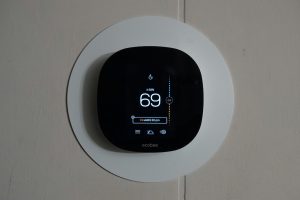
Room thermostat settings are the single biggest lever on heating bills. The Energy Saving Trust estimates that reducing your room thermostat by 1 degree C cuts heating costs by around 10% – roughly £100-150 per year for a typical UK household. Most UK homes are heated to between 20-22°C when 18-19°C is perfectly comfortable for most people when dressed appropriately indoors. This one adjustment alone delivers more saving than most other measures combined, and it costs absolutely nothing to make.
The heating timer schedule is equally important. Heating an empty house – while everyone is at work or school – is the most common source of unnecessary heating expenditure. Set the timer to start heating 30 minutes before the household wakes and to switch off 30 minutes before the last person leaves. The residual heat stored in radiators and the fabric of the building keeps rooms comfortable for 30-45 minutes after the boiler turns off, meaning you lose nothing by switching it off earlier than you might think. A smart thermostat with geolocation can automate this adjustment, switching off when everyone leaves and starting the warm-up cycle when the first person is approaching home.
Check individual room thermostatic radiator valves. TRVs on individual radiators are often left on their maximum setting or turned off completely and forgotten. Setting TRVs to 3 or 4 in bedrooms and other rooms that do not need full heating, and turning them to 1 in rooms rarely used in winter, can reduce heating energy significantly with no impact on the rooms you actually spend time in.
Draught proofing
Cold draughts make rooms feel colder than the air temperature, causing people to turn the heating up to compensate. Eliminating draughts makes a room feel warmer at the same temperature, reducing the thermostat setting needed for comfort. Draught proofing measures are among the cheapest energy improvements available and typically pay back within a single winter season. A whole-house draught proofing exercise covering all the main sources costs around £30-60 in materials and a weekend afternoon to complete. The annual saving from reducing uncontrolled ventilation is estimated at £25-50 for a typical semi-detached property – a full payback in year one.
Getting more from your radiators
Bleed your radiators at the start of the heating season. Air that accumulates in the system prevents hot water from circulating to the top of the radiator, reducing output significantly. Bleeding is a two-minute job with a radiator key – if the top of any radiator is noticeably cooler than the bottom when the heating is running, that radiator needs bleeding. Do this every autumn before temperatures drop rather than waiting until you notice cold spots mid-winter. After bleeding, check the boiler pressure gauge – it may need topping up to the correct operating pressure, typically 1-1.5 bar.
Do not block radiators with furniture. A sofa pushed against a radiator absorbs the heat before it can warm the room. Moving furniture 10-15cm from the wall allows convection currents to circulate heat effectively. Reflective radiator panels fitted to the wall behind radiators on external walls reduce heat absorption into the cold masonry and reflect more warmth into the room. These are particularly effective in solid-wall or poorly insulated properties. A set of panels costs around £15-25 and takes an hour to fit, with no tools required beyond a tape measure and scissors.
Hot water habits
Hot water is the second largest energy cost after space heating in winter. Reducing shower duration, fixing dripping hot taps and setting the boiler hot water temperature correctly are the three highest-impact hot water changes. A four-minute shower uses around half the hot water of an eight-minute shower – that difference adds up to a meaningful annual saving across a household. A dripping hot tap wastes thousands of litres of hot water per year and the fix is almost always a washer replacement costing under £1. A boiler hot water temperature set to 70°C when 50-55°C is perfectly adequate for a combi boiler wastes energy heating water beyond what is needed for any practical purpose.
In homes with a hot water cylinder, ensure the cylinder thermostat is set to exactly 60°C – the minimum safe temperature to prevent Legionella bacteria growth, and no higher. Cylinder jackets on uninsulated cylinders and pipe lagging on accessible pipework reduce standing heat losses throughout the winter months when the garden is dormant and there is no opportunity for outdoor drying. For a complete breakdown of all hot water saving measures and the payback periods for each one, see our guide on how to reduce hot water bills.
Appliances and standby
Standby power consumption across a typical UK home adds up to around £55-80 per year. Switching appliances off at the wall rather than leaving them on standby eliminates this cost entirely. The biggest standby draws are televisions, set-top boxes, games consoles and broadband routers – items that run continuously even when nobody is actively using them. A smart power strip that automatically cuts power to peripheral devices when the main device is switched off makes this effortless for entertainment systems. The habit takes a week to form and then becomes automatic, requiring no ongoing effort at all.
The tumble dryer is one of the most expensive appliances to run in winter. At around 60-80p per cycle, a family using it five times per week spends around £175-210 per year on tumble drying alone. A heated airer costs around 3-5p per session and handles a similar volume of laundry at a fraction of the running cost, though drying time is longer. In winter months when outdoor drying is not practical, this swap delivers meaningful savings with minimal inconvenience. Running full loads rather than half loads in both the washing machine and dishwasher reduces energy use per item washed significantly, and washing at 30°C rather than 40°C costs around a third less per cycle with negligible difference in results for everyday laundry.
Low-cost insulation measures
Loft insulation is the highest-impact insulation measure for most UK homes and the least disruptive to install. A loft with less than 100mm of insulation benefits enormously from topping up to the recommended 270mm. This is a DIY-accessible job in most accessible lofts using rolled mineral wool and costs around £300-500 in materials for a typical semi-detached property. The Energy Saving Trust estimates savings of £150-300 per year depending on property size and current insulation levels. The payback period is typically two to three years, after which every subsequent year represents pure saving with no further investment required. In homes that qualify for the Great British Insulation Scheme or ECO4 grants, the cost may be fully covered.
Thermal curtain liners fitted to existing curtains provide a meaningful reduction in heat loss through windows overnight. The liner attaches to the back of an existing curtain with press-studs or velcro and adds a layer of insulation at a fraction of the cost of new thermal curtains. For homes with single glazing or older double glazing, this is one of the cheapest per-degree improvements available and works every evening without any ongoing effort or cost. Drawing curtains at dusk and keeping them closed until morning reduces window heat loss by around 15-17% compared to leaving curtains open overnight. Even standard curtains provide a meaningful buffer against cold radiating from glass on freezing nights – and this is a measure that costs nothing at all to implement starting tonight.
Winter energy saving checklist
Share on socials: